High Resolution LED Display: What You Need to Know
High Resolution LED Display Solutions
Are you ready to let the high resolution LED display screen bring you a superb visual experience? Let’s do it!
Get Quotation Now!
High Resolution LED Display
A high-resolution LED display refers to a display screen that offers exceptional clarity and detail, allowing for sharp images and text, even at close viewing distances.
The resolution of an LED display is typically measured by its pixel pitch, which is the distance between the centers of two adjacent pixels.
Start Here!
https://youtu.be/rEVIWkt5w-o
High-resolution LED Displays Recommended
UNIT has a range of high resolution LED display products that we’d be happy to recommend based on your specific needs. These LED displays are ideal for environments requiring sharp, clear visuals.
MA640 Series
640x480mm Cabinet
4:3 LED Display
P1.25, P1.53, P1.66, P2.5mm
Learn More!
MA600 Series
600×337.5mm
16:9 LED Display
P1.25, P1.56, P1.87, P2.5mm
Learn More!
IF320 Series
320×480mm Cabinet
Magnetic Installation
P1.538, P1.86, P2.5mm
Learn More!
LED PANEL PRICE
Just fill in the sizes, and get your LED screen budget right now!
High-resolution Screen Key Technical Requirements
(1) Pixel Pitch
For an LED display to be considered high-resolution, the pixel pitch is generally below 2.5mm. Common high-resolution pixel pitches range from P1.2 to P2.5.
(2) Resolution
The total resolution depends on the screen’s physical size and the pixel pitch. For example, a high-resolution display with a pixel pitch of 1.5mm on a 1920×1080 panel offers full HD clarity.
(3) Brightness
High-resolution LED displays need adequate brightness to be visible in various environments. 800 to 1,500 nits for indoor use and exceeding 4,000 nits for outdoor displays.
(4) Refresh Rate
To ensure smooth motion without flickering, a refresh rate of at least 3,840 Hz is preferred for high-resolution LED displays
(5) Color Depth
Color depth of at least 16-bit, some reaching 24-bit for even more precise color representation.
https://youtu.be/0ogWMWfEfgE?si=tlP8PJsRn9-1giYd
Applications of High Resolution LED Display
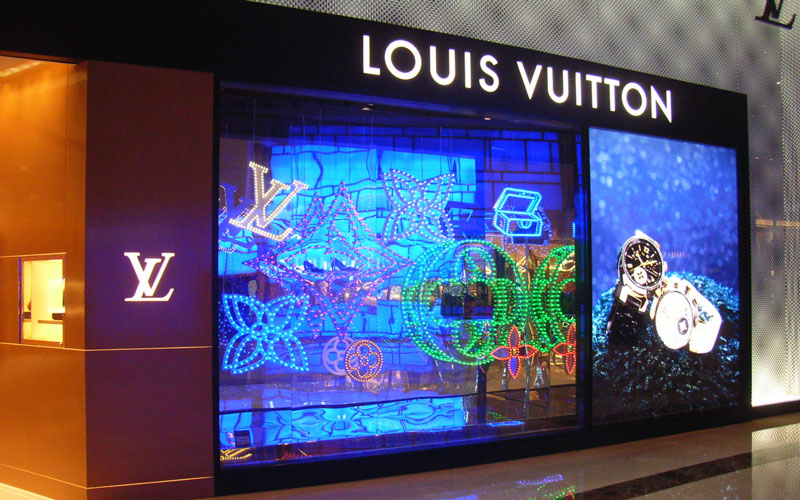
High-end Retail & Advertising
Transform storefronts and in-mall kiosks into engaging brand experiences with vivid colors, fluid motion, and real-time promotional updates.
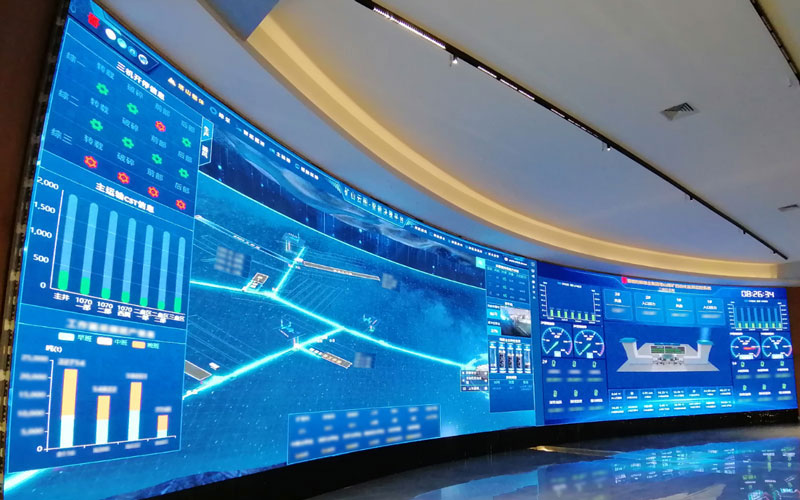
Corporate & Trade Shows
Deliver crystal-clear charts, 3D renders, and product demos in boardrooms and exhibition booths, reinforcing brand identity and audience engagement.
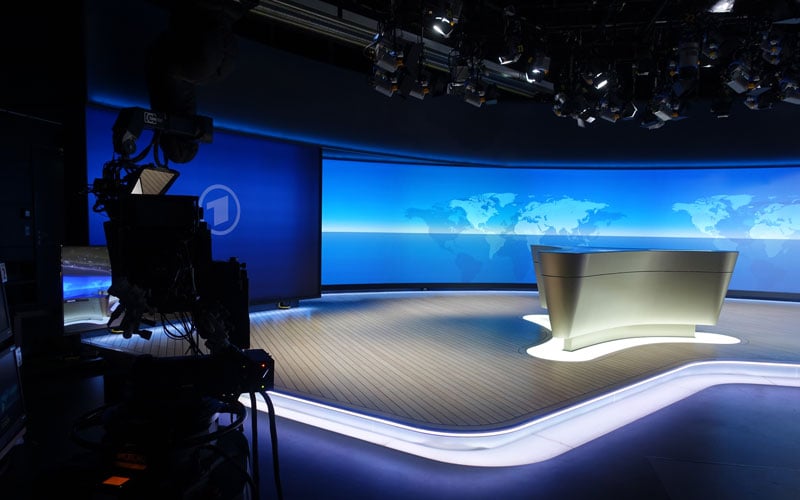
Broadcast & Virtual Production
Replace green screens with ultra-fine-pitch LED walls that offer flicker-free backgrounds (≥ 3,000 Hz) and true-to-life color for seamless on-camera integration.
Sports Arenas & Stadiums
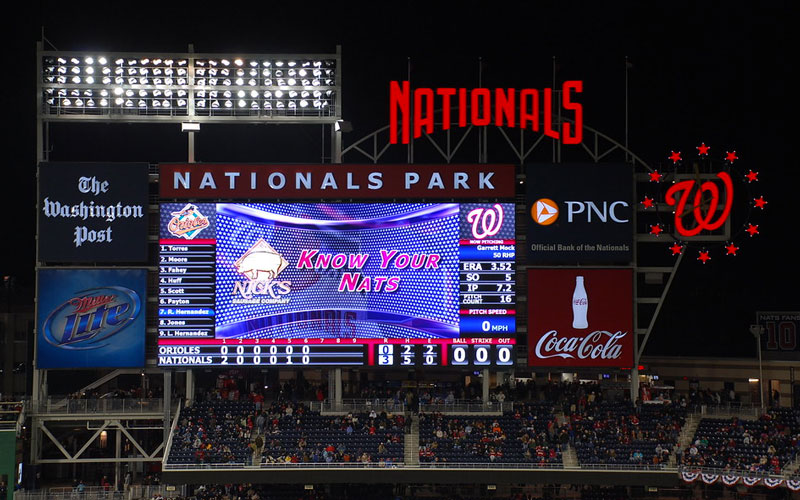
For scoreboards, perimeter displays, replays, using high-resolution LED displays provide fans clear, real-time information even from distant seats.
Control Rooms
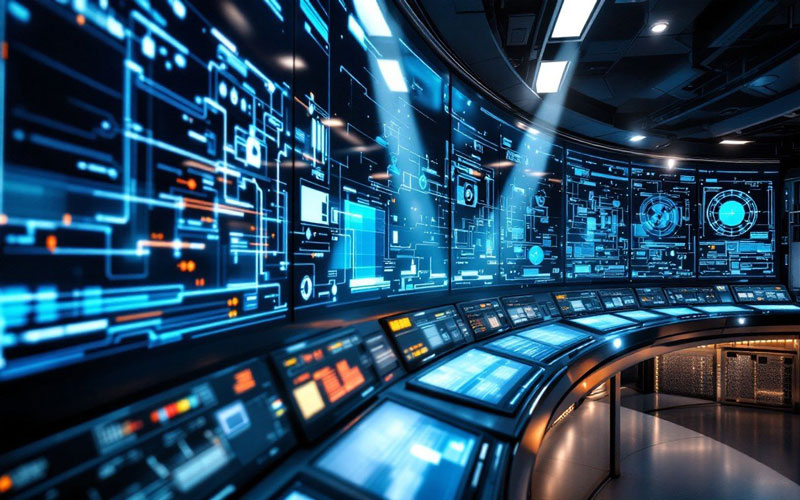
Display multi-source data dashboards with sharp detail and wide viewing angles for traffic, security, and emergency-response operations.
Education & Museums
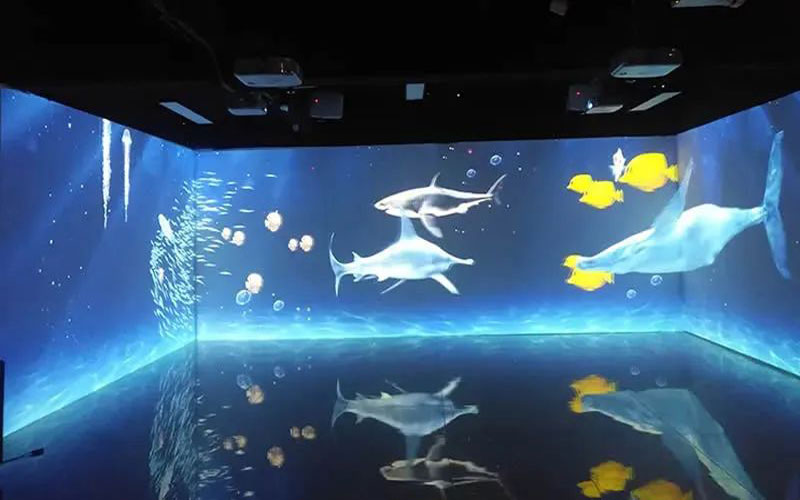
Create immersive lecture halls and interactive exhibits using high‑definition video, animations, and live feeds to captivate and inform audiences.
UNIT HD LED Screen Projects
https://youtu.be/Kgvo45sucC0?si=KMiEXlgQ_e12Kx9ihttps://youtu.be/yxjQcnn81k0?si=Iz_2-EzEKzE7Oby3
UNIT High Resolution LED Display
- Indoor HD LED Display
- ≥3840Hz Refresh Rate
- Perfect for Indoor Places
- Various Pixel Pitches and Sizes
- CE, Rohs Approved
- 3 Year Warranty and 5% Spare Part
Get Price Now
High Resolution LED Display: Everything You Should Know!
In the rapidly evolving world of digital signage, high resolution LED display stands at the forefront, delivering vibrant colors, razor-sharp clarity, and unparalleled brightness. From the monochrome LED displays that only display text to the high-resolution LED screens with 4K and 8K image quality, the advantages of LED are now known to the public.
https://youtu.be/JiLErZxkDuE?si=Cw5L_Jfr1MX1ohKL
P1.875mm High Resolution LED Display Case
From expansive outdoor billboards to immersive indoor conference room walls, these displays have become indispensable across industries. In this comprehensive guide, we will explore everything you need to know about high-resolution LED displays.
Table of Contents
1. What is High Resolution LED Display?
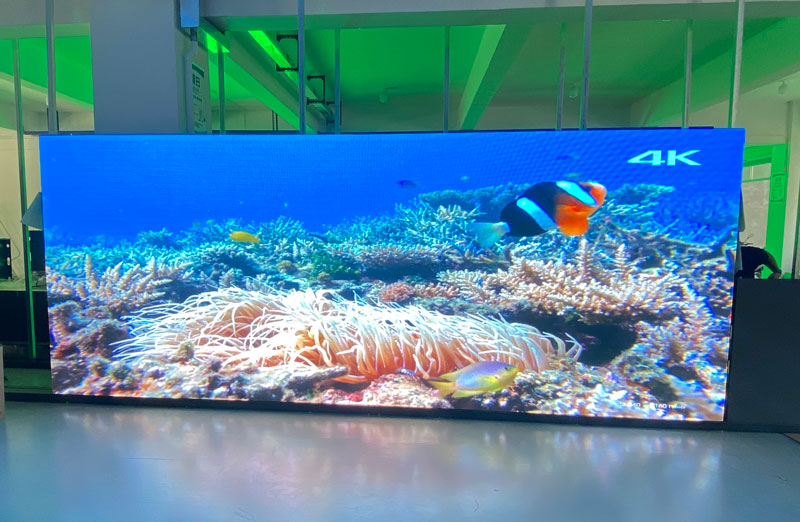
A high resolution LED display is a type of digital screen composed of light-emitting diodes (LEDs) arranged in a dense pixel grid. Each pixel consists of red, green, and blue sub-pixels, enabling the display to produce a full spectrum of colors.
The term “high resolution” refers to the pixel density, measured in pixels per inch (PPI) or dots per inch (DPI), which determines the sharpness and clarity of the image.
1.1 Pixel Pitch and Density
Pixel Pitch: The distance between the centers of two adjacent pixels, usually expressed in millimeters (mm). Smaller pixel pitches result in higher pixel density, leading to finer detail and smoother visuals.
Pixel Density: Often described as PPI or DPI; higher values translate to improved image sharpness. For indoor applications, pixel pitches of 0.9mm to 2.5mm are common. Outdoor displays typically use pixel pitches ranging from 3mm to 20mm, striking a balance between viewing distance and cost.
1.2 Indoor vs. Outdoor LED Displays
Indoor LED Displays: Optimized for close-up viewing, indoor High Resolution LED Displays prioritize tighter pixel pitches, higher refresh rates (up to 3840Hz), and superior color calibration.
Outdoor LED Displays: Designed to withstand environmental elements, these displays feature weatherproof housings (IP65 or higher), high brightness levels (up to 9,000 nits), and larger pixel pitches to ensure visible clarity from greater distances.
2. High-Resolution LED Displays Resolution Standards
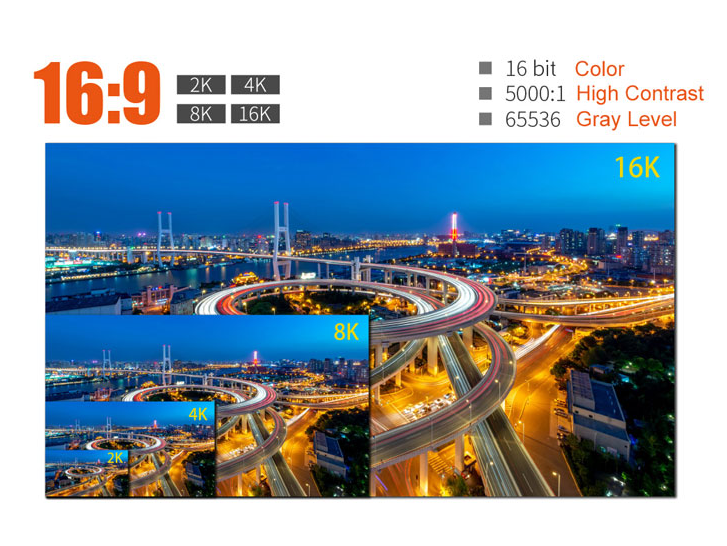
When defining what makes an LED screen “high-resolution,” the benchmarks most often referenced are 2K, 4K, and 8K, terms familiar from the world of LCD and OLED panels. An LED display that achieves any of these pixel counts is generally categorized as high resolution LED display:
| Resolution Standard | Pixel Dimensions | Total Pixels | Aspect Ratio | Common Usage Scenarios |
| 2K | 2048 × 1080 | ~2.2 million pixels | ~17:9 | Cinematic applications, indoor displays |
| 4K UHD | 3840 × 2160 | ~8.3 million pixels | 16:9 | High-end retail, TV studios, luxury venues |
| 8K UHD | 7680 × 4320 | ~33.2 million pixels | 16:9 | Large event stages, museums, sports arenas |
| Custom Resolutions | Varies based on cabinet size | Flexible | Flexible | Stage backgrounds, creative LED structures |
Tips: Custom & Non–Standard Resolutions
One of the greatest advantages of modular LED technology is its flexibility: you can build virtually any screen size or aspect ratio, yielding bespoke resolutions that fall outside classic 2K/4K/8K definitions.
As long as the assembled panels deliver pixel densities equal to or greater than 2K standards, they qualify as high-resolution LED displays. This modularity empowers designers and integrators to tailor LED solutions for unique venues and creative applications.
For a deeper dive into LED screen resolution, check out: Guide to LED Screen Resolution: How to Calculate & Choose.
3. Why is High Resolution LED Screen More and More Popular?
The advancement of technology and the increase in investment costs have promoted the transformation of the display industry. The demand for high-quality monitors has increased accordingly.
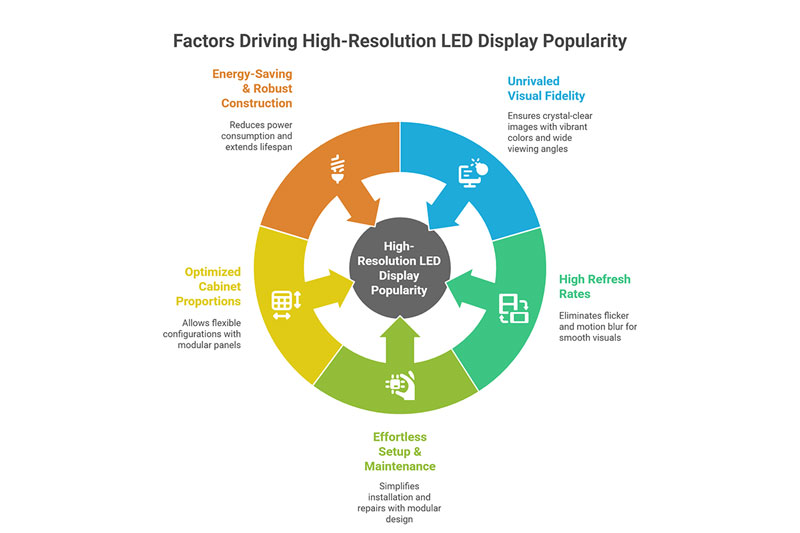
A High-resolution LED video wall brings perfect picture quality, a good viewing experience, and high return income. Of course, the performance advantage of the product is still the key to gaining the favor of customers. Below are the principal factors that make high resolution LED display more and more popular:
① High Refresh Rates for Flawless Motion
To eliminate flicker and motion blur, especially on camera, many high resolution LED displays operate at refresh rates above 3,840 Hz (some even up to 7,680 Hz). This ultra-smooth rendering is critical for live broadcasts, event presentations, and fast-moving content, ensuring every frame appears stable and fluid.
② Effortless Setup & Front-Service Maintenance
Modern UHD LED screens are engineered for quick installation and minimal downtime. Slim, lightweight cabinets feature front-access modules or magnetic mounts, so individual LED tiles can be swapped out without dismantling the entire video wall. This design streamlines repairs, reduces labor costs, and keeps high-traffic venues running smoothly.
③ Ultra HD Perfect Picture Quality
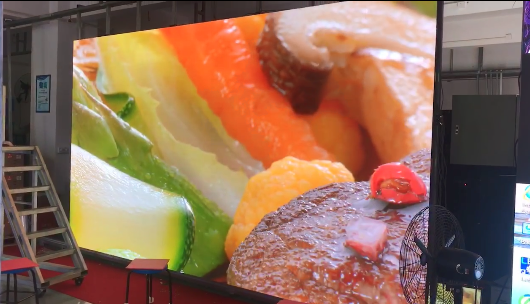
The pixel pitch of the high resolution LED display is generally below P2.5mm. Small spacing brings an excellent display effect. As we can see, the picture effect is stable, with no ripples and no black screen. The video is smooth, and the dynamic display picture is clear. A good image display effect will bring the best viewing experience to the viewer.
Compared with LCD screens, another obvious advantage of ultra HD LED displays is seamless splicing. The screen will not be divided. It adopts a special connector, and the gap of the LED modules can be adjusted to show the perfect display effect.
④ Optimized Cabinet Proportions & Flexibility
High-resolution LED display cabinets are thoughtfully sized around golden-ratio formats. Common dimensions include 640×480 mm, 600×337.5 mm, and 320×480 mm, allowing seamless tiling into 16:9 or 4:3 configurations. Whether you need a 4K LED screen or an 8K UHD LED screen, these modular panels adapt to virtually any layout, from flat video walls to gentle curves, maximizing both aesthetics and space efficiency.
⑤ Energy-Saving & Robust Construction
Advanced driving schemes (such as common-cathode technology) reduce power consumption by up to 30% compared to legacy LCD or plasma screens. Lower energy draw also means less heat buildup, which extends component lifespan. Quality LED modules routinely exceed 100,000 hours of continuous operation without significant brightness loss, delivering years of reliable performance.
⑥ Power and signal dual backup system
A dual signal input device can automatically detect the integrity of the signal. The backup power supply will continue to supply power when one power supply is out of service. Therefore, it will not affect the use of the LED display. The dual backup system of power supply and signal escorts the continuous and stable operation of the product for 24 hours.
4. What Technologies are Used in High Resolution LED Displays?
As technology constantly improves, the quality of LED display panels is also improving. Traditional DIP LED lights are gradually fading out of the LED market. For high-resolution LED panels, SMD LED and COB LED are the two most popular LED lights on the market. These two kinds of LED lights have their own characteristics.
Next, we will give you a brief introduction to LED technologies.
4.1 Different LED Technologies for High Resolution LED Screen
① SMD LED
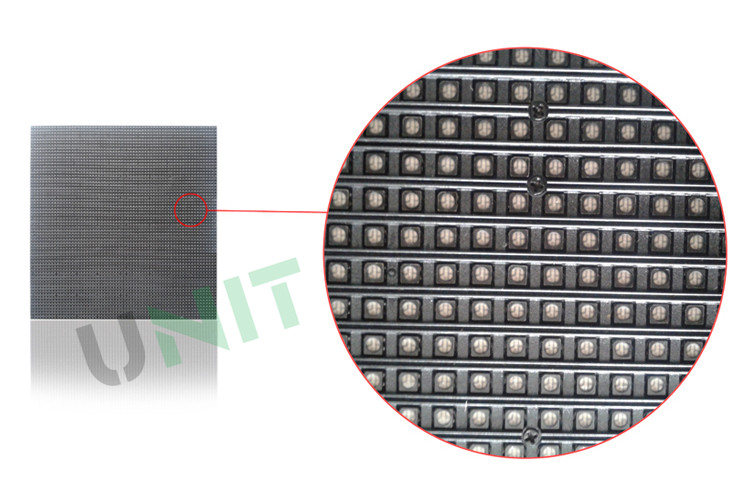
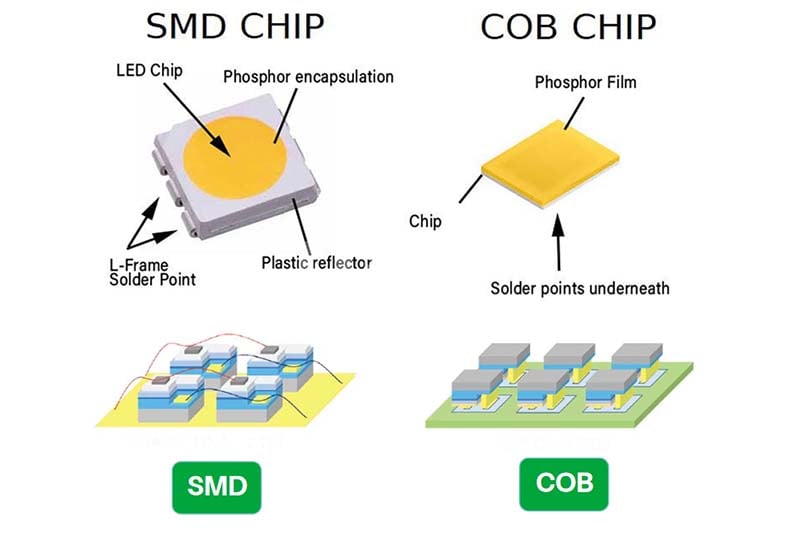
SMD LED, or Surface Mounted Devices, is a packaging technology for LED chips. It directly encapsulates the LED chip in the bracket to form a lamp bead, and then directly solder it to the PCB. Among them, the LED display with three-in-one SMD technology is the most popular product on the market among manufacturers and customers.
The innovation of the three-in-one SMD is that the LED chips of the three colors of RGB are packaged in the same colloid according to spacing.
SMD LEDs have the following characteristics:
- SMD screens have a wider viewing angle, which can meet the viewing needs of different angles.
- Compared with DIP screens, SMD screens are more suitable for fine pixel pitch LED displays.
- The technology of SMD screens is more mature. The display screen has high color saturation and high screen flatness. SMD has always been the standard technology adopted by high resolution LED walls.
② COB LED
COB(Chip on board) LED refers to the packaging technology that integrates light-emitting chips on PCB boards.
COB has three package forms: strip, square, and round. As a new technology, the price of COB LED screens will be 10%-20% higher than that of SMD LED screens. However, the high cost also brings a better image.
COB LEDs have the following characteristics:
- COB screens are stronger in protection.
- COB screens display fuller pixels. It can effectively suppress moire. Even if people view it from a close distance, it will not hurt their eyes.
- COB screens have better heat dissipation performance. The heat is dissipated directly through the PCB, so the thermal resistance value is small.
③ GOB LED
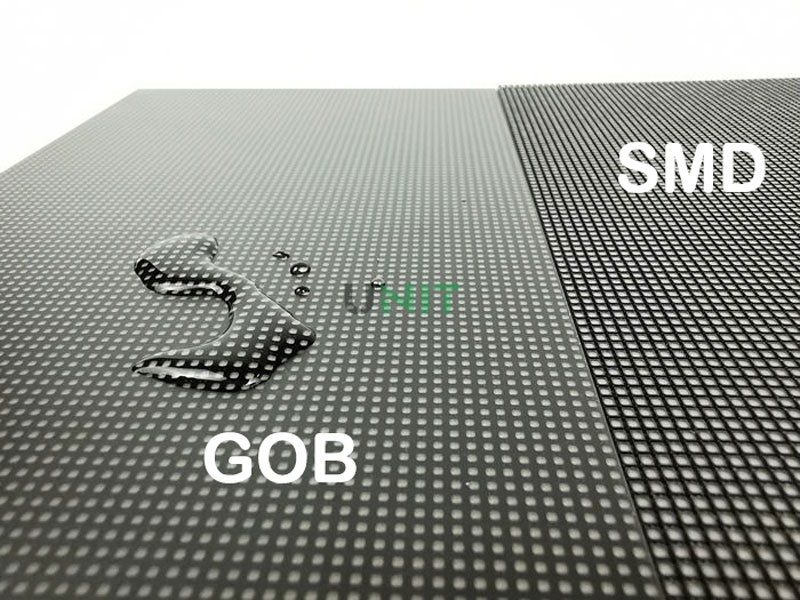
GOB is the abbreviation of Glue on board. It aims to solve the problem of LED lamp bead protection. GOB adopts advanced, new transparent materials to encapsulate the substrate and LED lamps. This material has good transparency and ultra-high thermal conductivity.
This special packaging technology enables GOB small-pitch LED display screens to adapt to harsh environments and achieve good moisture-proof, waterproof, dust-proof, and impact-proof effects.
GOB LED has the following characteristics:
- High protection function, effectively avoid the phenomenon of large area deadlights and lights out.
- Compared with COB LED screens, GOB screens are easy to maintain and cost less.
- The viewing angle is wider. The horizontal and vertical viewing angles of the GOB screen are both close to 180 degrees. In addition, GOB can effectively eliminate the moiré phenomenon and help reduce visual fatigue.
- Wide application. The application of the GOB process has expanded the scope of the application of the LED display. GOB technology is used in fine pixel pitch LED displays and various LED products that require high protection capabilities.
| Feature | SMD | GOB | COB |
| Technology Structure | LED chips mounted on PCB surface with exposed diodes | SMD LEDs covered with transparent epoxy glue | LED chips directly packaged on PCB without traditional casing |
| Surface Protection | No protection; LEDs are exposed | Fully protected by hardened glue layer | Fully sealed and integrated on board |
| Durability | Fragile; vulnerable to physical impact and moisture | High durability; water-resistant and dust-proof | Extremely durable; resistant to moisture, dust, and impact |
| Heat Dissipation | Moderate | Improved via glue layer | Excellent due to compact integration |
| Display Quality | Good color uniformity and brightness | Similar visual effect to SMD with better protection | Superior color consistency and contrast ratio |
| Maintenance | Easy to repair individual LEDs | Moderate; requires careful glue handling | Difficult; repairs require reworking entire modules |
| Cost | Lower production cost | Moderate cost (more expensive than SMD) | Higher cost due to complex manufacturing process |
| Application Scenarios | Indoor/outdoor screens, rental, general usage | Rental LED displays, interactive screens, harsher environments | Command centers, control rooms, high-end indoor applications |
4.2 Point-by-point Correction Technology
When the LED display has worked for some time, the color uniformity will be affected due to the difference in LED light decay or other external reasons. An obvious manifestation is the phenomenon of a “flowering screen” appearing on the display screen, showing pockmarks, bright and dark spots, and even mosaics. The function of point-by-point correction is to improve this phenomenon and make the picture of the LED screen purer and delicate.
Point-by-point correction is a technique to improve the brightness uniformity and color fidelity of high resolution LED video walls. In the later maintenance, maintenance staff can use professional instruments to perform one-time calibration on the entire screen. The operation is simple, and the effect is good. It can effectively improve the image quality and reduce the waste of resources.
5. High Resolution vs Low Resolution LED Display
High-resolution LED walls are defined by fine pixel pitches (≤ 2.5 mm) and high pixel densities, delivering razor-sharp imagery for close-range viewing. In contrast, low-resolution LED screens use larger pitches (≥ 3 mm), optimized for long-distance visibility and cost-effective large-format installations.
Here is a detailed comparison table:
| Characteristic | High Resolution LED Display | Low Resolution LED Display |
| Pixel Pitch | 0.9 mm-2.5 mm | 3.0 mm-10 mm |
| Pixel Density | Higher | Lower |
| Optimal Viewing Range | 1-5 m | 10-50 m |
| Brightness | 800-1,500 nits (indoor); 2,000-4,000 nits (outdoor) | 4,000-7,000 nits (outdoor) |
| Contrast & Color | High contrast; wide color gamut | Moderate contrast; standard gamut |
| Refresh Rate | ≥ 3,000 Hz (ideal ≥ 4,000 Hz) | 1,920 Hz or lower |
| Cost | More expensive | More affordable |
| Use Cases | Control rooms, broadcast studios, retail signage, corporate lobbies | Outdoor billboards, stadium screens, highway signage |
Choose high-resolution LED displays for environments demanding detailed visuals and close-up engagement (e.g., corporate, retail, broadcast). Opt for low-resolution LED screens when your priority is long-distance readability, ruggedness, and lower cost per square meter.
6. Key Technical Requirements When Choosing One
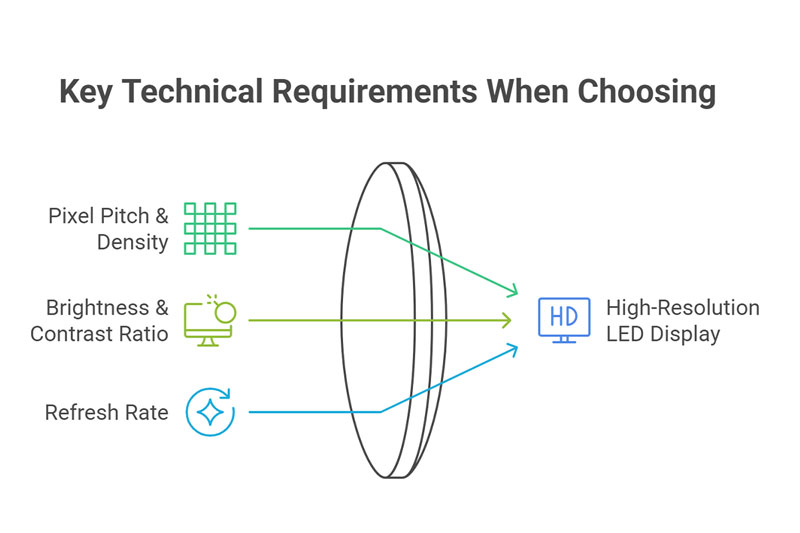
When choosing a high resolution LED display, it’s essential to match its specifications with your performance needs and operating environment. Below are the key technical criteria you should evaluate:
① Pixel Pitch & Density
“Pixel pitch” refers to the center-to-center distance between adjacent LED pixels, expressed as P followed by a number (e.g., P1.86, P2.5, P4, P5). A tighter pixel pitch means more pixels per square meter, yielding crisper, more detailed images, crucial for installations where viewers stand close to the screen.
Calculation:
Pixel density = (1 000 mm/pixel pitch mm)²
Here’s a reference table of common LED pixel pitches and their corresponding pixel densities (pixels per square meter):
| Pixel Pitch (mm) | Pixel Density (dots/m²) |
| P1.25 | 640,000 |
| P1.538 | 422,500 |
| P1.667 | 360,000 |
| P1.86 | 289,444 |
| P1.953 | 262,144 |
| P2 | 250,000 |
| P2.5 | 160,000 |
| P2.604 | 147,456 |
| P2.976 | 112,896 |
| P3 | 111,111 |
| P3.076 | 105,625 |
| P3.33 | 90,000 |
| P3.91 | 65,536 |
| P4 | 62,500 |
| P4.81 | 43,264 |
| P5 | 40,000 |
| P5.3 | 35,600 |
| P6 | 27,556 |
| P6.67 | 22,500 |
| P8 | 15,625 |
| P10 | 10,000 |
| P16 | 3,906 |
② Brightness & Contrast Ratio
Brightness (Nits): Indicates how well the LED panel performs under different ambient lighting. Indoor LED walls typically start at around 800 -1500nits, whereas outdoor-grade displays often exceed 5,000 nits to combat sunlight.
Contrast Ratio: The ratio between the darkest black and brightest white that the display can produce. A high contrast ratio ensures vivid colors and clear shadow detail, making graphics and video content pop even in challenging lighting.
③ Refresh Rate
Measured in hertz (Hz), the refresh rate determines how many times per second the display image is updated. A higher refresh rate prevents flicker and delivers smooth motion, critical for live broadcasts, camera filming, and fast-moving visuals on your LED video wall.
The following are the main refresh rates that affect high resolution LED display:
| Refresh Rate | Typical Use Case |
| 1,920 Hz | Standard applications: smooth playback for general video and digital signage. |
| 3,840 Hz | Professional environments: broadcast studios and event venues requiring minimal flicker. |
| 7,680 Hz | Ultrahighend scenarios: live sports, concert backdrops, and oncamera presentations. |
By carefully balancing pixel pitch, brightness, contrast, and refresh rate, you’ll select a high-resolution LED display that delivers exceptional clarity, reliable performance, and lasting durability in its intended setting.
7. Common Pixel Pitch of High-resolution LED Display
High-resolution LED video walls are often classified by pixel pitch into three tiers, Ultra Small, Small, and Mid, to help integrators match display detail to viewing distance and budget.
| Category | Pixel Pitch | Ideal Viewing Distance | Typical Use Cases |
| Ultra Small Pixel Pitch | P0.9-P1.2 mm | 0.5-2 m | Broadcast studios, virtual production, command centers |
| Small Pixel Pitch | P1.5-P2.5 mm | 1.5-5 m | Corporate boardrooms, highend retail, conference rooms |
| Mid Pixel Pitch | P3.0-P4.0 mm | 3-10 m | Large lobby displays, museum exhibits, event backdrops |
8. How to Choose a Suitable High Resolution LED Display for Your Project?
For the LED display with equal size, the smaller the spacing, the higher the resolution, and the more natural the color. High-resolution LED displays are widely used in indoor stages, visual data management centers, command and dispatch systems, conference centers for party and government organs, and TV broadcasting centers.
When choosing a suitable HD LED display, you’d better consider the following points:
First, choose LED products according to project requirements. Such as application scenarios, display area, etc.
Secondly, clarify the viewing distance. Generally speaking, HD LED panels have a wide viewing angle. Since high-definition displays usually work indoors, pixel pitches below P2.5mm are suitable for close-up viewing. UNIT HD display series offers a variety of options, such as P1.25mm, P1.56mm, P2mm, etc.
Thirdly, choose the appropriate product model according to the budget. Different models have different display effects and different quotations. Choosing an interested LED manufacturer to communicate with will save you time.
Fourthly, choose a professional LED screen manufacturer for trading. Qualified suppliers can provide good technical support and after-sales service.
9. High Resolution LED Display Price
The high resolution LED display price varies widely based on their pixel count, underlying technology, and value-added features.
Key Price Drivers
- Pixel Pitch & Density: Smaller pitches (≤ 1.5 mm) command higher prices due to tighter LED spacing and more complex manufacturing.
- Brightness & Weatherproofing: Outdoor-rated panels with 5,000+ nits and IP65/67 protection cost more than indoor-only modules.
- Refresh Rate & Color Calibration: Displays with ≥ 3,840 Hz refresh and factory-calibrated color profiles incur premium costs.
- Serviceability: Front-access or magnetic-module designs reduce maintenance downtime but add to module price.
- Optional Features: Integrated media players, transparent panels, curved cabinets, and mounting systems increase overall system cost.
So, when budgeting your LED project, factor in not only panel costs but also control systems, mounting hardware, freight, and warranty/support options to gauge the true total cost of ownership.
10. High Resolution LED Video Wall Cases
As a company specializing in the production and sales of LED screens, UNIT has been committed to providing customers with high-quality LED display products for many years. Next, we will introduce some real cases about UNIT high-resolution LED displays.
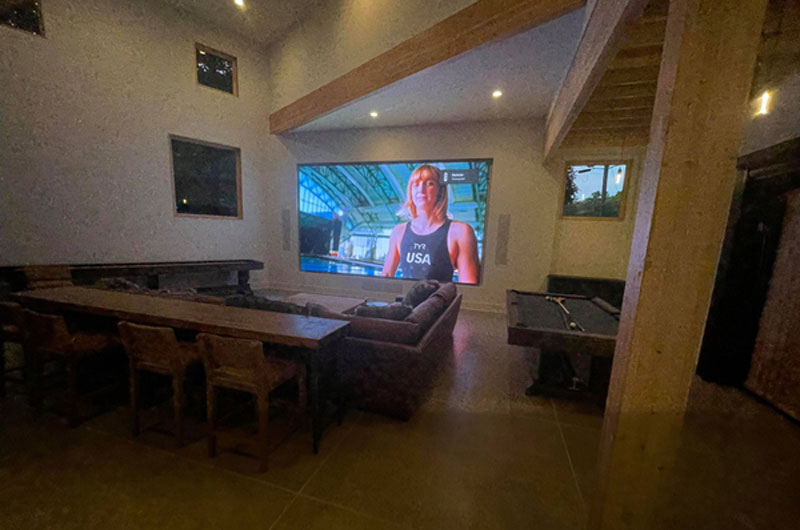
Case 1. N169 Series indoor 4K LED display for America
The customer from the United States is satisfied with the N169 series display.
The P1.25mm indoor fixed LED display perfectly meets his needs for 4K image quality. A high-resolution LED display with an extra-large size and perfect picture quality is comparable to a TV screen.
With the improvement of people’s quality of life, people’s spiritual needs are getting higher and higher. The most obvious example of this is the rapid development of the film industry.
The current mainstream display terminal in the film industry is the projection screen, but with the higher requirements of consumers for the viewing experience, LED display screens have begun to enter the film industry.
LED displays are gradually beginning to replace traditional TVs and projection screens.
Case 2. MA640 series P2.5mm LED Display Screen to Korea 1
Project details:
Installation Country: Korea
Pixel Pitch: P2.5mm
Product Model: MA640 series
Module Size: 320*160mm
Cabinet Material: Magnesium alloy
Cabinet Size: 640X480mm
Screen Height: 5440mm
Screen Width: 2080mm
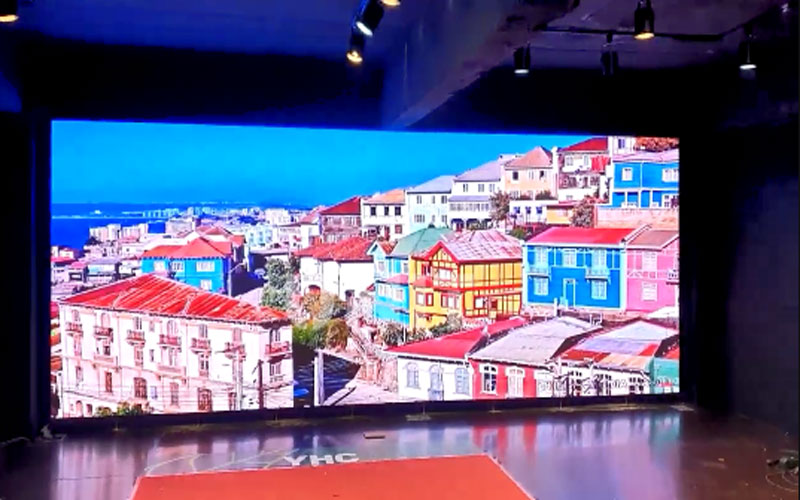
Case 3. MA640 series P2.5mm LED Display Screen to Korea 2
Project details:
Installation Country: Korea
Pixel Pitch: P2.5mm
Product Model: MA640 series
Module Size: 320*160mm
Cabinet Material: Magnesium alloy
Cabinet Size: 640X480mm
Cabinet Weight: 5.5Kg
Screen Height: 1440mm
Screen Width: 9600mm
Screen Size: 13.824㎡
Application: Indoor LED display

The indoor small-pitch display has a good display effect. The exquisite pictures bring the audience a pleasant visual experience. Thanks to the wide viewing angle, it can cover more target audiences.
UNIT is your best LED display cooperative manufacturer. Our high-resolution series LED panels adopt advanced LED light-emitting materials. And they are equipped with high-quality control systems in the industry, such as Nationstar, Colorlight, etc. With more than 15 years of rich experience in the industry, we have provided many customers with satisfactory high-resolution LED display solutions.
https://www.youtube.com/watch?v=utOosfK-ZEQ
11. Conclusion
In this article, we give you a comprehensive introduction to high resolution LED display. Including an explanation of some technical terms, advantages, and a comparison of three different packaging technologies. By reading this article, I believe you will have a new understanding of high-resolution LED video walls. The three technologies of SMD, COB, and GOB have their own characteristics. Who can win the competition in the small-pitch LED display market? The choice of the market is also the choice of the customer.
UNIT offers a range of high-resolution LED displays with great quality. A variety of sizes and models to meet your project needs to the greatest extent. If you are interested in this series of products, please contact us!