What Is 4K LED Screen? Benefits, Top Applications & Buying Guide
In the digital age, high resolution LED displays are essential for providing an immersive visual experience. Among them, the 4K LED screen stands out for amazing clarity, vivid colors, and versatility in various applications such as electronic LED billboards, entertainment, and control rooms.
https://youtu.be/Kgvo45sucC0?si=_vdcRMuQpJMgxfm7
The core difference between 4K LED displays and traditional displays is that their resolution is four times that of previous screens. This improvement makes 4K displays far superior to other types of screens in terms of the expression of picture details, presenting more delicate and clearer visual effects.
This guide will explore everything you need to know about 4K LED screen, from the core technical specifications of LED displays, the advantages of 4K resolution, to the actual applications of 4K LED video walls, comparisons with other resolutions, and how to choose the best 4K LED display for your needs.
Table of Contents
1. LED Screen Technical Specifications Explained
Before diving into 4K LED screen details, it’s crucial to understand the fundamental specifications that define any LED screen’s performance:
① Pixel Pitch & Viewing Distance
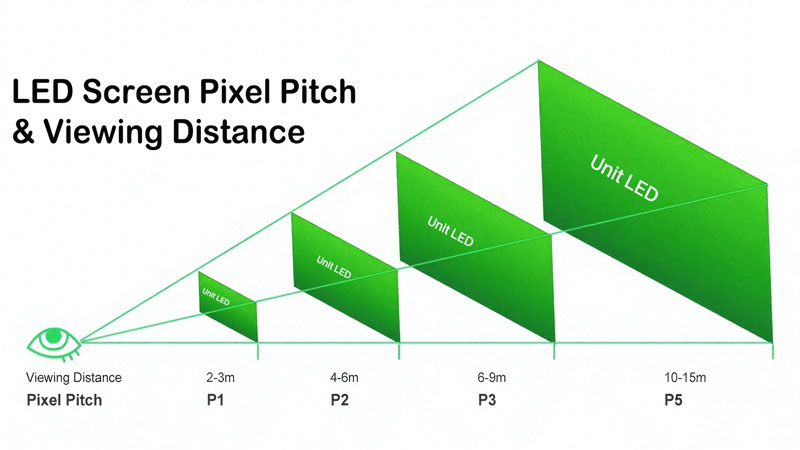
Pixel pitch refers to the physical distance (in millimeters) between the centers of adjacent LED pixels. A smaller pitch (e.g., 0.6–2.5 mm) delivers higher pixel density and sharper images, allowing viewers to sit closer without being able to detect individual pixels. Conversely, larger pitches (e.g., 2.5 mm or 3.9 mm) are well-suited for arenas or outdoor signage where viewers are positioned farther away.
Minimum viewing distance ≈ pixel pitch (mm) × 1 (meters) or × 10 (feet)
For example, a P2 mm screen should be viewed from at least ~2 m (6–7 ft).
② Brightness & Color Accuracy
LED screen brightness, measured in nits (cd/m²), determines how well a screen handles ambient light. Indoor screens generally range from 800 to 1,500 nits, while outdoor models can exceed 5,000 nits to combat direct sunlight.
Color accuracy refers to how faithfully colors are reproduced, typically gauged by ΔE, with lower values indicating more faithful rendering.
High brightness LED screen ensures legibility in various lighting conditions, while advanced calibration tools—such as 14 or 16 bit color processing—deliver superior color accuracy, wide color gamut coverage, and smooth gradients.
③ Refresh Rate & Response Time
Refresh rate indicates how many times per second the display redraws its image, with modern LED controllers supporting 3,840 Hz or higher. Higher rates minimize flicker and produce smooth motion to eliminate flicker, even under slow‑motion camera capture.
Response time describes how quickly each pixel transitions from dark to bright. Fast response (<1 ms) reduces motion blur, critical for dynamic content, gaming, and broadcasts.

Understanding pixel pitch, brightness, color fidelity, refresh rate, and response time provides a solid foundation. These interlinked specs influence sharpness, visibility, realism, and the overall viewer experience, especially in a high-resolution 4K LED display setup.
2. What is a 4K LED Screen?
What is LED screen resolution? What is 4K resolution? 4K resolution, 3,840×2,160 pixels, has an extremely high pixel density, which can show clear and delicate picture quality. It is usually combined with technologies such as HDR, high refresh rate and wide color gamut to present more realistic and vivid visual effects. At the same time, this resolution also puts forward higher technical standards for video decoding, transmission and playback devices.
What is a 4K LED screen? 4K LED screen is an ultra-high-definition display with a resolution of about 3,840 × 2,160 pixels and a total pixel count of about 8.3 million pixels, commonly referred to as “UHD”. Some professional-grade panels use a slightly wider DCI 4K format (4,096×2,160), which is consistent with digital cinema standards.
Unlike LCD screens that use backlights, each pixel on a direct-view LED screen is composed of independent LEDs, which can provide ultra-high brightness, realistic colors and seamless scalability.
4K LED video walls are built using multiple fine-pitch LED modules to create a massive, seamless display that retains stunning detail and clarity even when viewed up close. Ideal for environments that require large-scale, high-resolution visuals, such as control rooms, broadcast studios, corporate lobbies and high-end retail locations.
3. Advantages & Disadvantages of 4K LED Display
4K LED displays offer impressive visuals and scalable flexibility, making them suitable for high-end venues and events. However, their cost, hardware requirements, and installation complexity need careful consideration to ensure a worthwhile investment.
So, when considering a 4K LED screen, it’s crucial to weigh both its strengths and potential drawbacks:
Advantages
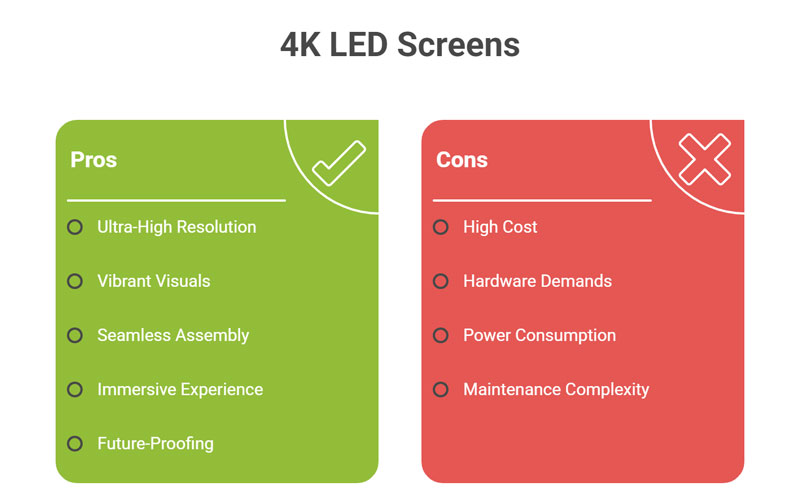
Ultra-High Resolution & Image Clarity: 4K resolution (3,840 × 2,160 or 4,096 × 2,160) delivers four times the detail of 1080p HD, revealing remarkable detail and clarity, even at close viewing distances.
Bright, Vibrant Visuals: 4K LED screen offers high brightness, deep contrast, and wide color gamut, exceeding traditional LCD or projector systems and ensuring vivid visuals in various lighting environments.
Scalable & Seamless: Modular fine-pitch LED panels easily assemble into large, seamless LED video walls with virtually no bezels, ideal for immersive installations, stage backdrops, and digital signage.
Enhanced Immersion: Finer pixels create lifelike visuals and immersive experiences.
Future–Proofing: Aligns with the growing 4K content ecosystem across streaming, gaming, and live events.
Disadvantages
High Cost: 4K LED panels are expensive, fine-pitch modules with ultra-high resolution that command premium pricing compared to HD or 1080p displays.
Hardware Demands: Driving 4K content requires powerful graphics processors (GPUs) and controller hardware.
Power & Thermal Requirements: Enhanced brightness and pixel density increase power consumption and heat output, mandating robust power supplies and effective thermal design to maintain stability.
Maintenance Complexity: Denser pixel arrangements can complicate cabling and servicing.
4. 4K vs 1080p, 2K, 8K LED Screen Comparison
Understanding how 4K LED screen compares to other popular resolutions is key when selecting an LED screen. Below is a comprehensive breakdown.
4.1 Resolution Overview
|
Resolution |
Pixels (W × H) |
Total Pixels (≈) |
|
1080p |
1920 × 1080 |
~2.07 million |
|
2K |
2048 × 1080 (DCI) |
~2.21 million |
|
4K UHD |
3840 × 2160 |
~8.2.9 million |
|
DCI 4K |
4096 × 2160 |
~8.85 million |
|
8K UHD |
7680 × 4320 |
~33.18 million |
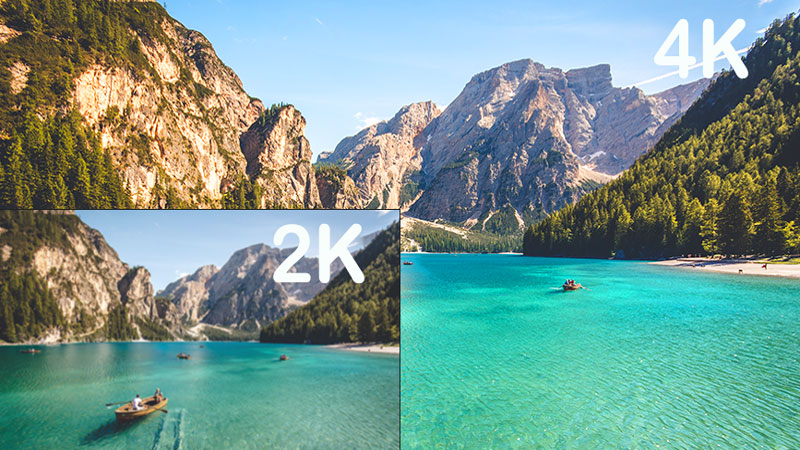
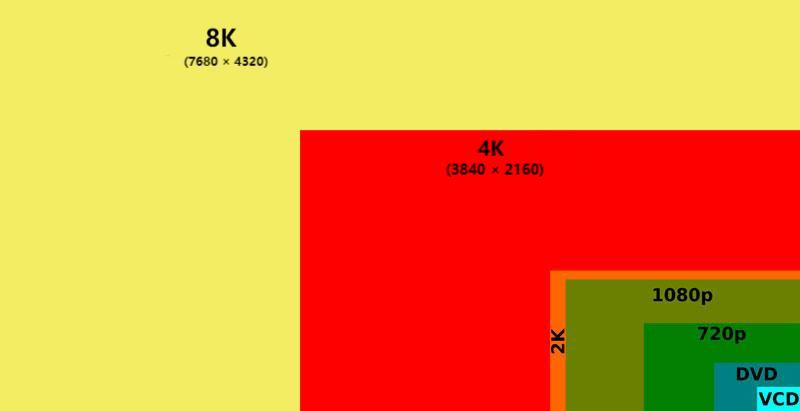
1080p (Full HD) remains widely used. Excellent for smaller screens (<50″ or P2–P3 fine-pitch LED) but becomes pixelated at close range on large video walls.
2K (2048×1080) is primarily a cinema standard but rare in LED display systems.
4K UHD (3840×2160) doubles both dimensions of 1080p, giving four times the detail, making it a popular choice for clarity and immersive display.
DCI 4K (4096×2160) is a film industry standard with a slightly wider aspect (~1.9:1).
8K UHD offers four times more pixels than 4K and is best suited for massive screens or future-proof installations.
4.2 Resolution vs Viewing Distance
1080p displays appear sharp at typical viewing distances on screens up to 50″. Beyond that, pixelation may occur.
4K on large screens (>50″) reveals finer texture, clearer text, and smoother lines when viewed up close. At 4 feet on a 55″ screen, 4K offers a noticeably cleaner image.
8K shows noticeable benefits only on very large screens (>80″) at close range < 3 ft.
4.3 Comparison Table
This comparison helps you match your application, viewing distances, and budget to the right resolution LED screen display choice.
|
Resolution |
Total Pixels |
Best Use Cases |
Pros & Cons |
|
1080p |
~2 MP |
Small indoor panels; low cost |
Affordable and common, but pixelation occurs at close range |
|
2K |
~2.2 MP |
Niche-cinema, some pro setups |
Cinema-focused but rare in LED signage |
|
4K |
~8.3 MP |
LED video walls, broadcast, corporate |
Sharp, immersive, content-rich-best balance of quality and price |
|
DCI 4K |
~8.8 MP |
Digital cinema |
Ideal cinema format; limited content availability |
|
8K |
~33 MP |
Ultra-large displays, future-proofing |
Exceptional clarity, but costly and lacking content |
5. How is 4K Resolution Used in LED Screens?
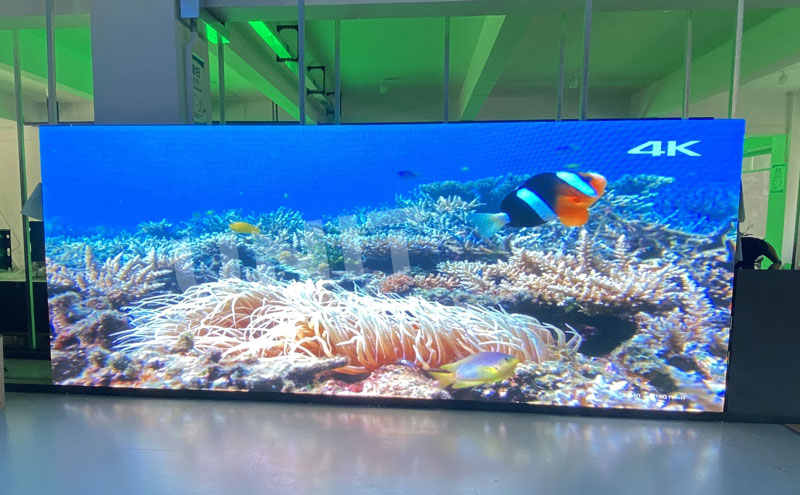
A 4K LED screen utilizes ultra-high-definition panels to deliver sharp, detailed content across large, seamless video walls. These displays maintain clarity and depth, even when viewed up close, making them ideal for immersive environments.
Key Implementation Methods
① Fine-Pitch Module Assembly
LED screens achieve 4K resolution by assembling arrays of small pixel-pitch modules (P0.9–P2.5 mm). A P1.2 mm module array of 8 × 4 panels, for instance, results in approximately 3,840 × 2,160 pixels, enough for a true 4K display.
② White-Balance Calibration & HDR Compatibility
Modern 4K LED walls support HDR10 and high contrast (≥ 5,000:1), enabling vibrant HDR content playback. Combined with pixel-level calibration, this ensures consistent color accuracy and dynamic range across large screens like jumbotron screens.
③ High Refresh Rate for Broadcast & Camera Shot Stability
To avoid flicker and motion artifacts in on-camera environments, 4K LED walls run at high refresh rates (≥ 3,840 Hz). This eliminates strobe effects and provides smooth playback during filming or live streaming.
④ Scalable Configurations & Mixed Aspect Ratios
Whether standalone screens or complex mural setups, 4K LED systems adapt to varied dimensions. Controllers enable precise scaling and synchronization to accommodate mixed panel orientations, maintaining pixel-perfect image integrity.
In summary, 4K LED screen leverages fine-pitch modules, HDR support, high refresh rates, and modular scalability to deliver stunning, cinematic-level visuals in diverse professional and commercial settings.
6. 4K LED Screen Applications
4K LED screen provides unmatched visual clarity and flexibility, making it ideal for a wide range of environments:
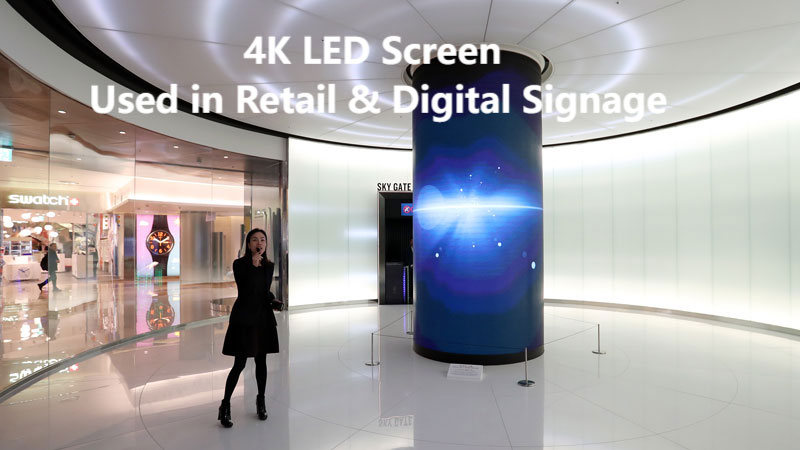
① Retail & Digital Signage
Perfect for malls, storefronts, and exhibition halls, 4K LED screen captures eye-catching product visuals and promotional content with crisp resolution and vibrant colors
② Control Rooms & Command Centers
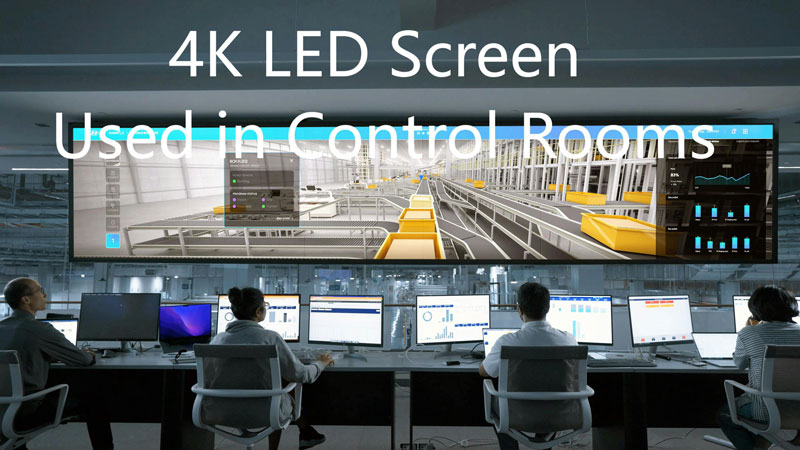
High pixel density ensures that critical dashboards, maps, and live feeds remain legible even on large walls. Real-time monitoring and situational awareness are enhanced, thanks to 4K’s detail and clarity.
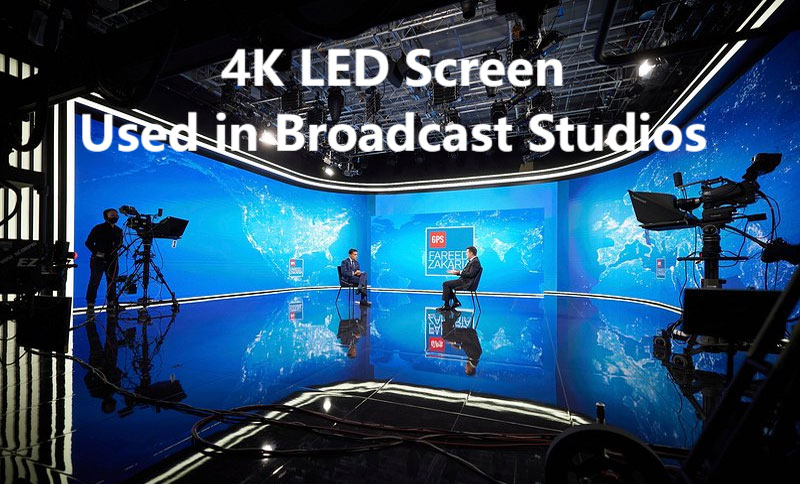
③ Broadcast Studios & Virtual Production
4K LED video walls act as rich, flicker-free backdrops during live broadcasts. Their high refresh rates and detail make them a favorite among newsrooms and film sets.
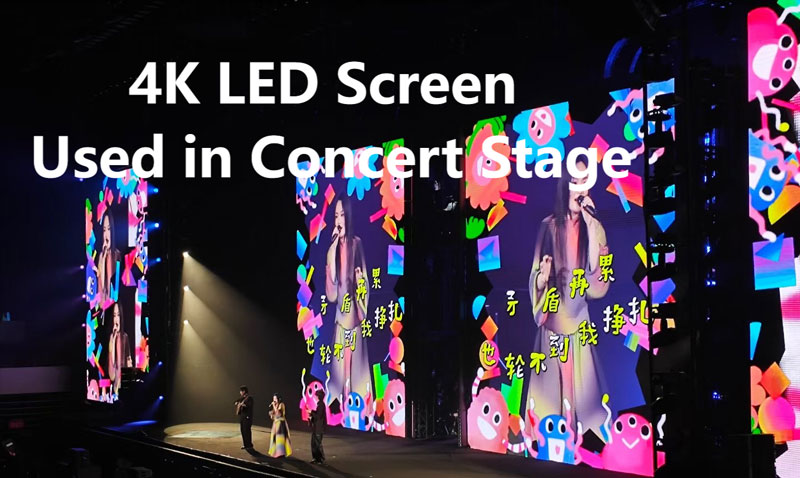
④ Events & Staging
In concerts, trade shows, and conferences, 4K LED screens provide immersive environments with dynamic visuals that remain sharp even at close viewing distances.
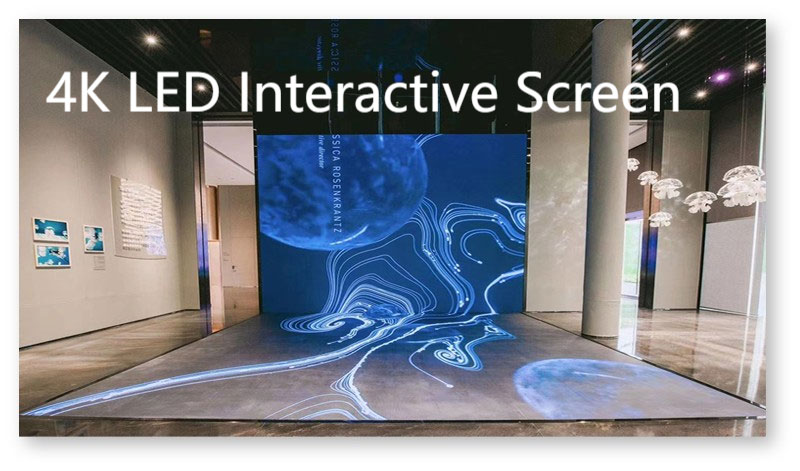
⑤ Education & Museums
Interactive displays and immersive installations in lecture halls and galleries benefit from the resolution and scalability of a 4K LED display, enriching educational and cultural experiences.
Here is a brief summary of 4K LED screen applications:
|
Application Area |
Benefit of 4K LED Resolution |
|
1. Retail & Digital Signage |
Sharp, attention-grabbing visuals for product and brand messaging |
|
2. Control & Command |
Detailed data and video surveillance displayed clearly |
|
3. Broadcast & Virtual Production |
Flicker-free, high-detail backgrounds ideal for cameras |
|
4. Events & Staging |
Immersive content that looks great even close-up |
|
5. Education & Museums |
Interactive, high-resolution displays for teaching and exhibits |
Whether for impactful advertising, mission-critical control rooms, professional broadcast environments, lively events, or immersive educational settings, 4K LED displays stand out by providing superior clarity, smooth visuals, and flexible deployment options.
7. How to Choose the Right 4K LED Display?
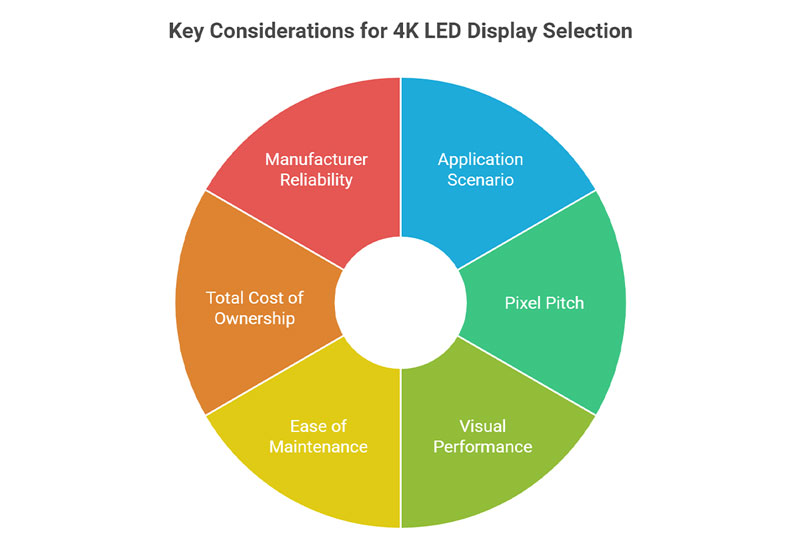
Choosing the ideal 4K LED display involves evaluating technical specifications, intended application, and budget. The right screen will deliver not only exceptional visual quality but also long-term performance and ease of maintenance.
① Define Your Application Scenario
Start by identifying your use case, whether it’s for indoor corporate meetings, outdoor advertising, control rooms, or immersive events. Each environment requires different brightness levels, pixel pitch, and viewing angles.
② Select the Right Pixel Pitch
Pixel pitch determines image clarity at different viewing distances. For indoor installations where viewers are closer, a fine pixel pitch like P1.2–P1.8 mm is ideal. For outdoor applications or long viewing distances, P2.5–P4 mm offers a good balance between resolution and cost.
③ Prioritize Visual Performance
Ensure the display supports true 4K resolution (3840×2160), high brightness (at least 1000 nits for indoor; 3500–5000 nits for outdoor), HDR support, and high refresh rates (≥3840Hz) for flicker-free performance, especially important for broadcast or camera environments.
④ Ease of Maintenance Consider
Opt for LED displays with front-access modules and modular designs to minimize downtime and simplify repairs.
⑤ Compare Total Cost of Ownership
Factor in not just purchase price, but also installation complexity, energy efficiency, service life, and support options.
⑥ Choose a Reliable Manufacturer & Product
Choose a supplier that offers strong after-sales service, technical support, and easy spare parts replacement. Consider products with high protection, front maintenance design, and seamless splicing for true UHD output.
UNIT 4K LED Screen Solutions
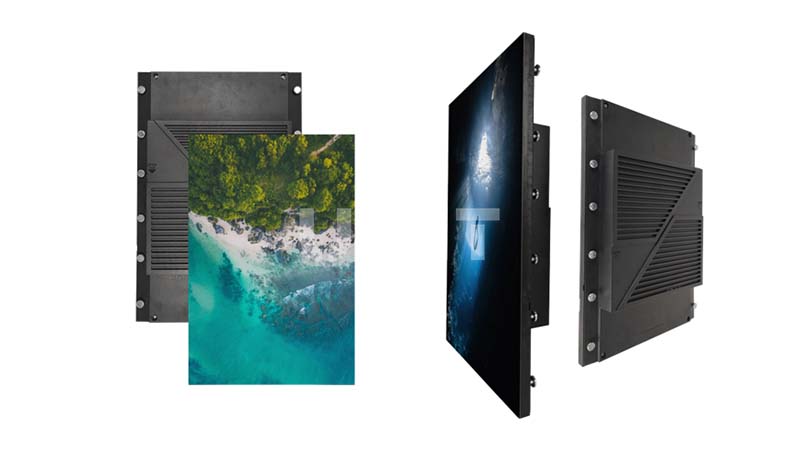
IF320 Series
- 320×480mm Standard Size Cabinet
- 3 in 1 High-Integration Board Design
- Cable-Free Hard Connection
- Magnetic Installation
- ≥3840Hz High Refresh Rate
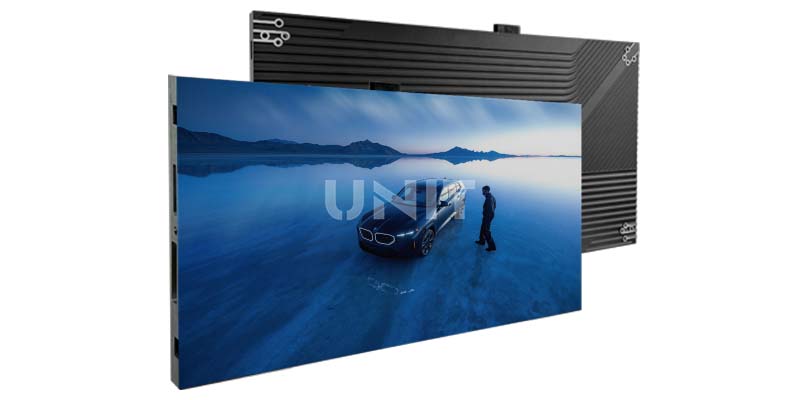
MA600 Series
- 600×337.5mm Cabinet Standard Size
- 16:9 Cabinet Size Design
- Frontal Service Design
- Ultra LightWeight Cabinet
- High Definition Quality in HD LED Display
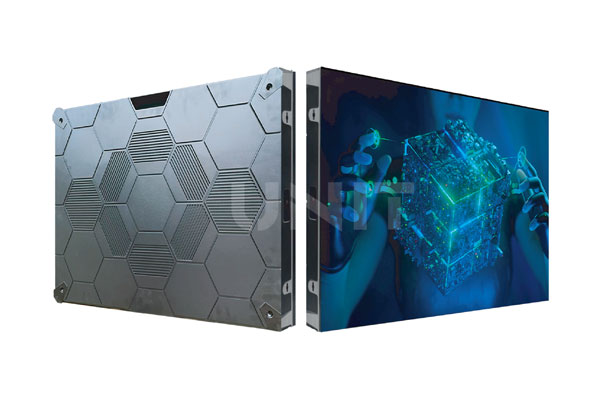
MA640 Series
- 640×480mm Standard Cabinet Size
- 4:3 Cabinet Design
- Frontal Service Design
- Magnesium Alloy Cabinet Design
- High Refresh Rate to 3840Hz
8. 4K LED Screen Price: Buying Guide & Budget Considerations
Planning for a 4K LED screen requires careful budgeting beyond just the upfront screen cost. Prices vary widely based on pixel pitch, LED screen size, usage environment, and customization.
① Price by Pixel Pitch
The finer the pixel pitch, the higher the resolution, and the higher the price:
- P1.2–P1.8 mm (Ultra-fine indoor): $1,200–$4,500 per m²
- P2.5–P3.9 mm (Mid-range indoor): $600–$1,800 per m²
- P4+ mm (Outdoor/large-venue): $300–$900 per m² plus extra for waterproofing and ruggedization
② Brightness and LED Technology
Indoor brightness (800–1,500 nits) typically adds about 20% less cost than higher-brightness models.
Outdoor-grade brightness (≥5,000 nits) screens include rugged housing (IP65+), UV protection, and thermal management, raising costs significantly.
③ Additional Cost Factors
|
Cost Component |
Estimate & Notes |
|
Control System (CMS, sending cards) |
$1,000-$5,000 depending on complexity |
|
Mounting & Structure |
5-15% of panel cost; higher for curved or outdoor setups |
|
Installation Labor |
$30-$60/m² for indoor, up to $200/m² for outdoor structural setups |
|
Power & Cooling |
Indoor: 200-400 W/m²; Outdoor: 500-800 W/m², add energy cost over years |
|
Shipping & Taxes |
Varies with weight, distance, and import fees |
④ Total Cost of Ownership
True ownership cost goes beyond purchase:
- Annual maintenance: 5–10% of upfront cost for cleaning, calibration, and repairs
- Power usage: Outdoor screens can add $1,000–$2,000 annually in electricity
- Longevity: High-quality panels may last 100,000+ hours, delivering better ROI over time
⑤ Buying Tips
- Match pixel pitch and brightness to your viewing distance and ambient conditions.
- Budget for structure, control systems, and installation, not just the panels.
- Evaluate TCO: energy, maintenance, and lifespan can outweigh the purchase price.
- Seek quotes with full transparency on hidden costs: support, cables, power, calibration, permits, and taxes.
By considering these factors, you’ll make an informed purchase, balancing performance, durability, and long-term value for your 4K LED screen project.
9. Installation & Maintenance Tips
Proper installation and routine maintenance ensure your 4K LED screen remains sharp and reliable for years.
9.1 Installation Best Practices
Site Assessment & Support Structure: Evaluate mounting location for weight, structural reinforcement, cable access, and ventilation space, essential for safe, long-lasting installation.
Panel Configuration & Alignment: Use precision alignment tools and follow manufacturer guidelines to ensure panels fit seamlessly without visible gaps or skew.
Power & Connectivity Setup: Ensure a stable power supply with correct grounding and surge protection. Confirm data cables are secure and signal strength is maintained from the input through the control system.
Testing & Calibration: After installation, run white-field and calibration patterns to align brightness, color, and image uniformity using factory or third-party tools.
9.2 Maintenance Best Practices
Regular Cleaning: Power down before dusting with a microfiber cloth. Use gentle solutions for deeper cleaning, and avoid harsh chemicals or moisture ingress.
Routine Inspections: Check panels, cables, connections, firmware updates, and environmental factors (temperature/humidity) periodically.
Professional Support: Schedule annual professional inspections for recalibration, module replacement, and diagnosis of component degradation. Keeps performance consistent and reduces downtime.
10. Future Trends in 4K LED Video Wall Technology
The future of 4K LED video wall technology is being shaped by advancements in AI integration, ultra-fine pixel pitch, and MicroLED innovation.
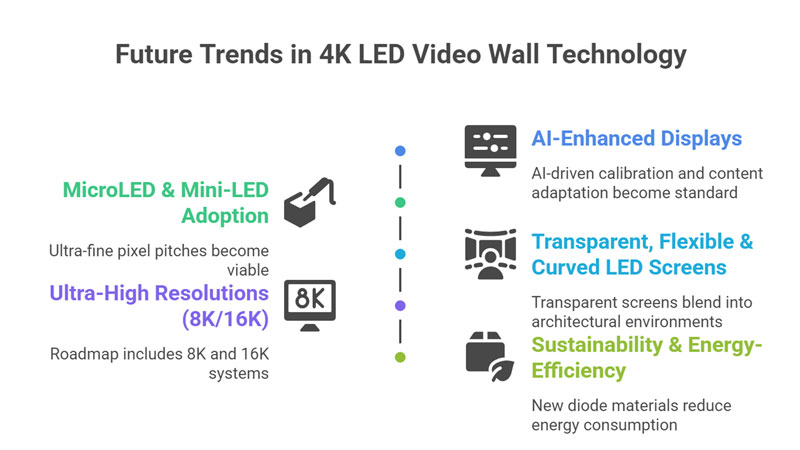
● AI-Enhanced Displays – AI-driven calibration and content adaptation will become standard. Smart screens will use real-time analytics to optimize brightness, content, and messaging based on audience and environmental data.
● MicroLED & Mini-LED Adoption – Ultra-fine pixel pitches (≤0.5 mm) are becoming viable, supported now by breakthroughs in mass manufacturing and lower MicroLED costs.
● Transparent, Flexible & Curved LED Screens – Transparent screens that blend seamlessly into architectural environments, along with curved and wrap-around configurations, continue to gain traction.
● Ultra-High Resolutions (8K/16K) – Though 4K LED screens remain dominant, the roadmap includes 8K and 16K systems for specialized, large-scale installations.
● Sustainability & Energy-Efficiency – New diode materials and smart power management will reduce energy consumption and support eco-friendly certifications.
11. FAQs
Q1. Is 4K LED better than 4K OLED?
LEDs excel in brightness and durability; OLEDs have better blacks but suffer from burn-in.
.elementskit-card END
Q2. Is a 4K LED screen the same as a 4K TV?
Not exactly. While both support 3840×2160 resolution, a 4K LED screen is usually a modular display used in commercial or large-format applications, offering higher brightness, larger size options, and better scalability.
.elementskit-card END
Q3. Does higher resolution impact brightness?
Not directly, brightness depends on LED output and drive current. However, finer pixel pitches have smaller individual LEDs, which may require higher drive currents for equivalent brightness.
.elementskit-card END
Q4. Can I use a 4K LED screen outdoors?
Yes, if it has 5,000+ nits brightness and IP65 waterproofing.
.elementskit-card END
Q5. Is 4K necessary for all applications?
Not always. For large outdoor or long-distance viewing, 1080p may be sufficient. 4K is ideal for indoor displays, control rooms, retail, and any use requiring high detail.
.elementskit-card END
Q6. How long do 4K LED screens last?
Typically 100,000 hours (10+ years at 10 hours/day).
.elementskit-card END
Q7. Do I need special content for a 4K LED screen?
Yes, to experience the full benefits, your media should be created or rendered in 4K resolution.
.elementskit-card END
12. To Sum up
4K LED screen delivers unmatched clarity, making it ideal for digital signage, broadcasting, and immersive experiences. When choosing one, prioritize pixel pitch, brightness, and refresh rate based on your needs.
By understanding specifications, application needs, and budgeting considerations, you can make informed decisions when choosing the right 4K LED screen. As technology evolves, 4K LED video walls are set to become even more efficient, affordable, and widely adopted.