Indoor/Outdoor Full Color LED Display Factory From China
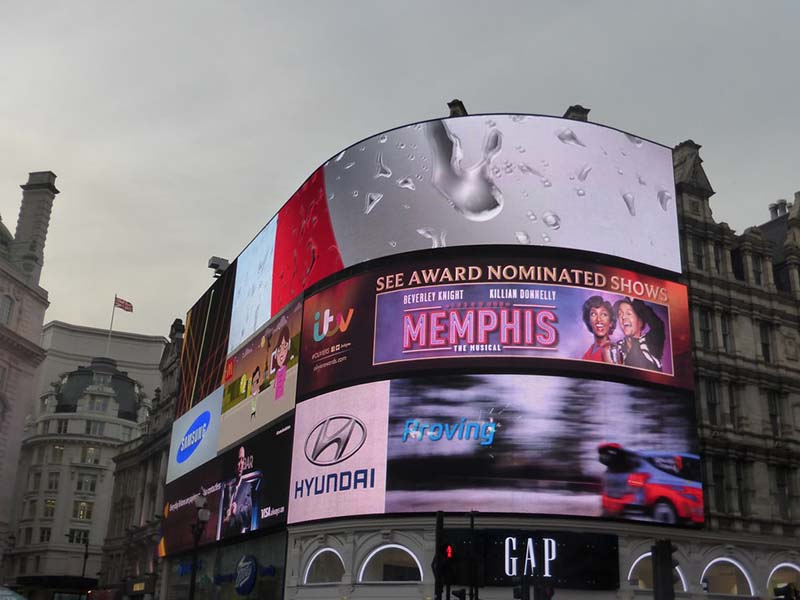
Full Color LED Display
-Modular cabinet size
-Ultra-lightweight & slim profile
-Innovative structural design
-Indoor & outdoor versatility
-3840Hz high refresh rate
-Customizable solutions
Full Color LED Screen Factory
From Shenzhen, China
UNIT LED is a leading manufacturer of full-color LED screens based in Shenzhen, China. Specializing in high-quality LED display solutions.
We offer a wide range of products for both indoor and outdoor applications.
Our LED display factory is equipped with advanced technology and skilled professionals, ensuring top-tier performance, energy efficiency, and durability in every display we produce.
Whether for advertising, sports venues, or entertainment, UNIT LED is committed to delivering innovative, reliable, and visually stunning LED screen solutions.
Get Quote Now!
https://www.youtube.com/watch?v=j3dA90joOfQ
Rental Full Color LED Displays
UNIT LED offers a diverse range of rental full-color LED displays designed for temporary events and flexible installations.
Our rental solutions include both indoor and outdoor displays, ideal for concerts, trade shows, sports events, and corporate functions.
MY Series
IF Design Award 2023
Support Right Angle Installation
Innovative Structural Design
MS series
Lightweight and Thin
Curved Installation
Right-angle Installation
NG series
500*500/1000mm Cabinet Size
Ultra-lightweight & Ultra-thin
Excellent performance
ME series
500*500/1000mm Size
P1.953mm, P2.604mm, P2.976mm, P3.91mm, P4.81mm
Ask For More Details
Indoor Full Color LED Displays
Whether you’re setting up for retail, corporate presentations, or exhibitions, UNIT’s indoor full color LED displays provide versatile solutions that blend seamlessly into any environment.
With advanced technology and durable construction, our displays guarantee long-lasting reliability and outstanding visual impact.
HD Indoor Full Color LED Display
640×480mm Cabinet
4:3 LED Display
Magnesium Alloy Cabinet
16:9 Indoor Full Color LED Display
600×337.5mm Cabinet
16:9 LED Screen
Die Casting Aluminum Cabinet
P2.5 Full Color LED Display
480×480mm Cabinet
240×240mm Panel
Magnesium Alloy Cabinet
Fixed Indoor Full Color LED Display
1000*250mm Cabinet
Indoor Fixed LED Display
Aluminum Cabinet
Ask For More Details
Outdoor Full Color LED Displays
Available in a variety of pixel pitches and cabinet sizes, our outdoor displays are perfect for digital billboards, sports arenas, and public signage.
With high brightness and exceptional durability, UNIT’s products ensure clear, vivid visuals day or night.
UNIT LED has the right product to meet your needs with unmatched quality and performance.
ES960 Outdoor LED Display
960x960mm Cabinet
Aluminum Cabinet
480×320mm Dual-service Panel
EV960 Outdoor LED Display
960×960mm Cabinet
480×320mm Module
Aluminum/Steel Cabinet
OF800 Outdoor LED Display
800×900/1200×87mm Cabinet
Aluminum Profiles Cabinet
400×300mm Panel
Perimeter Full Color LED Display
Anti-collision Design
Stadium LED Display
Best Solution For Football
Ask For More Details
LED PANEL PRICE
Just fill the sizes, and get your led screen budget right now !
Quickly See Features of Full Color LED Display
Modular cabinet size: 500×500mm / 500×1000mm and more size (customizable)
Ultra-lightweight & slim profile: Easy installation and portability, ideal for complex spaces.
Innovative structural design: Seamless splicing, front/rear maintenance, and weatherproof options.
Indoor & outdoor versatility: High brightness (≥6000nits for outdoor), IP65/IP67 protection, wide viewing angles.
3840Hz high refresh rate: Flicker-free performance for cameras and smooth visuals.
Customizable solutions: P1.2-P10 pixel pitches, curved/transparent/rental models, and interactive features.
Full Color LED Screen
- Variety of Pixel Pitches and Cabinet Sizes
- Dual Service with Front and Rear Maintenance
- Wide Applications: Retail, Advertising and More
- Unmatched Quality and Performance
- Indoor & Outdoor is Available
- CE,Rohs Approved
- 3 Year Warranty and 5% Spare Part
Get Quote Now
Learn More About Indoor/Outdoor Full Color LED Display!
Imagine a screen that can weave 281 trillion colors into flowing light and shadows like a magician. That’s the magic of full color LED displays!
These displays are more than just screens – they are dynamic storytelling tools that capture attention and change the way we experience visual content.
From advertising to entertainment, full color LED displays have redefined digital communications. But what makes them so effective?
How do they work? And why are they the first choice for high-impact visuals?
In this guide, we’ll explore everything you need to know about full color LED displays, from their technology to practical applications.
Click Here to Jump!
1. Understanding Full-Color LED Displays
3. Types of Full-Color LED Displays
5. Applications of Full-Color LED Displays
7. How to Choose the Right Full Color LED Display?
1. Understanding Full-Color LED Displays
1.1 Definition and Basic Working Principles
Full-color LED displays use a combination of red, green, and blue (RGB) LEDs to produce a wide range of colors.
These LEDs are arranged in tiny pixels that work together to form a full image.
By adjusting the brightness of each color component (RGB), the display can produce millions of different colors. The more precise the control of each LED, the better the image quality.
1.2 Comparison Between Full-Color and Single-Color LED Displays
Single-color LED displays convey information using only one color, typically red, green, or amber.
They are often used for simple text or graphics, such as scoreboards or traffic signs.
In contrast, full-color LED displays offer a richer viewing experience by displaying images, videos, and detailed graphics in a full spectrum of colors.
So, a full-color LED display screen is more suitable for dynamic content, including advertising, promotions, and entertainment.
2. Technological Components
2.1 RGB LED Configuration and Its Role in Color Production
RGB LEDs are the backbone of full-color LED displays. These displays use red, green, and blue LEDs to create a wide spectrum of colors.
Each pixel on a full-color LED display consists of these three LEDs. By varying the intensity of each color, the display can produce millions of different shades.
The combination of RGB LEDs allows for vibrant, high-quality visuals that are essential for applications like digital billboards and interactive screens.
2.2 Advancements in LED Backlighting
In addition to RGB LED technology, recent advancements in LED backlighting have significantly improved color accuracy and brightness.
RGB LED backlights, which use red, green, and blue LEDs behind the screen, help deliver richer and more accurate colors.
This technology allows displays to achieve higher brightness levels while maintaining energy efficiency.
The result is displays that offer better color reproduction and sharper images, even in bright outdoor environments.
2.3 How Does a Full Color LED Display Work?
A full color LED display uses the RGB (Red, Green, Blue) color model to generate a wide spectrum of vibrant colors. Each pixel on the screen consists of red, green, and blue LED diodes.
By adjusting the brightness of each diode, the display creates millions of color combinations, resulting in vivid and lifelike visuals.
These displays are powered by a central control system, which processes video signals and sends instructions to the LED modules. Each module is a building block of the screen, containing rows of LED pixels arranged with precise spacing (known as pixel pitch).
The synchronization of the controller and LED driver ensures smooth image rendering, excellent color reproduction, and seamless video playback — even on large-scale LED video walls.
Whether it’s an RGB LED display for indoor advertising or a high-resolution LED screen for outdoor events, the core working principle remains the same: fast signal processing, accurate color control, and modular scalability.
3. Types of Full-Color LED Displays
3.1 Indoor vs. Outdoor LED Displays
Indoor full-color LED displays are designed to operate in controlled environments, offering high resolution and sharp image quality.
They are often used in shopping malls, airports, or conference rooms.
Outdoor LED screens, on the other hand, are built to withstand various weather conditions and have higher brightness levels to be visible in sunlight.
Outdoor full-color LED displays are typically used for digital billboards, sports arenas, and public advertising.
|
Feature |
Indoor Full Color LED Screen |
Outdoor Full Color LED Display |
|
Brightness |
Lower (suitable for controlled lighting) |
Higher brightness to combat direct sunlight |
|
Waterproof Rating |
Typically not waterproof |
IP65+ waterproof and dustproof |
|
Pixel Pitch |
Smaller (e.g., P1.2, P2.5) for high-resolution |
Larger (e.g., P4, P6) for visibility from a distance |
|
Applications |
Shopping malls, exhibitions, stage backgrounds |
Billboards, stadiums, building façades |
If you’re searching for a full color LED display for advertising, UNIT LED offers both indoor and outdoor full color LED displays tailored to your needs.
3.2 DIP vs SMD LED Display
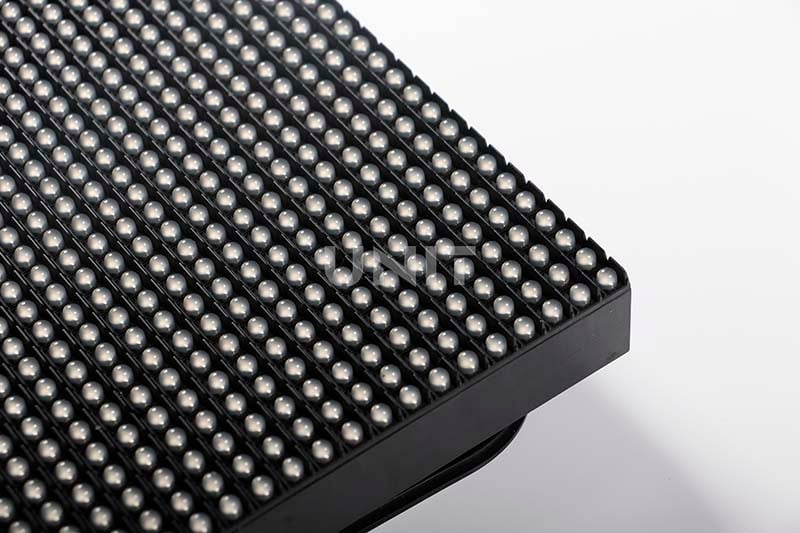
DIP LED Display
DIP technology is one of the earliest forms of LED displays. In DIP displays, the LEDs are housed in a traditional dual in-line package, with leads that go through the circuit board.
This design allows for easy replacement of individual LEDs, which makes maintenance relatively simple.
DIP LEDs are known for their high brightness, making them ideal for outdoor applications where sunlight visibility is a priority.
Advantages of DIP LED Displays
– High brightness and visibility, even in direct sunlight
– Easier to repair or replace individual LEDs
– Longer lifespan, especially for outdoor use
Disadvantages of DIP LED Displays
– Bulkier and heavier compared to SMD displays
– Lower resolution, which may not be ideal for applications requiring high pixel density
– Higher power consumption
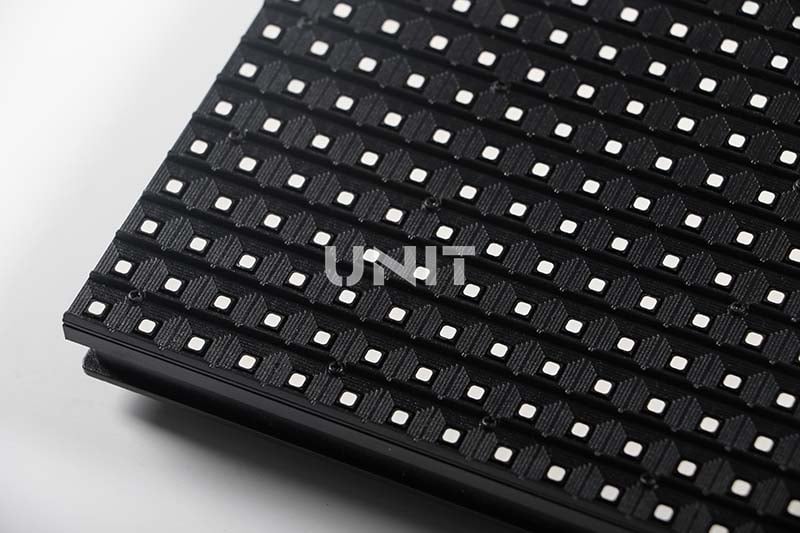
SMD LED Display
SMD LED displays use surface-mount technology, where the LEDs are placed directly onto the surface of the circuit board.
SMD LEDs are smaller and more compact, allowing for higher resolution and slimmer designs.
These displays are often used for both indoor and outdoor applications due to their flexibility in offering high-quality visuals in various pixel pitches.
Advantages of SMD LED Displays
– Compact and lightweight design, allowing for thinner displays
– Higher resolution, ideal for indoor applications with close viewing distances
– Lower power consumption compared to DIP LEDs
– Better color accuracy and uniformity
Disadvantages of SMD LED Displays
– Less bright than DIP LEDs, making them less suitable for direct sunlight exposure
– More challenging to repair as the LEDs are smaller and mounted directly onto the circuit board
3.3 GOB vs COB LED Display
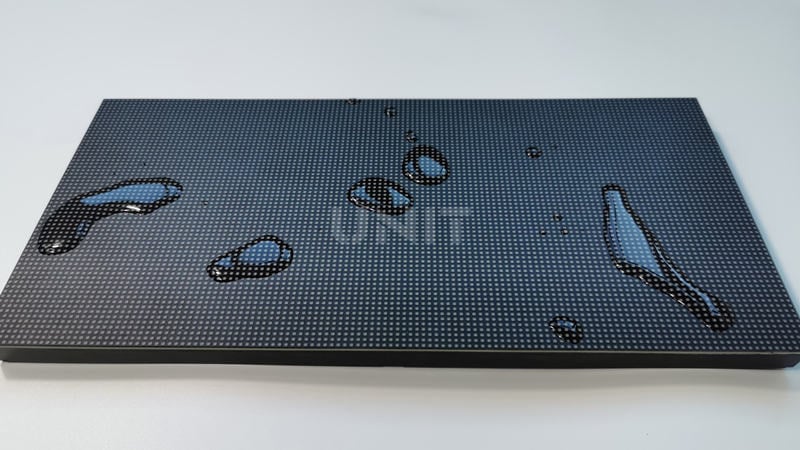
GOB LED Display
GOB (Glue on Board) LED display is an advanced LED encapsulation technology where a transparent, durable epoxy glue is applied over the entire LED module surface.
This protective layer enhances the screen’s resistance against moisture, dust, impact, and static electricity.
GOB LED displays are particularly suitable for interactive LED floors, rental displays, and outdoor or semi-outdoor environments, where high durability and user interaction are essential.
– High protection against water, dust, and physical impact
– Ideal for interactive and high-traffic environments
– Extended lifespan and reduced maintenance costs
– Works well in harsh environments and rental use
Disadvantages of GOB LED Displays
– A slightly glossy surface may affect viewing angles
– Heat dissipation is not as efficient as other technologies
– Limited availability in ultra-fine pitch models
COB LED Display
COB (Chip on Board) LED display is a cutting-edge encapsulation method where LED chips are mounted directly onto the PCB and sealed under a uniform resin layer.
This design results in ultra-fine pitch, high-density LED displays with superior protection and thermal management.
COB technology is widely used in fine pitch indoor LED displays, control rooms, broadcast studios, and retail environments that demand crystal-clear visuals and long-term reliability.
Advantages of COB LED Displays
– Ultra-fine pitch support for 4K/8K resolution
– Excellent heat dissipation and reliability
– Seamless surface with anti-static, dustproof, and anti-collision features
– Low failure rate, perfect for high-end indoor applications
Disadvantages of COB LED Displays
– Higher production cost compared to other technologies
– Difficult to repair, as individual LEDs cannot be easily replaced
– Not yet mainstream for large outdoor displays
GOB vs COB: Which One Should You Choose?
If your project requires outdoor durability and physical interaction (such as LED floor tiles or rental screens), GOB LED displays are a cost-effective and robust solution.
On the other hand, if your focus is on ultra-high resolution, fine pitch, and premium indoor performance, COB LED technology is the ideal choice.
https://youtu.be/HVjGpVWpG3Mhttps://youtu.be/_-2dkXX85vg
3.4 Fixed Installation vs. Rental Displays
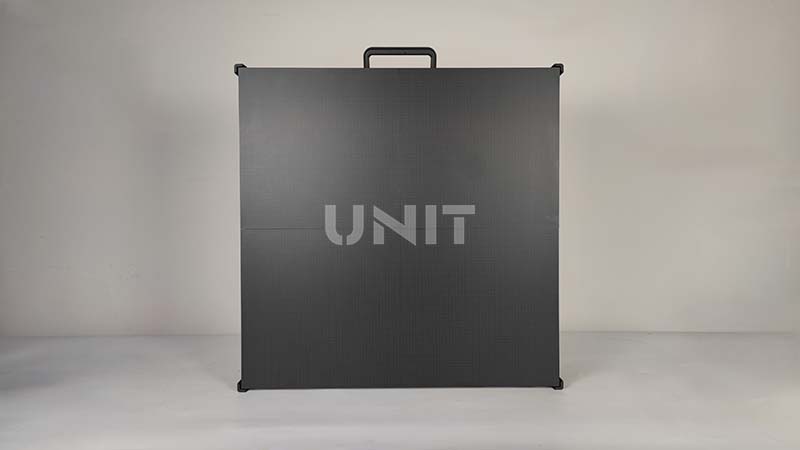
Fixed installation LED displays are permanently installed and are typically used for long-term projects. Like advertising boards or stadium scoreboards.
Rental LED displays, however, are designed to be easily assembled and disassembled. They are ideal for temporary events such as concerts, trade shows, or sporting events.
Rental displays offer flexibility and cost-effectiveness for short-term use.
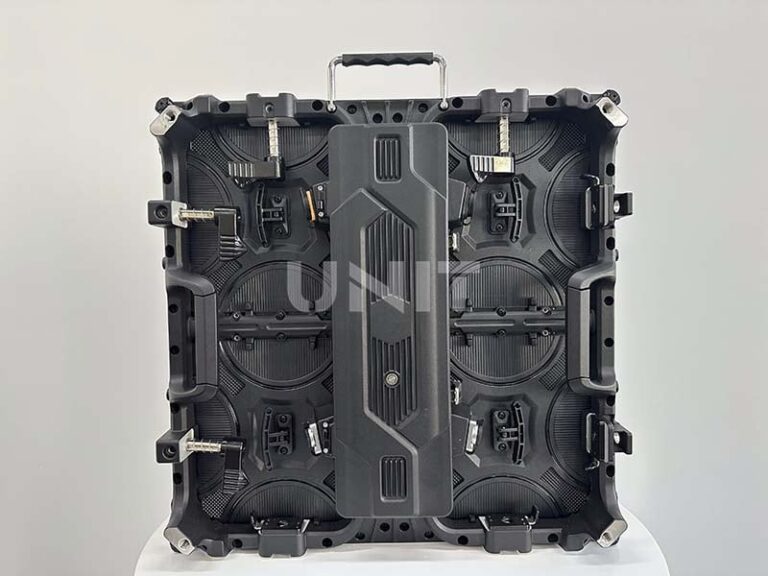
500*500mm Rental LED Panel
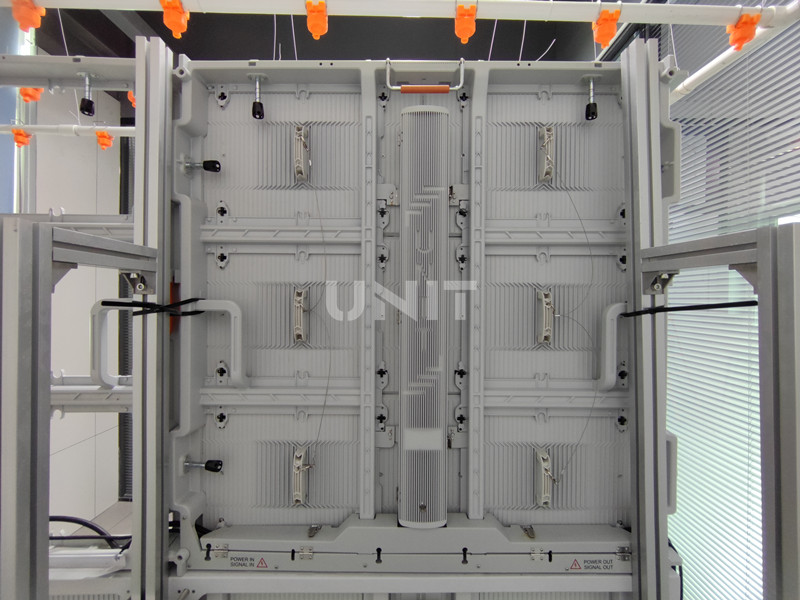
960*960mm Fixed LED Display
3.5 Emerging Technologies: Mini-LED and MicroLED Displays
Mini-LED and MicroLED are the latest advancements in LED technology.
Mini-LEDs are smaller than traditional LEDs. It can better control light and color and enhance contrast ratios and overall image quality.
MicroLED, even smaller than Mini-LED, offers further improvements in brightness, color accuracy, and energy efficiency.
Both technologies are paving the way for the next generation of high-performance displays. They offer even more vivid colors and sharper images for a variety of applications.
3.6 Monochrome vs. Dual-color vs. Full Color
Understanding the differences between various LED display types can help you make an informed decision:
Monochrome LED Display: Displays only a single color (typically red or green). It’s mainly used for text or basic symbols in traffic signs or factory settings.
Dual-color LED Display: Combines red and green diodes to display more detailed information, still limited in color range.
Full Color LED Display: Utilizes RGB diodes to deliver full-color visuals and videos. Ideal for dynamic advertising, branding, and immersive viewing experiences.
4. Key Features and Benefits
4.1 High Brightness and Contrast
Full-color LED displays offer excellent brightness. It is ideal for both indoor and outdoor environments.
These displays maintain clarity and vividness, whether placed in bright sunlight or a dimly lit room.
Their high contrast ensures that images and videos stand out with crisp details and deep blacks.
4.2 Wide Color Gamut and Color Accuracy
One of the outstanding features of RGB LED display boards is their ability to produce a wide color gamut and provide vibrant colors.
RGB technology provides accurate and lifelike colors. This is especially important in industries such as advertising and entertainment. Because color accuracy is essential to attract attention and engage the audience.
4.3 Energy Efficiency and Lifespan
LED technology is well known for its energy efficiency. Full color LED panels consume less power than traditional displays while still maintaining high brightness and performance.
In addition, these displays are durable and have a longer lifespan than other display technologies.
This can reduce maintenance costs and provide a better return on investment over time.
4.4 Scalability and Flexibility in Design
High-resolution full color LED screen is highly scalable.
This means they can be expanded or resized to suit a variety of applications.
Whether you need a small display for a retail store or a large digital billboard for a sports stadium, LED screen suppliers can provide customized services.
Their design flexibility allows for creative installations, such as curved or shaped screens.
Enhance visual impact while meeting the individual requirements of the project.
5. Applications of Full-Color LED Screen
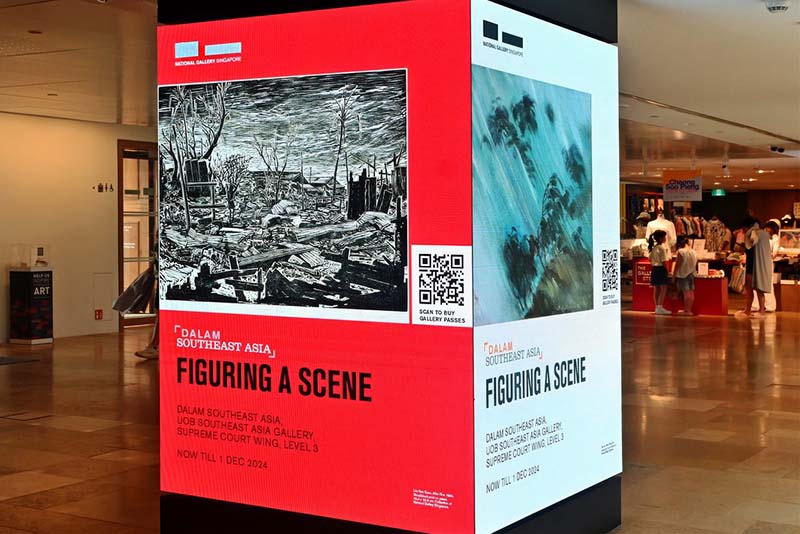
5.1 Advertising and Digital Signage
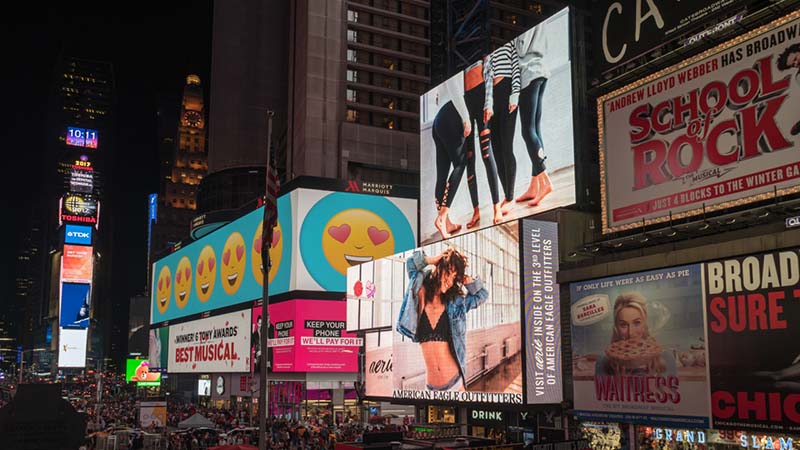
RGB LED screen panels are widely used in advertising and digital signage. High-definition screens allow businesses to dynamically display promotions, videos, and interactive content.
These displays are ideal for outdoor billboards, retail stores, and public places where attracting attention is crucial.
Their high brightness and vivid colors make them ideal for catching the eye of passersby.
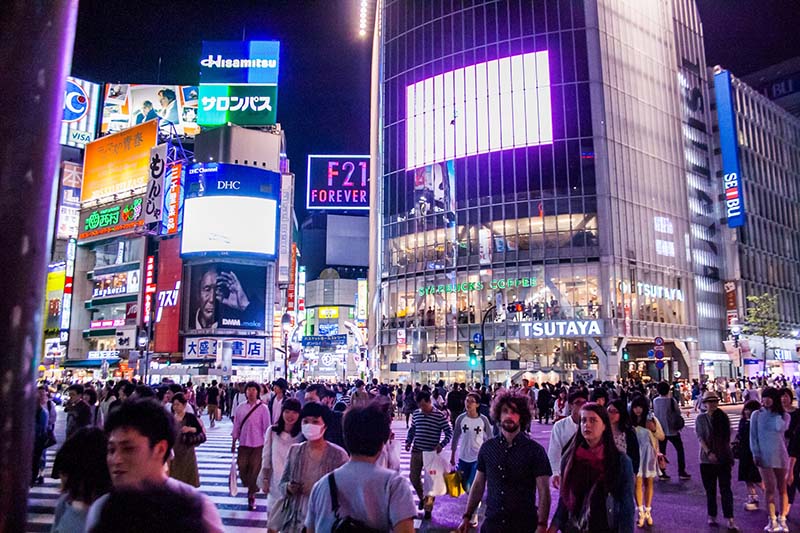
5.2 Stadiums and Scoreboards
In sports stadiums, full color LED video walls are used for scoreboards, video walls, and in-stadium advertising.
They display real-time scores, instant replays, and live broadcasts. High resolution and brightness ensure that spectators can enjoy clear visuals from every seat in the stadium.
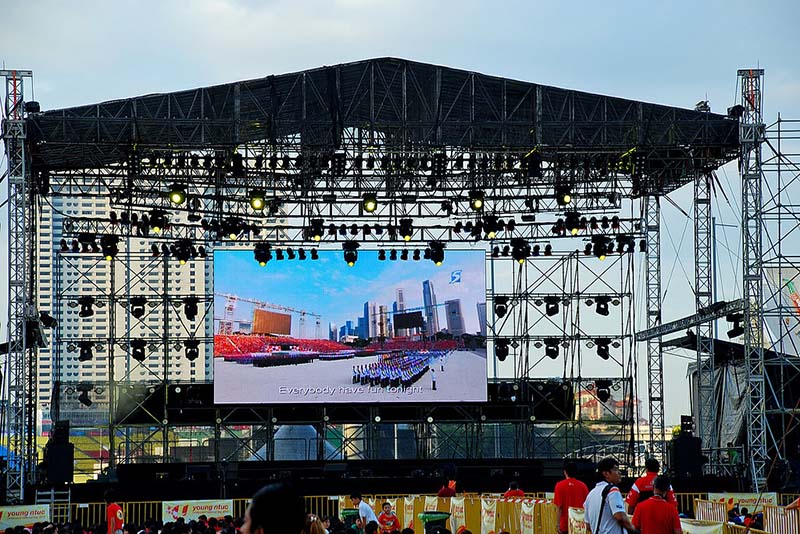
5.3 Entertainment Venues and Stage Productions
In entertainment venues such as concert halls, theaters, and live event stages, LED display full color provides stunning visuals.
They are used for backdrops, stage effects, and video projections, adding a dynamic layer to performances.
Their ability to adapt to different lighting conditions and provide vivid images makes them a favorite among event organizers.
5.4 Corporate and Educational Environments
Bright RGB LED screen panels are increasingly used in corporate and educational environments.
In offices, they can be used as digital signage for meetings, announcements, and presentations.
In classrooms or auditoriums, these display screens showcase high-quality visuals, interactive courses, and multimedia content to enhance learning.
6. Full Color LED Module
A full color LED module is the building block of any high-performance LED display.
It combines advanced RGB technology, precision engineering, and seamless integration to deliver stunning visuals.
Optimized for clarity, brightness, and energy efficiency, these modules are designed to meet the demands of diverse applications—from outdoor billboards to indoor control rooms.
6.1 What Makes a Full Color LED Module Stand Out?
(1) RGB LED Technology
Each module integrates red, green, and blue (RGB) LEDs, enabling millions of color combinations through precise PWM (Pulse Width Modulation) control.
This ensures true-to-life color reproduction, critical for branding, advertising, and immersive experiences.
(2) High Brightness & Uniformity
With 5,000–10,000 nits brightness (for outdoor use) and 800–1,000 nits (indoor), modules maintain visibility even in direct sunlight.
Advanced SMD (Surface-Mounted Device) packaging ensures uniform light distribution, eliminating dark spots.
(3) Energy Efficiency
Modern LED modules use low-voltage LED chips and intelligent power management.
It can reduce energy consumption by up to 40% compared to traditional displays—ideal for 24/7 operations.
(4) Durability & Weather Resistance
Built with IP65/IP67-rated protection, Outdoor LED modules withstand dust, moisture, and extreme temperatures (-30°C to 60°C), ensuring reliability in harsh environments.
https://youtu.be/x2__L-_BW8I?si=dVNKx7gTskYLwltjhttps://youtu.be/dM0FpJepiZY?si=6p80LvXFjx-1EIxd
6.2 Applications of Full Color LED Modules
Digital Billboards: High-resolution modules create eye-catching ads for highways and city centers.
Sports Arenas: Real-time replays and live stats with ultra-fast refresh rates (≥3,840Hz).
Stage Design: Curved or flexible modules adapt to creative setups for concerts and events.
Retail & Hospitality: Enhance customer engagement with interactive displays.
Transportation Hubs: Show real-time schedules and emergency alerts with fail-safe operation.
6.3 How to Choose the Right Full Color LED Module?
Pixel Pitch: Smaller pitch (e.g., P2.5–P4) for close viewing (indoor); larger pitch (e.g., P6–P10) for long-distance visibility (outdoor).
Brightness Requirements: Match nits to ambient light conditions.
Customization: Opt for modular designs that support curved installations or irregular shapes.
Supplier Reliability: Prioritize vendors offering 50,000+ hour lifespans and comprehensive warranties.
6.4 Why Partner with UNIT LED for LED Modules?
At UNIT LED, we engineer full color LED modules with cutting-edge technology and rigorous quality testing. Our solutions are:
✅ Certified: Compliant with ISO 9001, RoHS, and CE standards.
✅ Scalable: Seamlessly integrate modules for displays of any size.
✅ Service-oriented: 24/7 technical support and rapid replacement programs.
Boost Your Visual Impact Today—Contact Us for a free consultation and tailored LED module solutions!
7. How to Choose the Right Full Color LED Display?
Choosing the best full color LED display depends on several technical and practical factors:
Resolution (Pixel Pitch)
The smaller the pixel pitch (e.g., P1.5), the higher the resolution. For short viewing distances, choose a high-resolution LED screen with a tighter pitch.
Brightness
For outdoor use, ensure your display reaches at least 5000 nits to remain visible in direct sunlight.
Refresh Rate
A high refresh rate (1920Hz or more) ensures smoother visuals and is essential for video-rich environments.
IP Rating & Durability
Outdoor displays must have IP65 or above protection to withstand rain, dust, and harsh environments.
Installation Type
Consider whether your screen will be wall-mounted, freestanding, hanging, or embedded. UNIT LED offers customized solutions for all installation needs.
Looking for the best full color LED display supplier? UNIT LED provides advanced LED video displays with customizable sizes, pixel pitches, and control systems for any indoor or outdoor application.
8. Conclusion
As technology evolves, full-color LED displays are getting brighter, sharper, and more energy-efficient.
Whether used for advertising, live events, or corporate presentations, these displays create unforgettable visual experiences.
Their scalability, durability, and unmatched color accuracy make them the perfect choice for businesses and creatives alike.
UNIT LED provides high-quality indoor/outdoor full color LED display with various pixel pitches! Just contact us and get tailored LED solutions!