See Through LED Display Screen: The Ultimate Guide!
In the fast-evolving world of digital displays, see through LED display has emerged as a revolutionary technology.
These innovative screens combine high-resolution visuals with transparency, allowing businesses to showcase eye-catching content without obstructing the view behind them. Whether used in retail storefronts, corporate offices, or large-scale architectural designs, see-through LED displays provide a seamless blend of digital advertising and aesthetic appeal.
https://youtu.be/qrog_t94JL0
As demand for more engaging and space-efficient display solutions grows, transparent LED screens are becoming a preferred choice for brands looking to captivate audiences while maintaining visibility through glass surfaces.
This article explores the benefits, applications, technical aspects, and future trends of LED see-through screens. It will help you understand why they are shaping the future of digital signage.
Table of Contents
1. Introduction to See Through LED Display
1.1 What is See Through LED Screen?
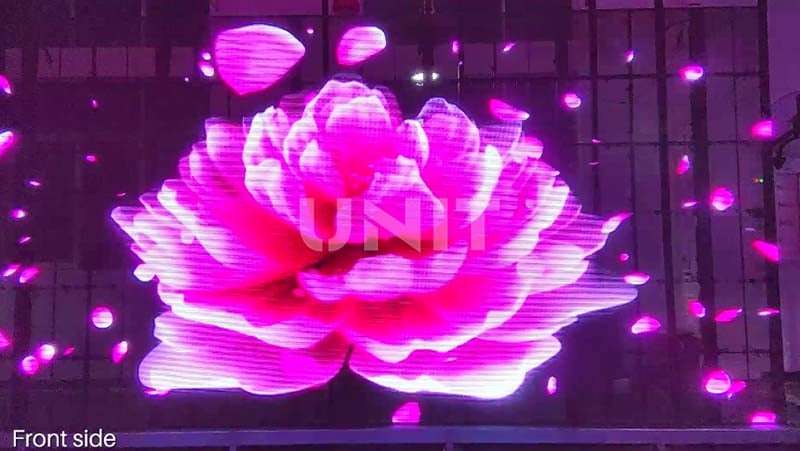
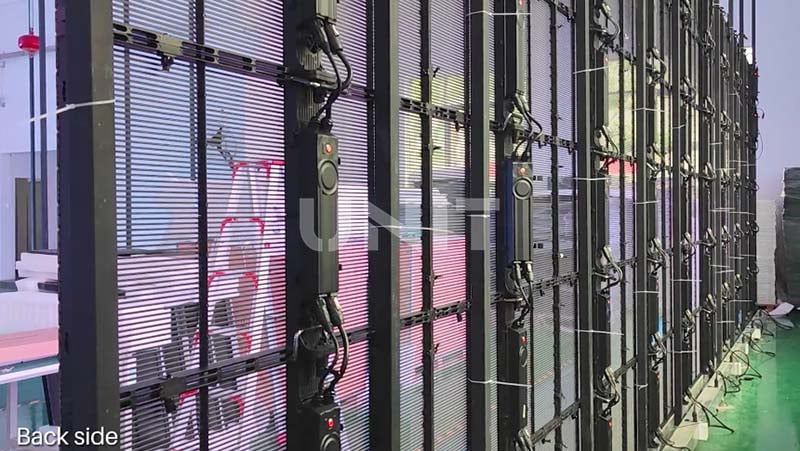
A see-through LED screen, also called a transparent LED display, is a digital screen that combines LED technology with transparency. It displays high-resolution content while allowing people to see through the screen.
The screen consists of transparent LED strips embedded on a clear acrylic or glass panel. These strips are spaced apart, ensuring both content visibility and background transparency.
1.2 Working Principle of LED See Through Screen
LED Light Transmission – LEDs emit bright light while leaving space for transparency.
Pixel Pitch & Transparency – The spacing between LEDs determines image clarity and transparency level.
High-Brightness Output – Brightness levels range from 5000-7000 nits, ensuring visibility even in daylight.
Smart Control System – Software allows content updates, scheduling, and real-time monitoring.
1.3. How It Differs from Traditional LED Screens and LCDs
|
Feature |
See-Through LED Screen |
Traditional LED Display |
LCD Screen |
|
Transparency |
50%-90% see-through |
0% (completely opaque) |
0% (solid panel) |
|
Structure |
Ultra-thin, lightweight |
Heavy, requires additional support |
Thick glass panel |
|
Brightness |
5000-7000 nits |
4000-6000 nits |
300-1000 nits |
|
Energy Efficiency |
Low power consumption |
High power usage |
Higher power due to backlight |
|
Best Applications |
Glass facades, storefronts, exhibitions |
Billboards, stadiums, events |
Indoor signage, TVs |
Key Differences:
See-through LED screens allow light to pass through, while traditional LED and LCD screens are fully opaque.
LCD screens use a backlight and are not suitable for outdoor high-brightness displays.
1.4 Key Components of a See-Through LED Panel
A see through LED panel consists of several essential components that work together to create a transparent and high-resolution digital display.
These LED display components ensure brightness, transparency, stability, and energy efficiency.
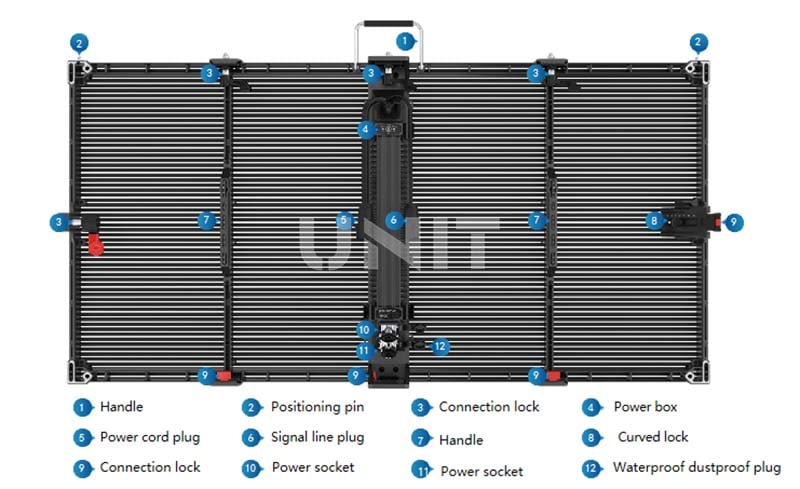
(1) LED Modules
The main display unit of the transparent screen. Contains tiny LED chips arranged in a grid on a transparent substrate.
Available in different pixel pitches (e.g., P3.91-P7.81, P5.2-P10.4) to balance resolution and transparency.
(2) Transparent PCB (Printed Circuit Board)
A clear circuit board connects LED modules while maintaining transparency. Made from glass-like materials to allow light to pass through.
Ensures stable electrical connections for uninterrupted display performance.
(3) Control System
Manages content playback, brightness, and synchronization.
Includes receiving cards, video processors, and cloud-based controllers.
Supports WiFi, 4G, or LAN connectivity for remote content updates.
(4) Power Supply Unit (PSU)
Converts AC power to DC to power the LED modules.
Ensures stable voltage output to prevent screen flickering.
Designed to be energy-efficient, reducing power consumption.
(5) Aluminum or Acrylic Frame
Provides structural support for the see through LED panel.
Made from lightweight yet durable materials.
Allows for easy installation on glass surfaces.
(6) Signal & Data Cables
Transmit image and video data from the control system to the LED modules.
Ensure high-speed signal transmission with minimal delay.
Includes flat cables and network cables for seamless operation.
(7) Protective Coating & Glass Layer (Optional)
Some high-end transparent LED screens include a protective coating to enhance durability.
A thin glass layer can be added for extra protection against dust and impact.
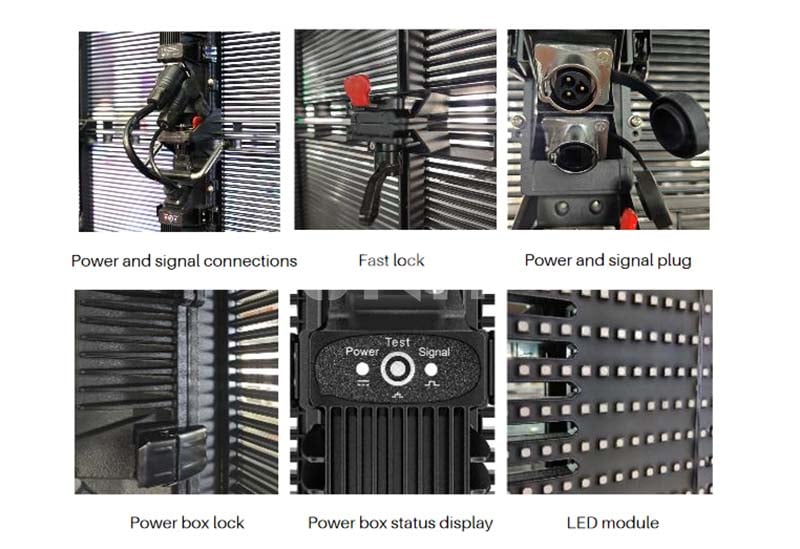
These components work together to create a clear, bright, and energy-efficient transparent LED display.
Suitable for retail stores, corporate buildings, trade shows, and more.
2. Advantages of See Through LED Screens
(1) Transparency
A see through LED screen allows natural light to pass through, making it an excellent choice for glass facades, storefronts, and corporate buildings.
Unlike traditional LED screens that block the view, transparent LED display screens maintain visibility while displaying digital content.
This feature is especially useful for businesses that want to attract customers without covering their store interiors.
(2) Energy Efficiency
Compared to conventional LED displays, a transparent LED screen consumes 30%-50% less power. It is a cost-effective and environmentally friendly solution for digital advertising.
The reduced power consumption helps businesses lower their electricity costs while maintaining high-quality visual performance.
(3) Lightweight & Slim Design
A see through LED display has an ultra-thin structure. It is easy to install on glass walls, windows, and suspended ceilings.
Unlike bulky LED billboards, these screens do not require heavy steel frames or additional support structures.
(4) High Brightness & Visibility
High brightness of a transparent LED display screen ensures that the display remains clearly visible even under direct sunlight.
Whether installed outdoors or indoors, these screens deliver sharp visuals, vibrant colors, and excellent contrast.
5. Creative & Customizable
A see through LED screen comes in various sizes, shapes, and pixel pitches. Users can choose the best configuration for their specific applications.
Whether mounted on curved glass, hanging structures, or free-standing installations, these screens provide businesses with unique and engaging effects.
3. Applications of See Through LED Screens
(1) Corporate Buildings
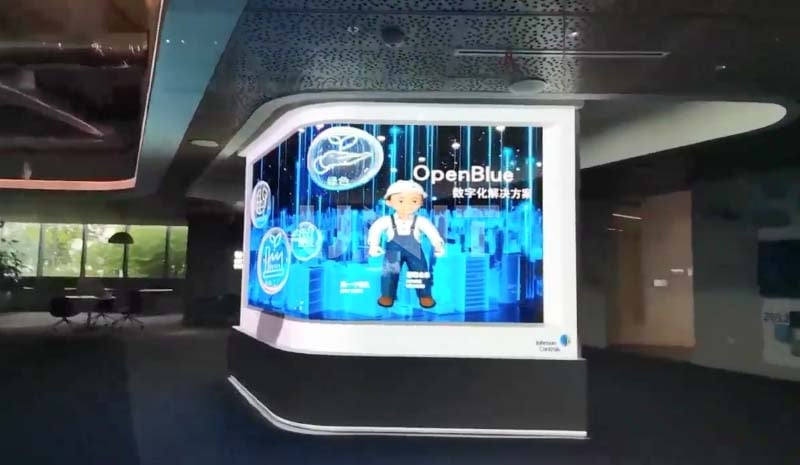
Many corporate offices and skyscrapers integrate transparent LED display screens into their glass walls and reception areas.
They display company branding, announcements, welcome messages, and digital presentations.
(2) Exhibitions & Trade Shows
Excellent see-through LED screens are widely used at exhibitions and trade shows to create visually stunning presentations.
The transparency of the screen ensures that products and displays behind it remain visible.
(3) Retail Storefronts
Retailers use transparent LED display screens to create eye-catching window advertisements while maintaining visibility inside the store.
Customers see promotional content without blocking their view of the store’s interior.
A see-through LED wall enhances the shopping experience by combining dynamic digital visuals with real-world displays.
https://youtu.be/H1A02c-Uxdk
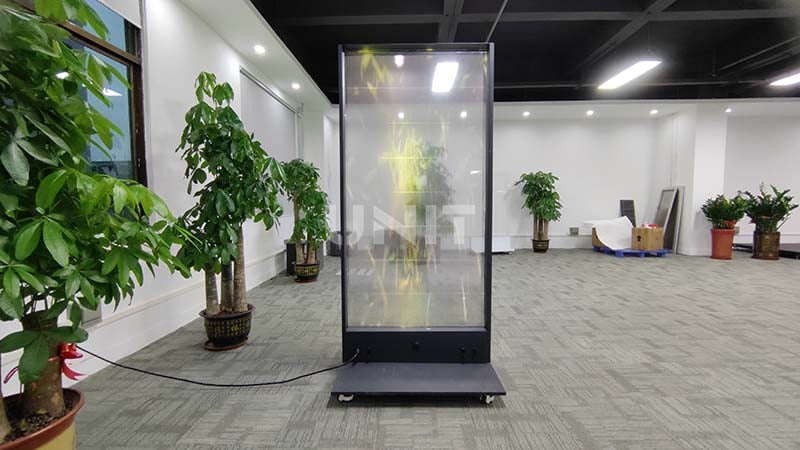
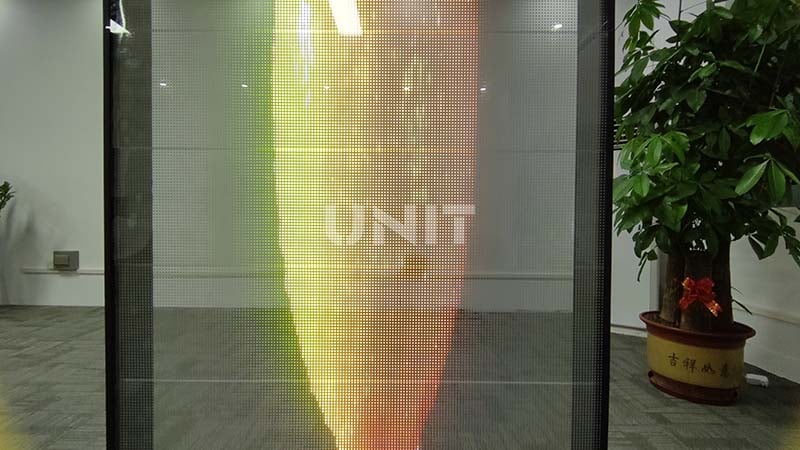
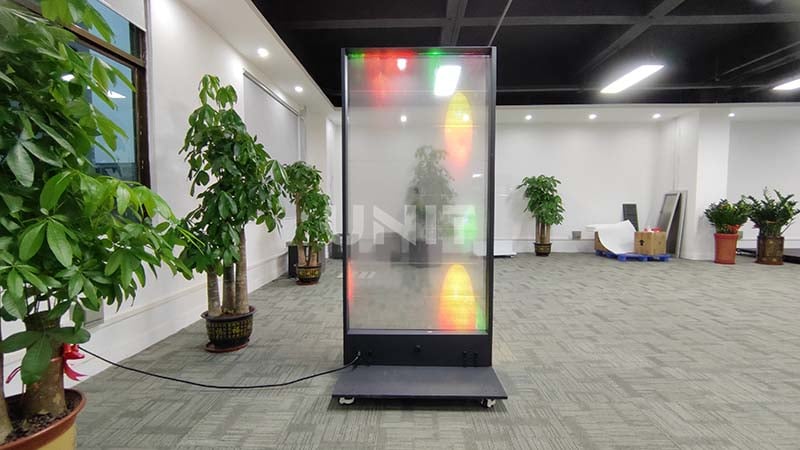
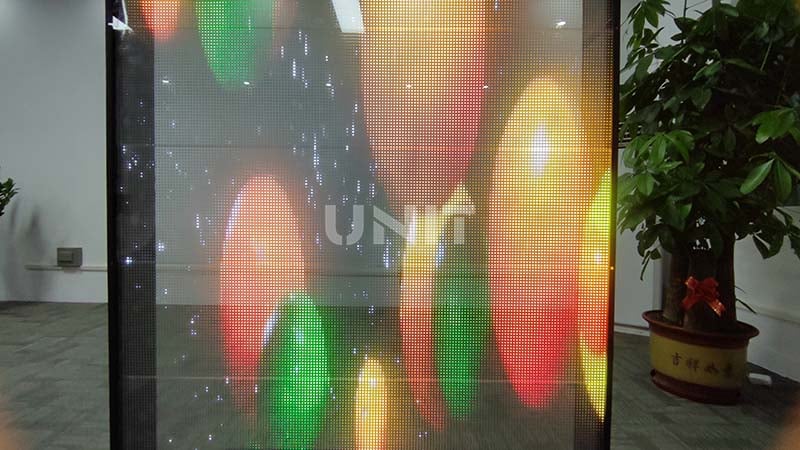
transparent film led poster display
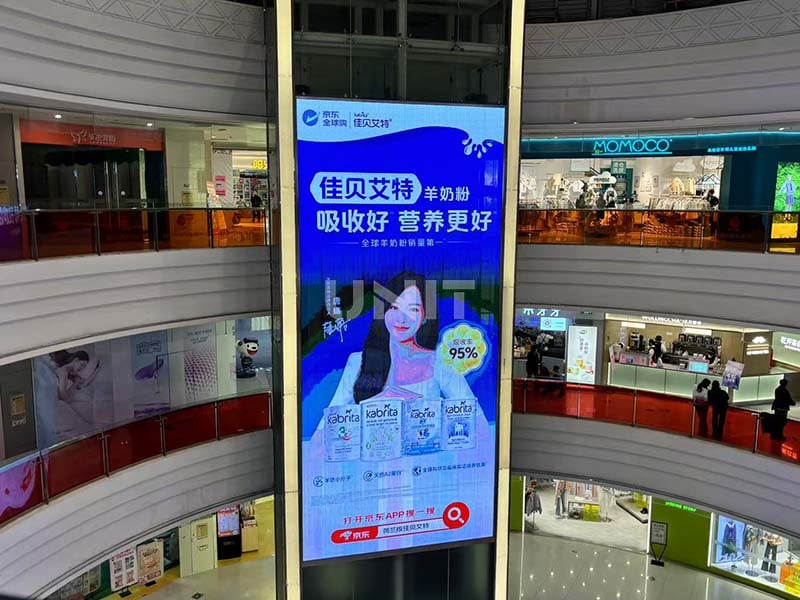
(4) Shopping Malls
Shopping mall LED displays use see-through LED panels to display promotional content, brand advertisements, and seasonal campaigns.
Screens are often installed on elevators, escalators, and glass atriums to capture shoppers’ attention without obstructing open spaces.
The combination of dynamic visuals and transparency creates a futuristic and immersive shopping experience.
(5) Airports & Transportation Hubs
Airports and train stations use transparent glass LED screens to display real-time travel information, advertisements, and interactive guides.
You can see them in waiting areas, check-in counters, and terminal windows. Passengers view important updates without blocking their surroundings.
A see through LED screen ensures that vital travel information remains visible while enhancing the overall aesthetics of the space.
(6) Museums & Art Installations
Museums and art galleries incorporate see-through LED panels into their exhibits to create interactive and immersive experiences.
The screens display historical narratives, digital artwork and multimedia content. But it will not obscure the actual artifacts or paintings behind them. The combination of technology and storytelling makes exhibitions more engaging for visitors.
A see through LED display is a versatile and innovative solution that enhances advertising, branding, and visual storytelling across various industries. Its ability to blend digital content with transparent aesthetics makes it one of the most exciting advancements in LED display technology.
3.1 See Through LED Display Screen Applications by Project Type
A see through LED display screen works best when the installation environment, viewing distance, brightness, and content style are planned together. Different projects need different screen structures, pixel pitches, and transparency levels, so buyers should not choose only by price or appearance.
| Project Type | Recommended Use | Key Requirement | Suggested Direction |
|---|---|---|---|
| Retail Storefront | Window advertising, product promotion, brand campaigns | High brightness and good transparency | Choose a transparent LED screen that keeps the shop interior visible while showing clear promotional content. |
| Shopping Mall Atrium | Large commercial display, event promotion, seasonal campaigns | Wide viewing angle and strong visual impact | Use a larger see-through LED wall for open spaces such as glass railings, elevators, and atriums. |
| Glass Facade | Building advertising, brand image, outdoor digital signage | Outdoor brightness, waterproof design, wind resistance | Choose a durable outdoor transparent LED display with proper structural support and heat dissipation. |
| Exhibition Booth | Product display, immersive booth design, temporary event setup | Lightweight cabinet and fast installation | Rental transparent LED screens are more suitable for trade shows and short-term events. |
| Museum or Showroom | Digital storytelling, interactive exhibits, premium display areas | Close viewing clarity and clean visual design | Use a finer pixel pitch and avoid content that blocks the objects behind the screen. |
For retail and mall projects, you can also compare the see-through solution with a retail LED display or a shopping mall LED display to choose the most suitable display format.
4. How to Choose the Right See Through LED Display?
Selecting the right see through LED display depends on several key factors.
You should consider pixel pitch, brightness, installation type, control systems, and durability to ensure the best performance for their application.
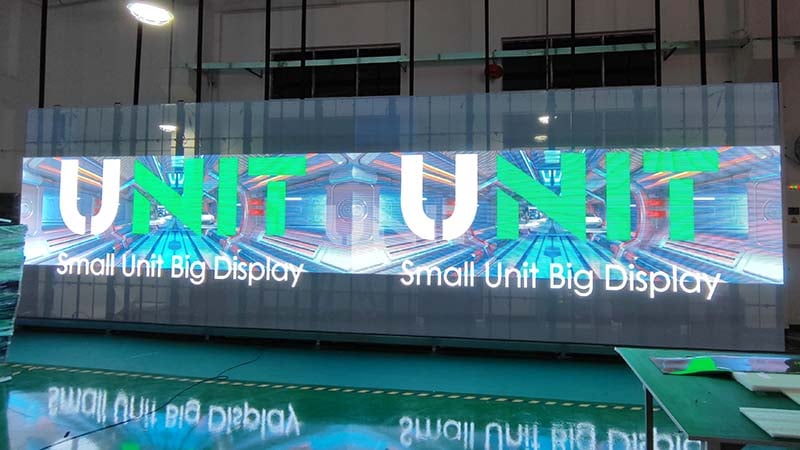
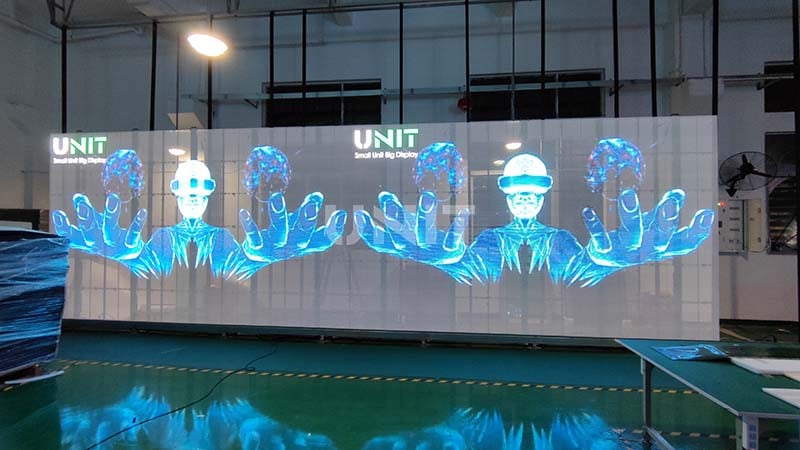
(1) Pixel Pitch & Resolution
The pixel pitch determines the resolution and clarity of a transparent LED display screen.
A smaller pixel pitch provides higher LED screen resolution and sharper images, making it ideal for short viewing distances, such as retail storefronts or exhibitions.
A higher pixel pitch is acceptable for large-scale outdoor displays since viewers will be further away.
(2) Brightness & Contrast
See-through LED panels should have sufficient brightness to remain visible in direct sunlight or bright indoor environments.
A brightness level of 5000 to 7000 nits ensures clear visuals for outdoor installations, while lower brightness levels may be suitable for indoor applications.
High contrast ratios improve color vibrancy and image sharpness, ensuring a better visual experience.
(3) Installation Type: Fixed vs. Rental
Fixed Installation
Fixed transparent LED displays are ideal for permanent setups such as retail store windows, corporate buildings, and airports. These displays require a sturdy structure for long-term use.
Rental LED Screens
Rental series are designed for temporary events, trade shows, and exhibitions. These screens are lightweight, easy to transport, and quick to assemble. So, they are ideal for short-term applications.
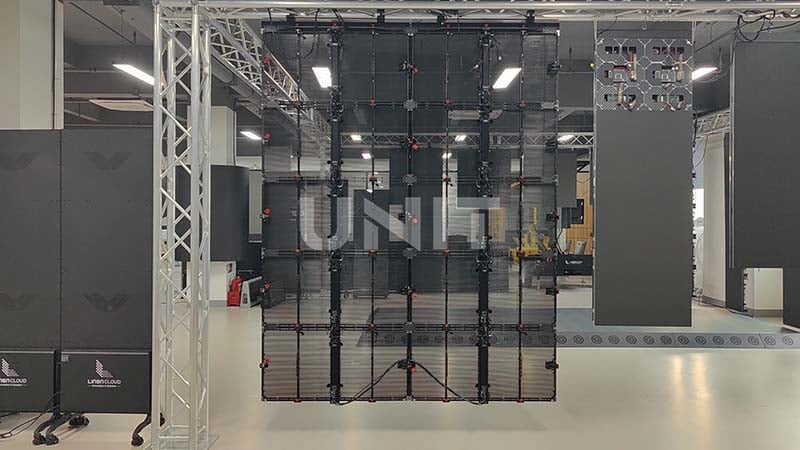
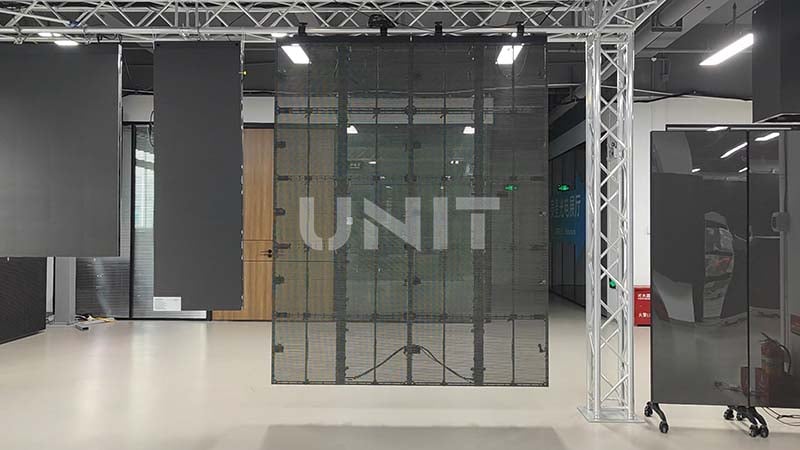
outdoor rental transparent LED screen
(4) Software & Control System
A user-friendly content management system (CMS) is essential for managing content on transparent LED display screens.
It is better to choose a system that allows remote access, real-time updates, and scheduling features.
Well-designed software platform ensures smooth operation, customization, and seamless content transitions.
(5) Durability & Maintenance
For outdoor applications, it’s crucial to select a waterproof and dustproof see-through LED wall with an IP65 or higher rating.
High-quality LED modules should be resistant to moisture, heat, and external impacts.
Additionally, selecting easily replaceable LED panels ensures long-term usability and cost-effective maintenance.
4.1 Recommended Specifications for See Through LED Display Screens
The right specification should match the actual viewing distance and installation environment. A smaller pixel pitch is better for close viewing, while a larger pixel pitch is usually enough for glass facades and long-distance viewing.
| Application | Suggested Pixel Pitch | Suggested Brightness | Transparency Focus | Buyer Tip |
|---|---|---|---|---|
| Retail Window | P3.91-P7.81 | 3500-6000 nits | Medium to high transparency | Balance image clarity with the need to keep products visible behind the glass. |
| Indoor Mall | P3.91-P10.42 | 1500-5000 nits | High transparency | Choose according to ambient light, atrium height, and main viewing distance. |
| Outdoor Glass Facade | P7.81-P20 | 5000-8000 nits or higher | High transparency and outdoor durability | Pay attention to waterproof rating, wind load, heat dissipation, and maintenance access. |
| Exhibition Booth | P3.91-P7.81 | 1500-4500 nits | Flexible depending on booth design | A lightweight rental structure is usually better for transport and repeated installation. |
| Showroom or Museum | P2.6-P5.2 | 1200-3000 nits | Moderate transparency | Use higher resolution for close-range viewing and detailed visual content. |
Brightness is especially important for glass-facing installations. If the screen faces strong daylight, you can read our LED screen brightness guide before deciding the final configuration.
5. Installation & Maintenance Tips
Proper installation and regular maintenance are essential to ensure the longevity and efficiency of a see-through LED screen.
(1) Installation Considerations
Structural Support: Ensure the glass or mounting surface can support the LED panel’s weight.
Power Requirements: Check voltage and power consumption to avoid overloading circuits.
Wiring Setup: Arrange cables neatly to prevent interference and damage.
Environmental Factors: Consider wind resistance for outdoor transparent LED screens.
(2) Regular Maintenance
Cleaning: Use a soft, dry cloth to remove dust and debris from the LED modules.
LED Module Inspection: Check for dead pixels, loose connections, or damaged panels.
Power Supply Monitoring: Ensure stable voltage to prevent screen flickering or malfunctions.
(3) Software Updates
Firmware Upgrades: Regularly update the LED screen software to improve performance.
Content Management: Refresh digital content to keep advertisements and promotions relevant.
Remote Monitoring: Use cloud-based software to monitor and troubleshoot the screen remotely.
A properly installed and well-maintained transparent LED display ensures optimal performance, long lifespan, and maximum visual impact for businesses and advertising applications.
6. How to Install It?
Next, we will take the holographic LED screen as an example to show you how to install the screen.
(1) How to Install a See Through LED Display on Glass?
Installing a transparent LED display screen on glass requires precision and careful handling to ensure stable installation and optimal performance.
Follow these steps for a successful setup.
https://www.youtube.com/watch?v=bcV2aE0Wrdw&t=67s
Step 1: Fix the Base of the Power Box
Begin by selecting the installation position for the power box.
Secure the base to the wall or frame using screws or mounting brackets.
Ensure the base is level and firmly attached to provide strong support for the display.
Step 2: Stick the Lamp Panels on the Wall
Carefully align the LED lamp panels on the glass surface.
Peel off the protective backing from the adhesive layer and gently press the panels onto the glass.
Make sure each panel is properly positioned to form a seamless display.
Step 3: Roll with Rollers to Make the Lamp Panels Flatter
Use a soft roller to press over the lamp panels, ensuring they adhere evenly to the glass surface.
This step helps remove air bubbles and ensures the panels lay completely flat for a smooth and professional finish.
Step 4: Install the Power Box
Once the LED panels are securely attached, mount the power box onto its base.
Align it correctly and fasten it with screws to ensure it is firmly secured and stable.
Step 5: Connect Power Cords and Network Cables
Carefully connect the power cables and network cables according to the manufacturer’s guidelines.
Ensure each connection is firm and secure to prevent signal or power interruptions.
Organize and route the cables neatly to avoid clutter and potential damage.
Step 6: Connect the Screen to a Power Source
Plug the system into a stable power supply and turn it on.
Check that the screen powers up correctly and test the brightness, transparency, and functionality of the see-through LED screen.
Step 7: Attach the Power Box Cover to the Power Box
Finally, secure the power box cover to protect the internal components.
It helps prevent dust, moisture, and accidental damage, ensuring the durability and longevity of the installation.
After completing these steps, the transparent see through LED display screen should be fully operational and ready for use.
It offers a seamless visual experience while maintaining transparency.
(2) How to Hoist a See Through LED Wall?
https://www.youtube.com/watch?v=ssMNP0DFimU
What you need:
Control box, lower bracket, side bracket, modules, ring, screw, magnetic column, cover plate, wirerope, buckle, network cable
Step 1: Install rings on the control box
Step 2: Install side brackets on both sides of the control box
Step 3: Splice the lower bracket together
Step 4: Splice the lower bracket and side brackets together
Step 5: Lift the brackets with wirerope
Step 6: Seal the side brackets
Step 7: Install cover plate of side bracket
Step 8: Install buckles on the module
Step 9: Install magnetic columns on the module
Step 10: Install modules and splice the modules with buckles
Step 11: Connect the power cables and network cables
Step 12: Install screws at the bottom of the modules
7. See Through LED Display Screen Price: What Affects the Cost?
The price of a see through LED display screen depends on size, pixel pitch, brightness, transparency rate, installation method, and project environment. For commercial buyers, the final cost is not only the LED screen itself, but also the structure, control system, power distribution, shipping, spare parts, and installation support.
| Cost Factor | How It Affects the Price |
|---|---|
| Pixel Pitch | Smaller pixel pitch provides sharper image quality but usually increases the cost per square meter. |
| Screen Size | Larger screens require more modules, power supplies, receiving cards, cables, and structural support. |
| Brightness Level | Outdoor and window-facing projects need higher brightness, which may increase power and component requirements. |
| Transparency Rate | Higher transparency may require a more refined structure and careful product selection. |
| Indoor or Outdoor Use | Outdoor transparent LED screens need better waterproofing, heat dissipation, and weather resistance. |
| Installation Method | Glass mounting, hoisting, fixed steel structure, and rental frame systems all have different costs. |
| Control System | Cloud control, remote scheduling, sensors, and advanced video processors may add to the total budget. |
| After-Sales Support | Spare modules, technical guidance, warranty, and maintenance service are important for long-term use. |
To get an accurate quotation, prepare the screen width and height, installation location, indoor or outdoor environment, viewing distance, brightness requirement, and content type. This helps the LED display manufacturer recommend the right see-through LED display instead of giving a rough price that may not fit the real project.
If you are planning a commercial glass display project, you can contact UNIT LED for a customized transparent LED screen solution based on your project size and installation environment.
8. Comparison of Different Transparent Screens
Different transparent display products are not designed for the same project. Before choosing between a transparent LED film screen, crystal film LED screen, cabinet-type transparent LED screen, or holographic LED screen, buyers should compare transparency, brightness, installation method, durability, and maintenance difficulty.
| Screen Type | Best For | Main Advantage | Possible Limitation |
|---|---|---|---|
| Transparent LED Crystal Film Screen | Indoor glass walls, retail windows, creative commercial displays | High transparency and clean glass appearance | Brightness is usually lower than cabinet-type transparent LED screens. |
| Adhesive Transparent LED Film Screen | Glass window advertising and indoor commercial displays | Thin structure and direct glass installation | Moisture, condensation, and long-term stability should be checked carefully. |
| Cabinet-Type Transparent LED Screen | Outdoor glass facade, stage, exhibition, commercial building | Higher brightness, stronger structure, and better durability | Transparency is usually lower than film-style products. |
| Transparent Holographic LED Screen | Luxury retail, shopping mall, showroom, creative visual display | More futuristic floating visual effect | Installation method and content design need more careful planning. |
(1) Transparent LED Crystal Film Screen
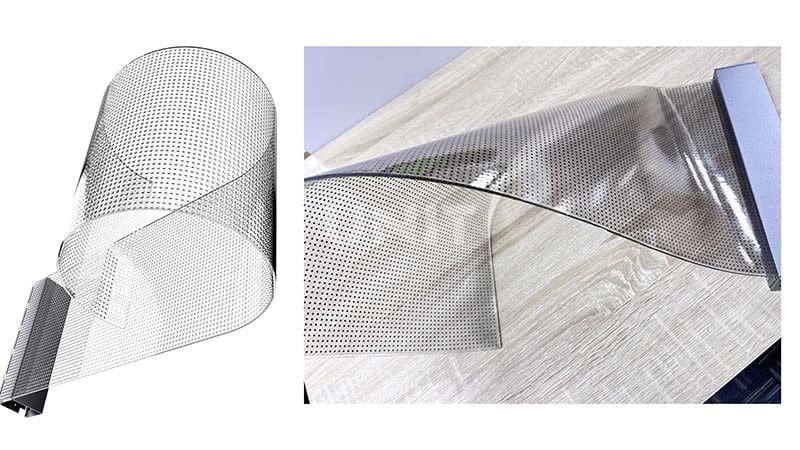
The PET light board of the transparent LED crystal film screen is fully wrapped by the colloid, which is more stable.
Only the lamp beads can be seen on the transparent substrate. The light transmittance is about 90%.
The surface of the product is glue, which can be directly adhered to the glass and can be pasted repeatedly.
It can be pasted on glass with direct sunlight.
The LED crystal film screen is an ultra-fine circuit, and the brightness is not very high, 3000-4000CD.
(2) Adhesive Transparent LED Film Screen
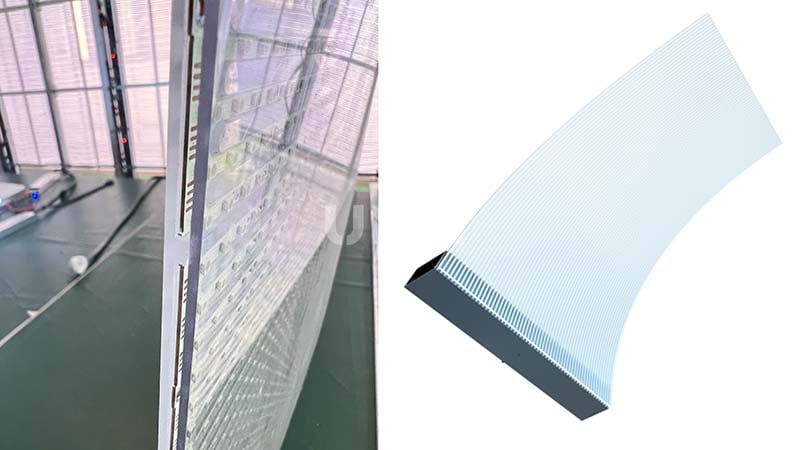
The PCB light strip is sandwiched between two acrylic boards. The lamp beads of the adhesive transparent LED film screen are not completely sealed, which is easily affected by moisture and condensation, causing instability.
The PCB light strip is partially opaque. The light transmittance is about 75%.
Apply glue on the acrylic board or use double-sided tape to stick it on the glass.
It cannot be pasted on glass with direct sunlight.
The transparent LED film screen is a PCB circuit with a high brightness of 5000CD.
(3) Transparent LED Screen
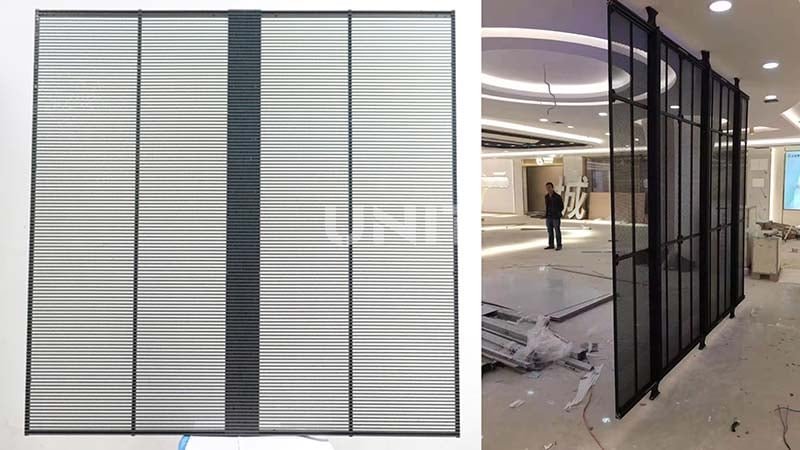
The traditional cabinet-type transparent LED screen and traditional PCB light board have the highest cost performance.
The PCB light strip is not transparent, the metal box is not transparent, and the transmittance is about 65%.
The box splicing can be hoisted with a hanging beam and fixed with a steel structure.
It can reach 10,000 brightness.
(4) Transparent Holographic LED Screen
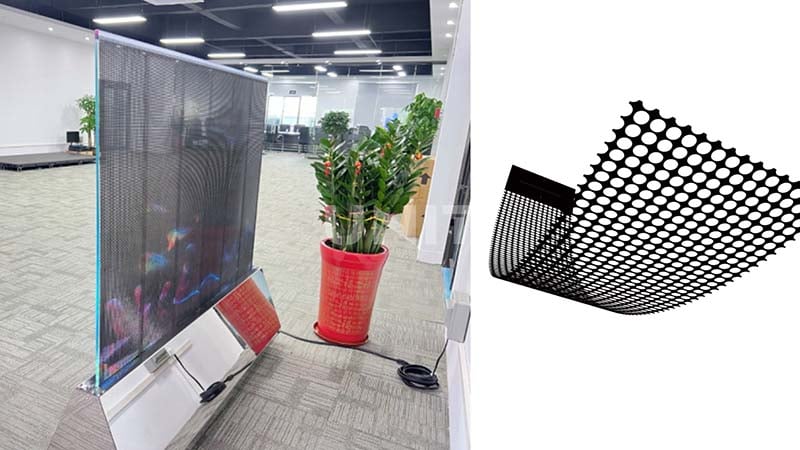
Traditional PCB light board, black light board design, better contrast.
PCB is hollowed out, with a transmittance of about 85%.
The holographic LED display is fixed up and down.
It is not recommended to directly stick the entire module to the glass for installation.
The brightness of single-sided power supply is about 3,000.
9. Conclusion
This guide explores the key features, benefits, applications, and installation process of LED see through screens. Whether you’re considering it for your storefront or an event, it will be an innovative solution!
Contact UNIT LED and get your customized see through LED display screen!
Related Posts
wp:paragraph
/wp:paragraph