LED Display Gray Scale & Brightness Explained
When choosing the right LED screen, people often talk about resolution or size. However, two key factors often go unnoticed — LED display gray scale and brightness. These two greatly affect image quality and viewer experience.
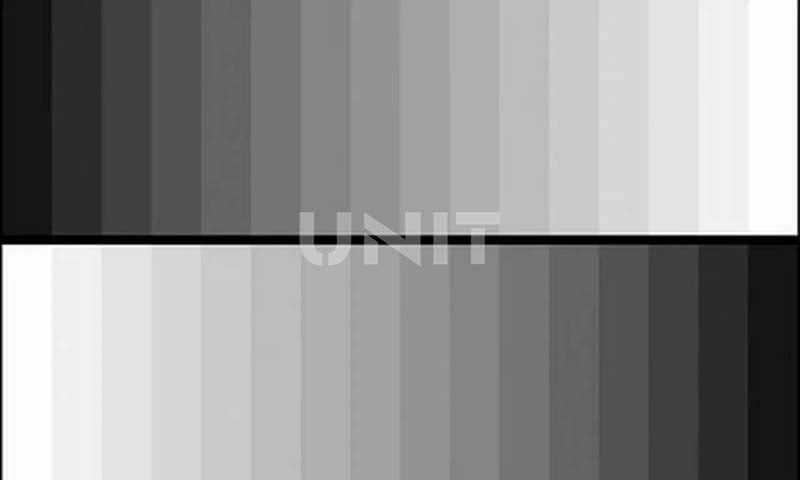
In this article, we’ll explain the gray scale definition, brightness level, and how they work together. We’ll also help you choose the right LED screen based on your needs. Let’s go!
Table of Contents
1. What is an LED Display Gray Scale?
(1) LED Display Gray Scale Definition
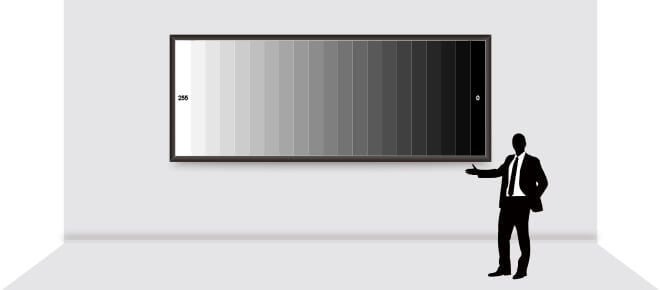
Gray scale refers to the number of shades between black and white that an LED screen can display. The more shades it can show, the more detailed and realistic the image becomes.
In LED displays, the gray scale controls how smoothly colors transition, especially in darker scenes. This is where understanding gray scale definition becomes crucial—it’s not just about color, but about depth and clarity.
Grayscale images are black-and-white or gray monochrome and composed exclusively of shades of gray. The contrast ranges from black at the weakest intensity to white at the strongest.
Resource: https://en.wikipedia.org/wiki/Grayscale
(2) Gray Scale Typical Range
LED screens are usually built with different levels of gray scale, based on their bit-depth:
8-bit gray scale: 256 levels
10-bit gray scale: 1024 levels
12-bit gray scale: 4096 levels
These levels indicate how finely the display can adjust brightness within each color. More levels mean smoother shading and more accurate image reproduction.
(3) Why LED Display Gray Scale Matters
A high gray scale ensures that even small changes in light or color are visible. This matters most when displaying gradients, soft shadows, or facial tones.
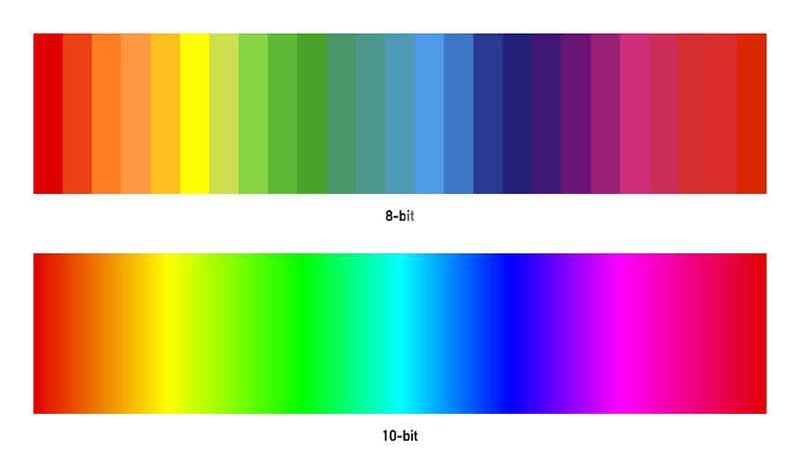
The higher the LED screen gray scale, the smoother and richer the content will look—especially in professional video playback or creative visuals. If the gray scale is too low, transitions between colors look sharp or unnatural. Faces may appear flat. Dark scenes may lose detail.
Imagine two LED video walls at a concert stage. One uses 8-bit gray scale, the other 12-bit. The 12-bit screen delivers smooth gradients, natural shadows, and crisp image transitions. The 8-bit screen might show banding or uneven light in dark backgrounds.
This difference in grayscale meaning can affect the entire viewing experience. Whether for broadcast, performances, or control rooms, a higher gray scale improves display quality significantly.
2. What is LED Screen Brightness?
(1) LED Display Brightness Definition
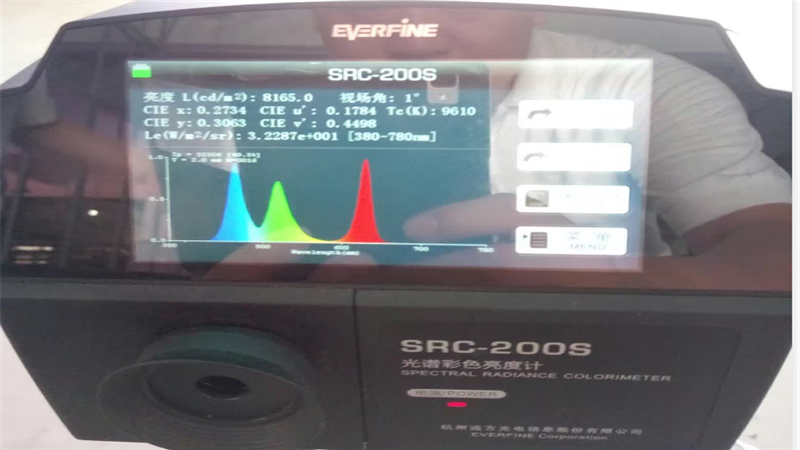
LED screen brightness is measured in nits, also known as cd/m². A nit measures how much light a display emits per square meter. So, when someone asks what a nit brightness is, they are really asking how bright an LED screen can get under real-world lighting conditions.
(2) Typical LED Screen Brightness Levels
Different environments require different brightness levels:
Indoor LED displays: 800 to 1500 nits
Semi-outdoor LED screens: 2000 to 3000 nits
Outdoor LED billboards: 4000 to 8000+ nits
The more sunlight or ambient light is present, the higher the nit value required for clear visibility.
(3) Why It Matters
The brightness of your LED screen determines whether your content will be seen clearly. If the brightness is too low for a bright environment, your display will look faded or washed out. If it’s too bright in a dark indoor area, it may cause glare or discomfort.
Choosing the right LED screen brightness ensures:
- Better visibility in any condition
- Improved energy efficiency
- Comfortable viewing without eye strain
- Accurate image presentation
Think about a digital billboard on a busy street. To stay visible in direct sunlight, it needs high brightness—often over 6000 nits.
A stadium LED screen must also shine bright enough for fans across the arena to clearly see replays or ads clearly, even during daytime events.
Meanwhile, a shopping mall display only needs about 1000 nits. Any more could be too harsh.
In this case, a good balance between brightness and gray scale is key to delivering a stunning image without overwhelming viewers.
3. Gray Scale vs Brightness: What’s the Difference?
While gray scale and brightness influence the image quality of an LED screen, they play very different roles.
(1) LED Display Gray Scale Meaning
Gray scale determines how many shades of color a screen can show. It’s all about detail, depth, and smooth transitions. The higher the gray scale, the better the screen can render shadows, skin tones, and fine color shifts.
Understanding the gray scale definition helps users evaluate LED display image quality.
(2) Brightness
Brightness controls how much light the screen emits, affecting its visibility under different lighting conditions.
When people ask what is a nit brightness, they’re talking about the measure of this light output, which directly influences LED screen brightness performance.
https://youtu.be/DlP8AwwAJZU
(3) How They Work Together
For the best image performance, a screen must balance both high LED display gray scale and suitable brightness. When both are optimized:
- Colors appear vivid
- Images look natural and sharp
- Videos remain clear in bright or dark settings
However, if brightness is high but LED display gray scale is low, the image may look flat or overexposed.
On the other hand, an LED screen with excellent gray scale but low brightness might appear too dark to see clearly.
A well-balanced display enhances both grayscale meaning and LED display image quality, especially in commercial, broadcast, and outdoor applications.
4. Factors That Affect Gray Scale and Brightness
Several technical components influence the brightness level and gray scale of an LED screen.
Let’s look at the most important ones:
(1) LED Driver ICs
The LED driver IC controls how much current flows to each LED. High-quality ICs support more precise control, enabling more gray scale levels and better image depth.
Without proper ICs, even high-bit displays may show banding or poor color performance.
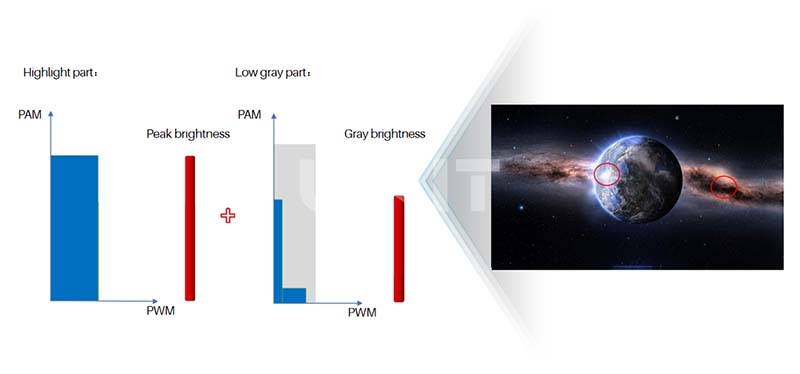
(2) PWM (Pulse Width Modulation)
PWM adjusts how long each LED stays on within a short time frame. By changing the pulse width, screens can control both brightness and gray scale.
Advanced PWM systems allow better performance at low brightness without sacrificing detail—vital for dark-room environments or nighttime use.
(3) LED Screen Refresh Rate & Scan Mode
The LED display refresh rate determines how often the screen updates per second. A higher refresh rate (e.g., 3840Hz) reduces flicker and ensures stable gray scale performance, especially when filming the screen or under changing lighting conditions.
Scan mode—how many rows are lit simultaneously—also affects brightness and grayscale consistency. Low scan modes usually perform better in both areas.
(4) Calibration & Processing Technology
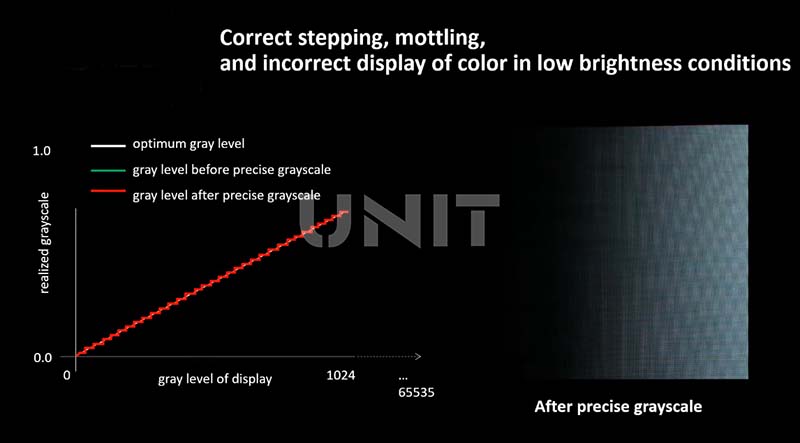
Even a screen with great hardware needs good calibration. Color calibration tools and image processors ensure consistent gray scale definition across the screen. They also help maintain accurate colors at low brightness, where many screens struggle to retain detail.
NovaStar’s precise grayscale technology is designed to solve the following problems: grayscale is too low, inaccurate or lacking in details by detecting and correcting grayscale step by step.
This technology ensures smoother grayscale gradation of LED displays.
(5) Ambient Light Sensors
Smart LED screens use ambient light sensors to adjust LED screen brightness automatically. This keeps content visible without being too harsh or too dim.
A good system maintains brightness while preserving gray scale, enhancing viewer comfort and LED display image quality. For example, a digital sign in a shopping mall can reduce brightness in the evening but still retain color richness.
That’s a smart balance between brightness level and gray scale.
5. How to Choose the Right LED Screen Based on Gray Scale and Brightness?
When choosing an LED screen, you must match the display’s gray scale and brightness level to your application.
Here’s a quick guide based on real-world needs:
Application-Based Guide
(1) Indoor Fixed Displays
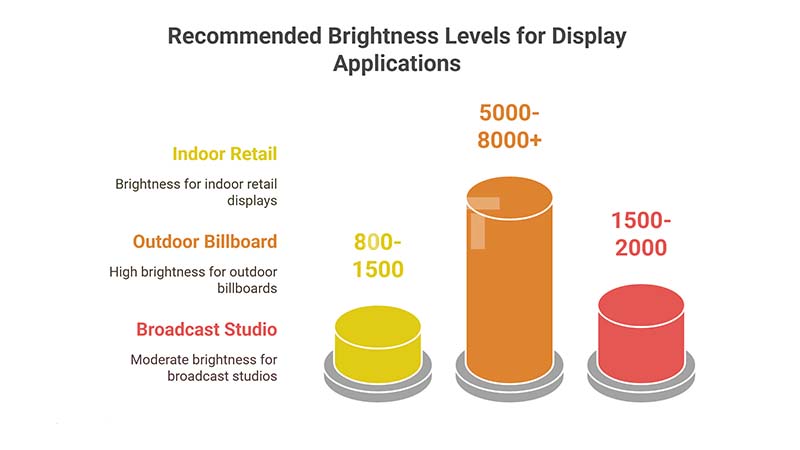
These are often used in malls, meeting rooms, or hotels. Ambient light is controlled, so LED screen brightness can be lower—around 800 to 1500 nits.
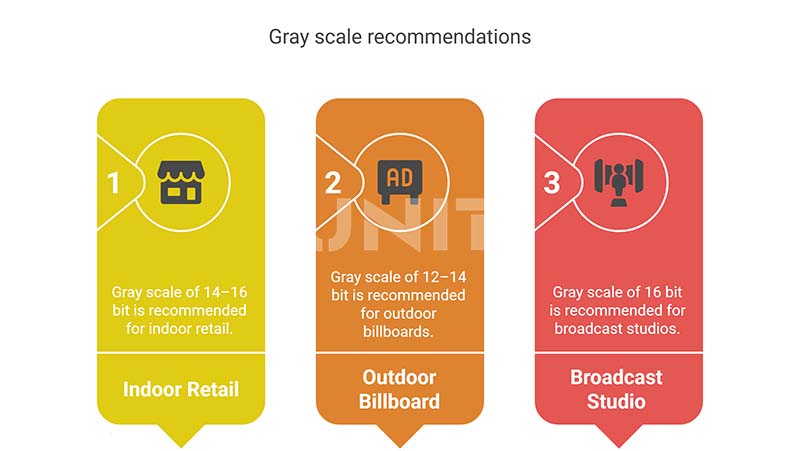
However, detail matters. A high gray scale ensures smooth visuals and better LED display image quality for text, faces, and video content.
(2) Outdoor LED Billboards
For outdoor advertising, visibility is key. Go for a display with 5000+ nits to ensure clear content even under direct sunlight.
While gray scale still matters, LED screen brightness takes priority here.
Automatic brightness adjustment using ambient light sensors is a plus.
(3) Broadcast and Studio LED Displays
These applications demand the best of both. High gray scale ensures subtle image transitions on camera, while consistent brightness levels prevent flicker or shadows.
This is where understanding both gray scale definition and what is a nit brightness is becomes critical.
Industry Examples
(1) Retail Windows
Bright screens attract attention. But if colors look washed out, you lose impact.
A good balance of gray scale and brightness helps products pop.
(2) Stage Design
Whether it’s a concert or theater show, image quality matters. A rich grayscale meaning brings depth to backgrounds and effects.
(3) Corporate Branding
In lobbies or showrooms, smooth and professional visuals enhance your brand. This calls for an accurate gray scale and comfortable brightness.
(4) Traffic Management
Outdoor signs and dashboards must stay visible day and night.
High LED screen brightness and automatic adjustment keep information readable in all conditions.
Cost vs Performance Consideration
Higher gray scale and brightness often mean higher cost. So, when is it worth the investment?
Yes, invest when image quality is central to your brand or audience experience—e.g., luxury retail, live events, or broadcast.
Save cost for basic signage or small displays in low-light areas, where standard performance is enough.
Finding the right balance of LED display gray scale and brightness level based on usage helps maximize ROI without overpaying.
6. Common Myths and Misunderstandings
Let’s bust a few myths about gray scale and brightness that confuse many buyers:
Myth 1: Higher Brightness = Better Image Quality
This is not always true. More brightness can improve visibility outdoors, but too much in indoor settings can cause eye fatigue or glare.
Without good gray scale, high brightness just leads to flat, lifeless visuals. For the best LED display image quality, both need to be optimized.
Myth 2: Gray Scale Only Matters for Photography Displays
False. Gray scale is essential for any display that shows detailed images, videos, or gradients.
It affects how natural skin tones, shadows, and transitions look. Strong gray scale definition enhances overall image quality and engagement even in retail and advertising.
Myth 3: Adjusting Brightness Will Harm Gray Scale Quality
This used to be a problem in older systems. But with modern PWM technology and smart calibration, LED screen brightness can be adjusted without losing gray scale accuracy.
Advanced processing chips now maintain high LED display gray scale even at low brightness, ensuring smooth images in any light.
7. Why Work With a Trusted LED Display Manufacturer?
A good LED display is about much more than just resolution or screen size.
To ensure the highest performance, you need a screen with an excellent gray scale and optimized LED screen brightness.
That’s where working with a professional LED display manufacturer makes a big difference.
What Sets the Best Manufacturers Apart?
The most reliable LED display companies offer:
- High gray scale levels even at low brightness, preserving image quality in all settings
- Advanced driver ICs and PWM control to deliver precise color performance
- Smart brightness adjustment using ambient light sensors for indoor and outdoor environments
- Custom display solutions based on your unique application and budget
- Technical support from design to installation
What We Offer
At UNIT LED, we specialize in high-quality LED displays tailored to your needs. Our products include:
- LED screens with 16-bit gray scale support, delivering over 65,000 color levels for smooth, detailed visuals
- Brightness up to 6500 nits, making content visible even under direct sunlight
- Full consultation, including project design, product selection, and after-sales support
Whether you need a high-performance indoor video wall or a large outdoor LED billboard, we’ll help you achieve the right balance between gray scale definition and brightness level—without compromise.
8. FAQs
Q1. Does higher brightness mean better image quality?
Not always. Extremely high brightness can:
Cause glare
Reduce perceived gray scale
Increase power consumption
The best displays balance brightness and gray scale.
.elementskit-card END
Q2. How are gray scale and brightness related?
Brightness sets the maximum output, while gray scale determines how finely the brightness is distributed. At higher brightness, some LED systems lose low-brightness detail, reducing grayscale performance.
.elementskit-card END
Q3. What is low-brightness grayscale compensation?
This technology improves color reproduction and details when the brightness is reduced, often using:
PWM optimization
Gamma correction
Curve compensation algorithms
It allows displays to maintain high quality at lower brightness levels.
.elementskit-card END
Q4. Why do LED screens look washed out at high brightness?
When brightness is too high, the lighter part of the grayscale range gets compressed, making images appear:
Overexposed
Low-contrast
Less vivid
Proper brightness tuning solves this.
.elementskit-card END
Q5. What is HDR technology in LED displays?
HDR (High Dynamic Range) enhances brightness range and grayscale detail by:
Increasing brightness peak value
Enhancing contrast
Improving gradient transitions
HDR displays show brighter highlights and deeper blacks.
.elementskit-card END
Q6. Why does gray scale decrease at low brightness?
Many LED drivers cannot control current precisely in low-current ranges, causing loss of detail. Advanced driver ICs eliminate this issue.
.elementskit-card END
Q7. How to improve LED grayscale performance?
Use:
Higher-bit driver ICs
HDR engine
Gamma adjustment
Low-brightness enhancement algorithms
Proper calibration procedures
.elementskit-card END
Q8. Will higher grayscale increase cost?
Yes, advanced ICs and processing hardware increase system cost. However, it significantly improves image quality, especially in professional applications.
.elementskit-card END
9. Conclusion
In LED technology, two things matter most: gray scale and brightness.
Gray scale enhances color depth and detail. It makes images look real, smooth, and vibrant.
Brightness ensures your content stands out in any lighting—indoors or outdoors.
Understanding the grayscale meaning and what is a nit brightness helps you make smarter decisions when choosing an LED display. Getting this right means better engagement, better visibility, and better business results.
Looking for expert advice on LED screen brightness or LED display gray scale? Contact us today for a free consultation and customized quote!