LED Package: Technologies & Main Types & How to Choose
In the LED display industry, LED package is one of the most decisive factors that determine the performance, visual quality, and durability of a screen.
From massive outdoor advertising billboards to fine-pitch indoor video walls, the way LED chips are packaged, whether DIP, SMD, COB, or the emerging Mini/Micro LED, directly shapes brightness, resolution, color consistency, and lifespan.
This post will guide you through the LED packaging technology, types, applications, advantages, and future trends, helping you to make smarter decisions when choosing LED display solutions.
Table of Contents
1. What Is LED Package?
An LED package is the process of enclosing an LED chip within a protective structure that enables it to function reliably in a display system. At its core, the LED packaging process involves:
● Mounting the LED chip on a substrate or lead frame.
● Wiring and bonding the chip to establish electrical connections.
● Encapsulating the chip with resin, epoxy, or other materials for protection.
● Optimizing optical design through lenses or phosphors to shape light emission.
● Enhancing heat dissipation to ensure longevity and stable performance.
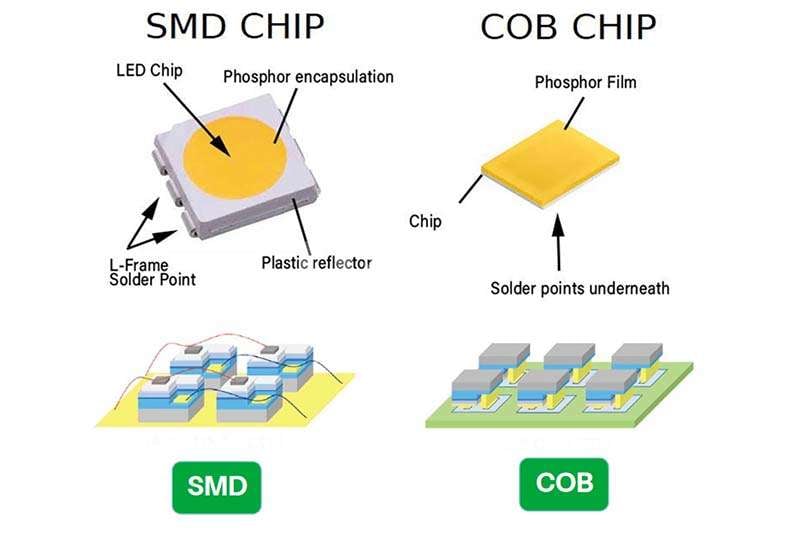
The LED package transforms a fragile semiconductor chip into a robust, market-ready component capable of meeting diverse application needs.
Key Functions of LED Packaging
For LED screens, packaging is not just about protecting the chip, the importance of LED packaging lies in its multi-functional role:
● Protection: Safeguards the LED chip from moisture, dust, and mechanical damage.
● Light Extraction: Improves luminous efficiency by managing light direction and output.
● Color Conversion: Uses phosphors to convert blue LED light into white or other colors.
● Thermal Management: Provides a pathway for heat dissipation, preventing performance degradation.
● Electrical Connection: Ensures reliable current flow from the external circuit to the LED chip.
In simple terms, LED packaging transforms fragile semiconductor chips into display-ready components, making it possible to build robust and high-performing LED video walls for both indoor and outdoor applications.
2. Evolution of LED Package Technologies
The evolution of LED package technologies has been central to advancing LED displays, enabling higher brightness, finer resolution, and more durable screens for both indoor and outdoor applications.
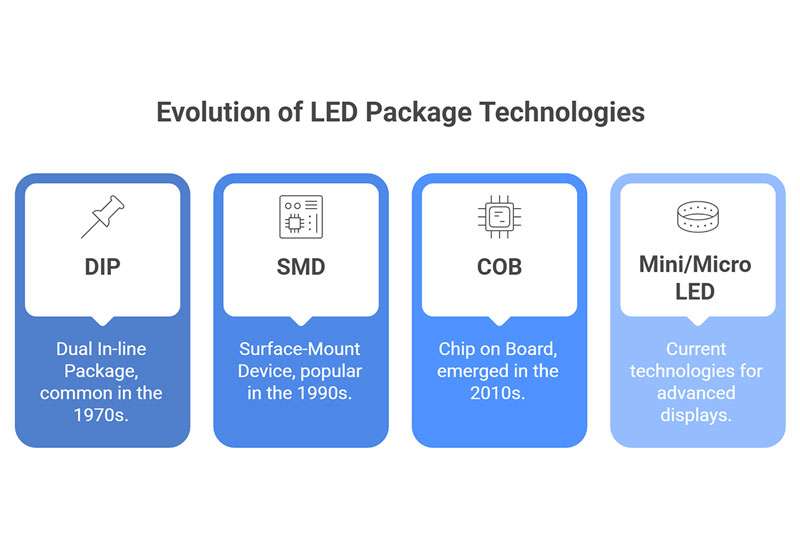
- 1970s – DIP (Dual In-line Package):
DIP LEDs were the first widely used packaging technology. They offered high brightness and durability, making them suitable for outdoor billboards and stadium screens. However, their bulky size limited pixel density and resolution, restricting their use in modern high-definition displays.
- 1990s – SMD (Surface-Mount Device):
SMD technology revolutionized LED displays by mounting chips directly onto a PCB. This enabled smaller pixel pitches, higher resolution, and wider viewing angles, making SMD the preferred choice for indoor video walls, retail signage, and flexible display designs.
Learn more about SMD vs COB here.
- 2010s – COB (Chip on Board):
COB packages mount multiple LED chips directly on a substrate, creating seamless surfaces and improving thermal management. This technology became ideal for fine-pitch, high-end indoor displays, such as control rooms and broadcast studios.
- Present – Mini LED and Micro LED:
Today, Mini and Micro LEDs represent the cutting edge. They allow ultra-fine pixel pitches, exceptional brightness, and energy efficiency, driving next-generation displays in AR/VR, ultra-high-definition video walls, and premium commercial applications.
3. Main LED Packages Types for LED Displays
Different LED packages directly determine how an LED display performs in terms of brightness, resolution, viewing experience, and durability. Below are the main LED packaging types used in LED screens:
① DIP LED Package
DIP (Dual In-line Package) represents one of the earliest LED packaging technologies. It features a simple structure composed of an LED chip, a frame, leads, and epoxy encapsulation. DIP LEDs typically have two through-hole leads that can be soldered onto a circuit board, similar to traditional electronic components.
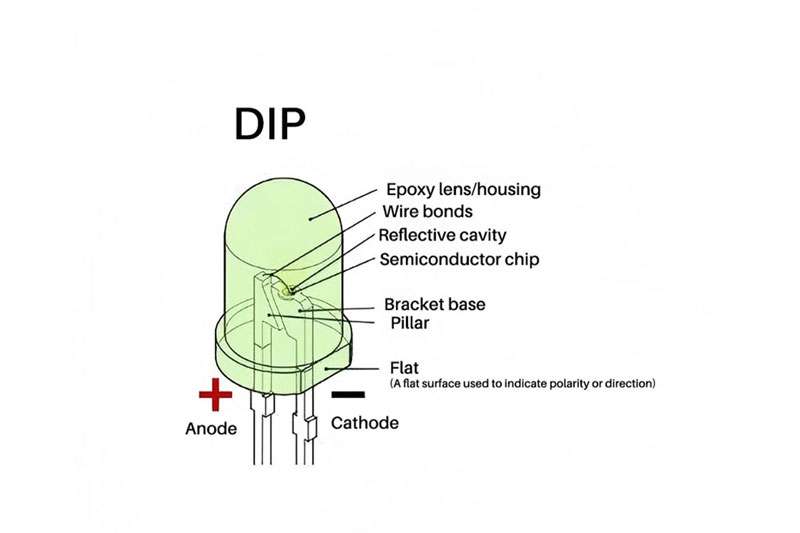
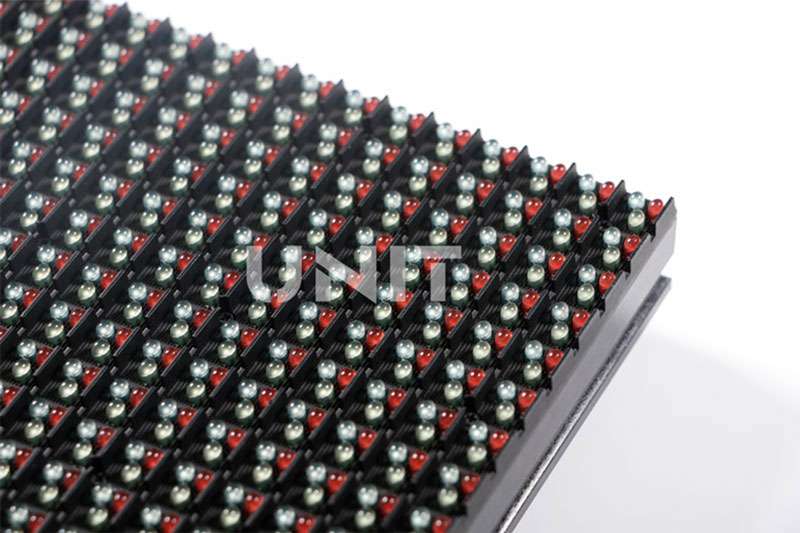
Advantages:
- Simple structure and low cost: The manufacturing process is mature, making production cost-effective.
- High reliability and long lifespan: The robust structure of DIP LEDs provides strong shock resistance and long operational life.
- Good heat dissipation: The leads efficiently transfer heat to the circuit board, ensuring effective thermal management.
Disadvantages:
- Large size and low integration: DIP LEDs occupy more space compared to modern packaging technologies.
- Narrow viewing angle and limited luminous efficiency: The light emission angle is relatively small, and the luminous efficiency is lower, making it less suitable for high-brightness and wide-angle lighting applications.
https://youtu.be/jrhoKKoFvS8?si=WB_tKipH35s_Neskhttps://youtu.be/1L4Zv2HBFWg?si=U_jmKF92-MEHhsBi
② SMD LED Package
SMD LED packaging has rapidly developed in recent years. Traditionally, SMD technology encapsulates one RGB (red, green, blue) chip per LED, which is then soldered onto a PCB using SMT (Surface-Mount Technology) to form a unit module, and these modules are combined to create a complete LED screen.
Unlike DIP LEDs, SMD LEDs have no long leads; they are compact, come in various shapes, and can be customized according to different application requirements.
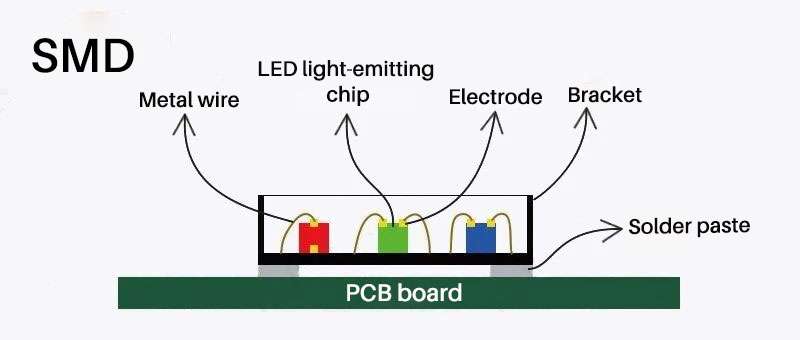
Advantages:
- Easy maintenance: Individual LEDs can be replaced when damaged, reducing repair costs.
- Mature supply chain and high reliability: Stable production and cost-effective.
- Flexible applications: Suitable for a wide range of scenarios, from large outdoor screens to standard indoor displays.
Disadvantages:
- Weaker protection: LEDs are soldered onto the PCB via a frame, making them vulnerable to falling off if impacted.
- Limited pixel pitch: The packaging process restricts achieving extremely small pixel spacing.
- Visual experience limitations: As point light sources, SMD LEDs can produce a granular effect, making them less suitable for long-distance close-up viewing.
- Limited heat dissipation: Small size limits thermal area, often requiring auxiliary heat sinks.
- Relatively high cost: Complex manufacturing process results in higher costs compared to DIP.
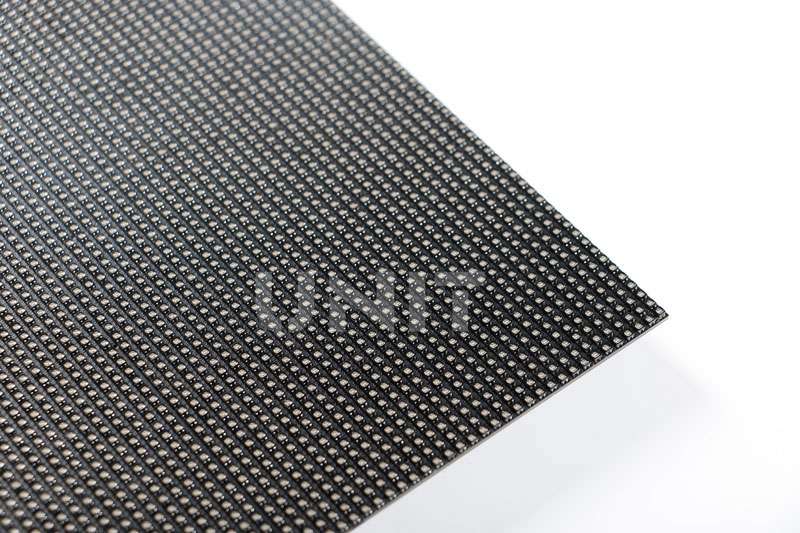
https://youtu.be/ohJqDnhJ1M4?si=T7gUVIfXz6ozAgBX
③ COB LED Package
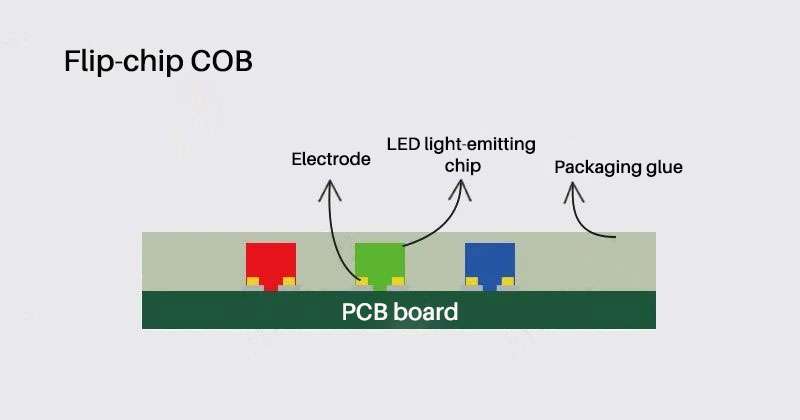
COB, or Chip on Board, involves directly soldering multiple RGB chips onto a single PCB, followed by an integrated encapsulation to form a unit module, which is then assembled into a complete COB LED display. COB packaging comes in two types: upright COB and flip-chip COB.
Upright COB has limitations in performance due to the emission angle and wire bonding distance. Flip-chip COB, as an upgraded version, enhances reliability, simplifies production, delivers superior display quality, offers excellent close-up viewing, and achieves true chip-level (Micro) pixel pitch.
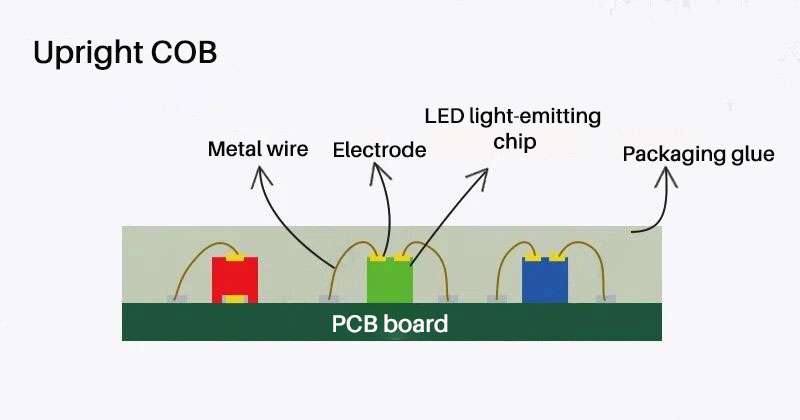
Compared to SMD, COB screens cannot sort individual LEDs for optical consistency, so full-screen calibration is typically required before shipment.
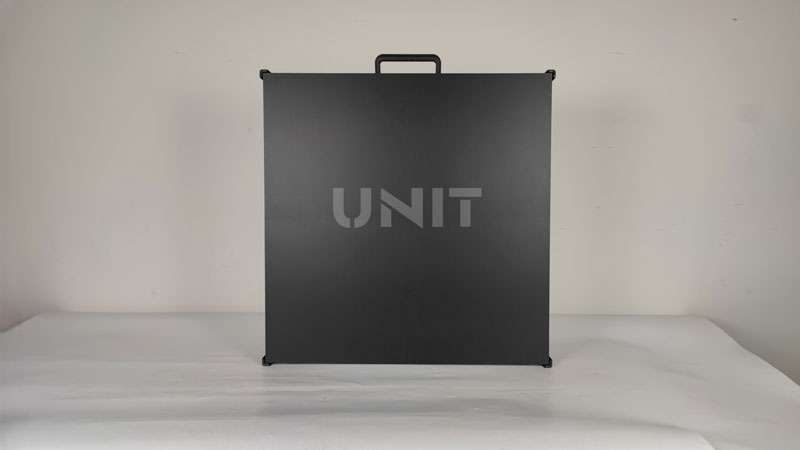
Advantages:
- Excellent display quality: COB is a surface light source, providing uniform brightness and detailed visuals. Pixel pitches below P1.25, such as P0.9 or P0.7, allow ultra-high-definition 8K/16K video.
- Strong protection: Chips are encapsulated in resin, offering shock resistance, moisture protection, and dust resistance; LEDs are less likely to fall off.
- Color uniformity: Chips are evenly mounted with consistent emission angles, avoiding uneven brightness and producing harmonious visuals.
Disadvantages:
- High maintenance cost: Due to integrated packaging, a damaged module requires the replacement of the entire unit.
- High production cost: Complex manufacturing processes and advanced equipment increase costs compared to SMD.
- Higher price: Equipment and process requirements lead to a higher market price.
④ GOB LED Package
GOB, or Glue On Board, is a specialized LED display packaging technology. It involves fixing LED chips onto a PCB and filling the gaps between them with optical thermal-conductive nano-level glue, creating a tightly connected and highly protective structure.
Originally developed to address the protection of LED chips, GOB uses advanced optical thermal-conductive nano materials and special processes to encapsulate the PCB and AMD LEDs, while applying a matte double-surface optical treatment.
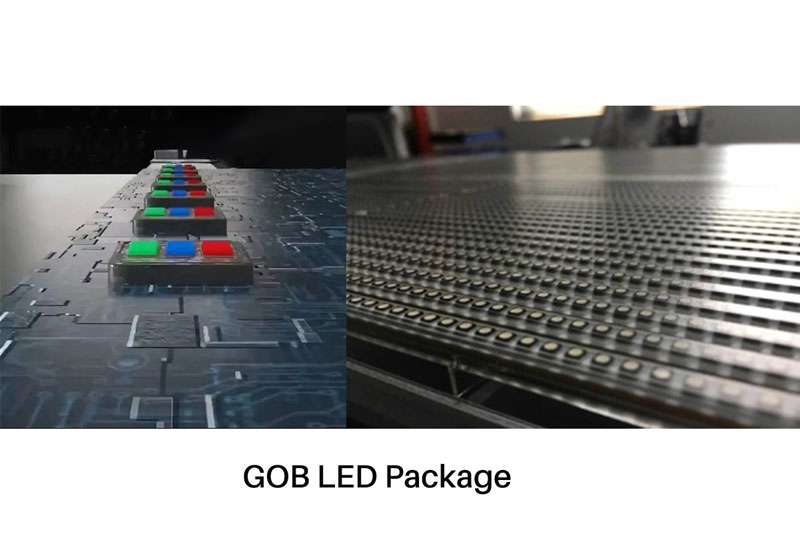
Advantages:
- Superior protection: Offers resistance to water, moisture, impact, dust, corrosion, blue light, salt, and static electricity.
- Enhanced display quality: The matte surface converts point light sources into surface light sources, increasing viewing angles, improving color contrast, effectively eliminating moire patterns, reducing visual fatigue, and delivering more delicate visuals.
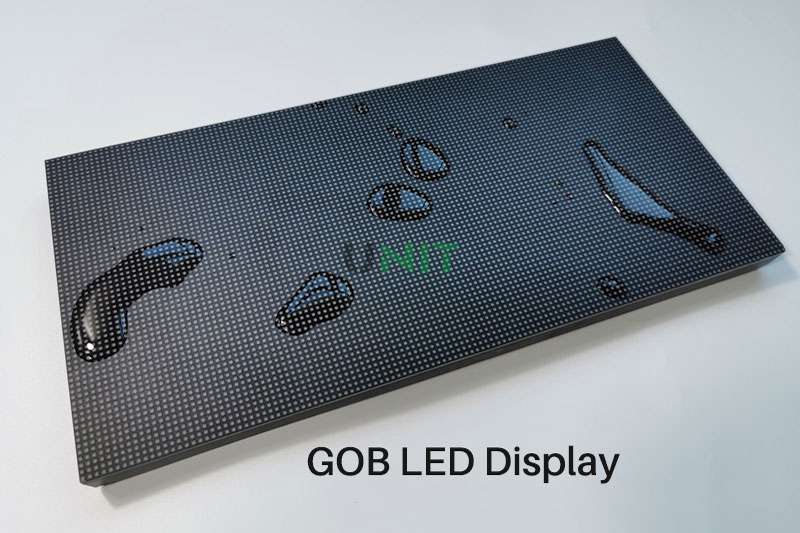
Disadvantages:
- GOB packaging involves higher production costs and complex processes, requiring precise manufacturing conditions.
⑤ MiP Technology
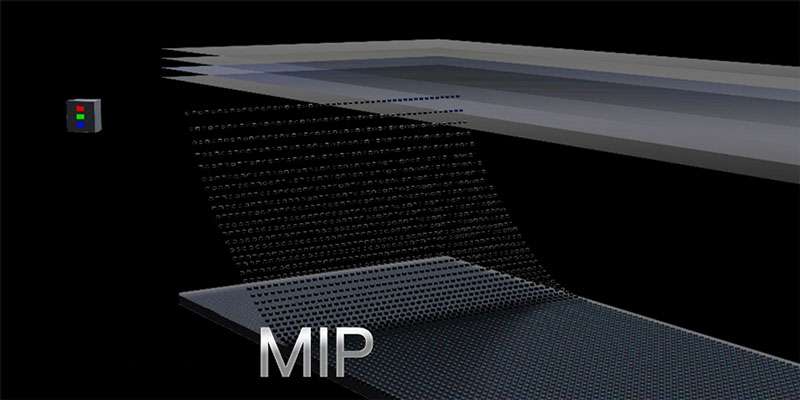
MiP (Micro LED in Package) is an innovative packaging technology designed for new Micro LED chips and is considered by many industry professionals as the future standard for LED displays with pixel pitches from P0.2 to P3.0 and high-performance indoor displays.
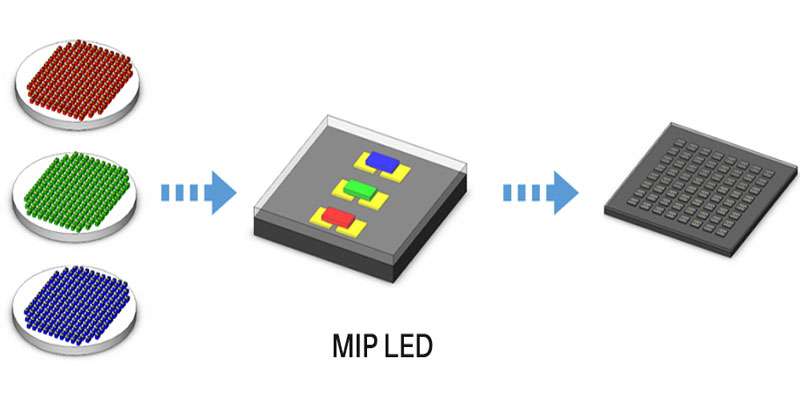
MiP technology involves cutting LED chips on a panel into single or multi-chip micro devices. After optical sorting and color mixing, the chips are soldered onto a PCB using SMT to form LED display modules.
This innovative approach, tailored for Mini/Micro LED chips, employs mass transfer, packaging, cutting, and optical mixing processes to produce smaller chips with lower energy consumption and higher display consistency, while also potentially reducing costs and increasing production output, significantly improving LED display performance and efficiency.
Advantages:
- Extremely fine detail: Pixel pitches can reach P0.7 or smaller, delivering highly detailed visuals.
- High integration: Fewer solder points, strong impact and vibration resistance, ideal for high-stability applications.
- Ultra-high-definition performance: Uniform visuals with high brightness and high contrast.
- High reliability and protection: Excellent resistance to impact, moisture, and dust.
Disadvantages:
- High process requirements and cost: Complex manufacturing processes and advanced equipment are required.
- Limited applications: Primarily used in laboratories and high-end consumer electronics, not yet widely adopted in everyday life.
Here is a comparison table about DIP vs SMD vs COB vs GOB vs MIP LED packaging:
|
Package Type |
Pixel Pitch |
Brightness |
Durability |
Viewing Angle |
Best For |
|
DIP |
Typically P6-P20 |
Medium |
High, robust, and shock-resistant |
Narrow |
Outdoor displays, traditional LED screens |
|
SMD |
Typically P1.5-P10 |
Medium-High |
Medium; less impact-resistant |
Medium-Wide |
Indoor screens, general-purpose displays |
|
COB |
P0.7-P1.86 |
High |
High; encapsulated, dust/water resistant |
Wide |
Command centers, broadcast studios, high-end conference rooms |
|
GOB |
Typically P1.5-P10 |
High |
Very High; superior protection against water, dust, impact, corrosion |
Wide |
Harsh environment displays, high-protection indoor/outdoor screens |
|
MiP |
P0.2-P0.7 |
Very High |
High, strong integration, impact-resistant |
Wide |
Ultra-high-definition indoor displays, labs, high-end consumer electronics |
4. Key Performance Parameters of LED Packages
When choosing an LED package, it is essential to consider these performance parameters:
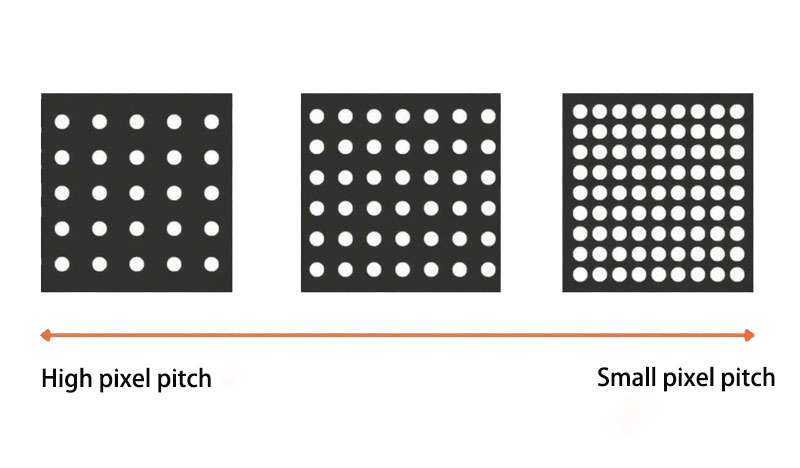
● Pixel Pitch: Determines display resolution. Smaller pixel pitch provides higher detail and clarity, ideal for close-viewing applications.
● Brightness: Measured in nits, brightness affects visibility under different ambient light conditions. High brightness is crucial for outdoor displays.
● Durability: Quality packaging materials and good thermal management ensure long-term reliability.
● Viewing Angle: Wider angles provide uniform visibility from different positions.
● Color Uniformity: Advanced phosphor materials and precise packaging prevent color inconsistency.
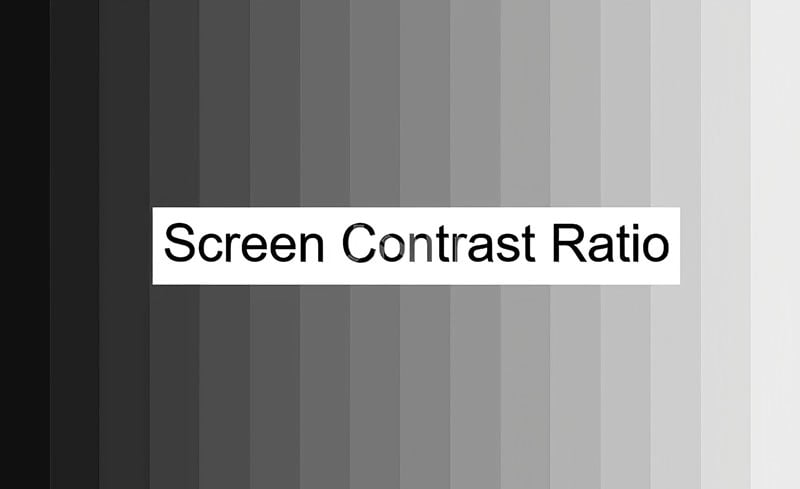
● Contrast ratio: The screen contrast ratio of the brightest white to the darkest black, determines image depth and HDR performance, making it crucial for high-end indoor and professional displays.
● Power Efficiency: Efficient LEDs reduce energy consumption and heat generation.
Balancing these factors according to your application ensures optimal display performance. For example, indoor fine-pitch SMD LEDs offer crisp images up close, while GOB LEDs withstand outdoor weather conditions.
5. How LED Package Impacts Display Quality?
The LED package plays a critical role in determining the overall quality and performance of an LED display. Its design and materials directly affect brightness, color accuracy, viewing angles, durability, and thermal management. High-quality LED packages ensure uniform light output, prevent color inconsistencies, and reduce hotspots, resulting in a visually seamless display.
|
Impact Area |
Description & Effect |
|
Brightness & Uniformity |
A well-designed package distributes light evenly across each pixel, maintaining consistent brightness across the screen. |
|
Color Accuracy |
Advanced phosphor coatings and precise packaging technology ensure that colors remain true to the source material. |
|
Thermal Management |
Efficient heat dissipation prevents LED degradation, extends lifespan, and maintains consistent performance over time. Packages like COB, GOB, and MIP excel in thermal management. |
|
Seamless Appearance |
Some LED packages, such as COB, GOB, and MIP, minimize gaps between pixels, creating a smooth and immersive visual experience without visible black lines or pixel separation. |
|
Durability & Reliability |
The encapsulation and protective design of the LED package safeguard against environmental factors like moisture, dust, and physical impact, reducing maintenance needs and ensuring long-term reliability. |
6. How to Choose the Right LED Package for Your Project?
Selecting the right LED package is crucial to ensure your display delivers optimal performance, longevity, and visual impact. Several factors should be considered:
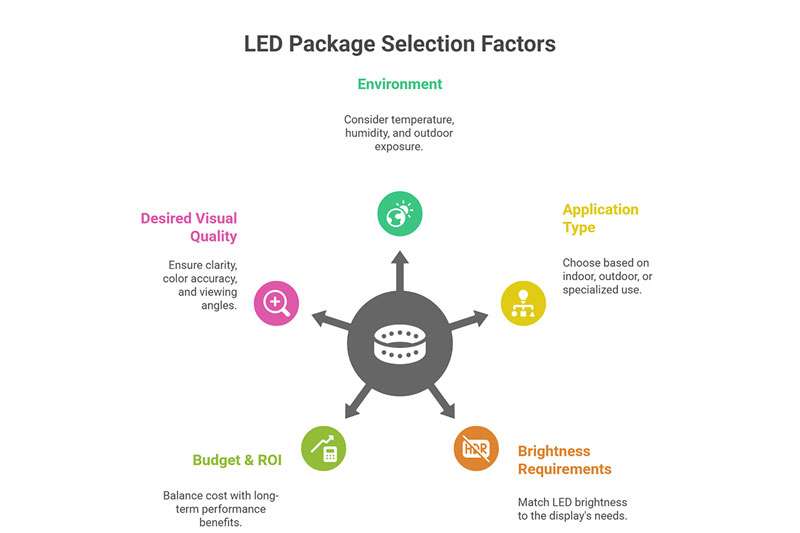
|
Factor |
Considerations |
Recommended LED Package |
|
Environment |
Indoor or outdoor, exposure to moisture, dust, and extreme temperatures |
Indoor: SMD, COB; Outdoor: SMD (with IP65+ protection), GOB |
|
Viewing Distance |
How close viewers will be to the display |
Close-viewing: smaller pixel pitch (0.9-2mm); Long-distance: larger pixel pitch (8-32mm) |
|
Application Type |
Advertising, stadiums, rental events, creative installations |
SMD for high-resolution indoor/outdoor walls, COB for seamless creative displays, DIP for large outdoor stadiums, GOB for harsh outdoor environments |
|
Brightness Requirements |
Ambient light conditions and visibility needs |
Outdoor high-brightness: SMD (5000-10000 nits), GOB; Indoor: SMD or COB |
|
Budget & ROI |
Project cost vs long-term maintenance |
High-end packages (MIP/COB) provide durability and low maintenance; cost-effective packages (SMD/DIP) for short-term or rental projects |
|
Desired Visual Quality |
Resolution, color accuracy, and seamlessness |
Smaller pixel pitch, MIP or COB for ultra-high resolution and seamless screens |
Key Tips:
- Match pixel pitch with viewing distance to avoid pixelation or blurred visuals.
- Ensure outdoor SMD LEDs meet IP65+ standards and high brightness requirements for daylight visibility.
- Balance budget and performance: investing in a premium LED package can reduce long-term maintenance costs and improve visual quality.
- Choose packages suited for the content type: HDR or high-detail applications benefit from MIP or COB technology.
By evaluating these factors, you can select the LED package that ensures your display performs reliably, looks impressive, and meets both project and business objectives.
7. Conclusion
The LED package is the foundation of every LED display, influencing performance, durability, and visual quality. From DIP to SMD, COB, GOB and MIP LED technologies, each package has unique advantages suited to different applications. By understanding the evolution, types, and performance parameters of LED video wall packages, you can select the most suitable solution for indoor, outdoor, advertising, or creative LED displays.
Remember: The right LED package not only enhances your LED display’s performance but also strengthens your credibility as a provider of premium LED solutions.