LED Display 16:9 Aspect Ratio vs 4:3: How to Choose
In the world of digital display technology, the 16:9 aspect ratio has become the dominant standard across televisions, monitors, broadcasting systems, and LED screens.
The 16:9 aspect ratio LED display is now the standard for video walls and commercial use. It supports HD to 8K content with full-screen playback, no stretching or black bars, ensuring clear visuals, proper proportions, and strong impact.
https://youtu.be/Kgvo45sucC0?si=NIaW31m_n5vvrx_L
Although 4:3 LED display aspect ratio exists in certain legacy systems, monitoring environments, or vertically-limited spaces, most current digital advertising, broadcast media, and presentation formats are created in 16:9.
This guide focuses on why 16:9 is the preferred LED display format, how it compares to other formats (4:3 aspect ratio), and how to select the ideal ratio for your specific LED screen installation.
Table of Contents
1. What is Screen Ratio?
Screen ratio, also known as aspect ratio, refers to the proportional relationship between the width and height of a display screen. It is expressed using two numbers separated by a colon, for example, 16:9 aspect ratio, 4:3 aspect ratio, 21:9 aspect ratio.
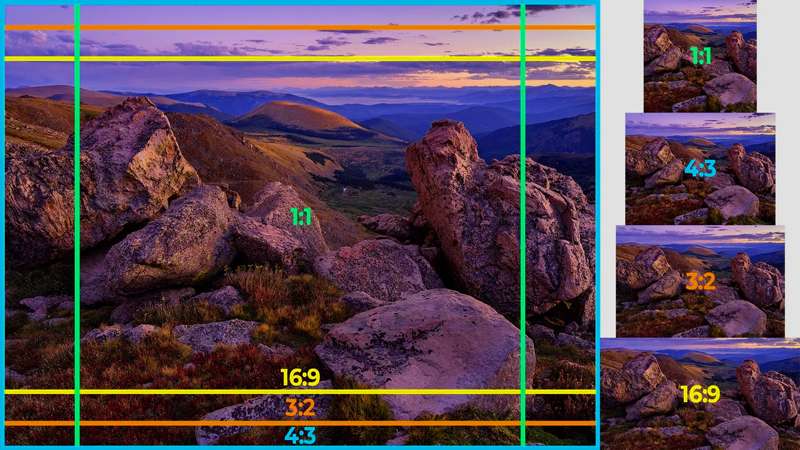
Instead of indicating actual physical size, aspect ratio represents a shape ratio, helping users understand how video, graphics, and layout are displayed.
The aspect ratio of an LED display determines how content appears on the screen, whether images stretch, scale correctly, or display with black bars. When the content’s ratio matches the LED screen ratio, the viewer experiences accurate proportions, balanced visuals, and a full-screen presentation. If the format does not match, the result may include distortion, cropping, or letterboxing.
1.1 Screen Ratio vs Screen Size: What Is the Difference?
Screen ratio and screen size are different concepts. Screen ratio describes the shape of the LED display, such as 16:9, 4:3, 21:9, or 9:16. Screen size describes the actual physical width, height, or diagonal size of the screen.
For example, a 110-inch LED display and a 220-inch LED display can both use a 16:9 aspect ratio. Their shape is the same, but their actual width, height, pixel quantity, cabinet quantity, and viewing distance are different.
That is why buyers should not only ask for a “16:9 LED screen”. They should also confirm the installation space, viewing distance, pixel pitch, target resolution, and content format before choosing the final LED display size.
1.2 Why Aspect Ratio Matters for LED Displays?
LED display aspect ratio influences overall performance in several ways:
-
Visual experience – displays image proportion as originally intended -
Content compatibility – avoids resizing or pixel loss -
Installation planning – determines cabinet configuration and screen dimensions -
Broadcast and media adaptability – aligns with standard video formats -
Future scalability – ensures long-term suitability for HD and 4K/8K media
For commercial LED display applications, choosing the correct aspect ratio is equally as important as choosing pixel pitch, resolution, brightness, or LED type.
1.3 Common Screen Aspect Ratios
Screen aspect ratio directly shapes how visual content appears on LED installations. While multiple ratios exist, not all are commonly applied in modern projects. Below is a structured overview of today’s mainstream display ratios.
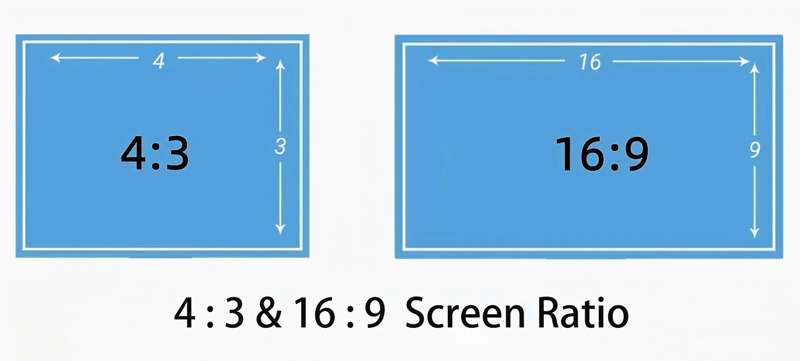
① 4:3 Aspect Ratio — Traditional Display Format
The 4:3 ratio was widely used in first-generation televisions, projectors, and data monitors. While its usage has dropped significantly, it still appears in specific environments.
Today, 4:3 serves more as a legacy or special-purpose display ratio rather than a universal deployment option.
② 16:9 Aspect Ratio — Current Industry Standard
The 16:9 aspect ratio is now the dominant format used across commercial display applications. This ratio inherently matches mainstream digital and broadcasting formats, including HD, Full HD, UHD, and 8K video.
Common resolutions aligned to 16:9 include:
- 1920×1080
- 3840×2160
- 7680×4320
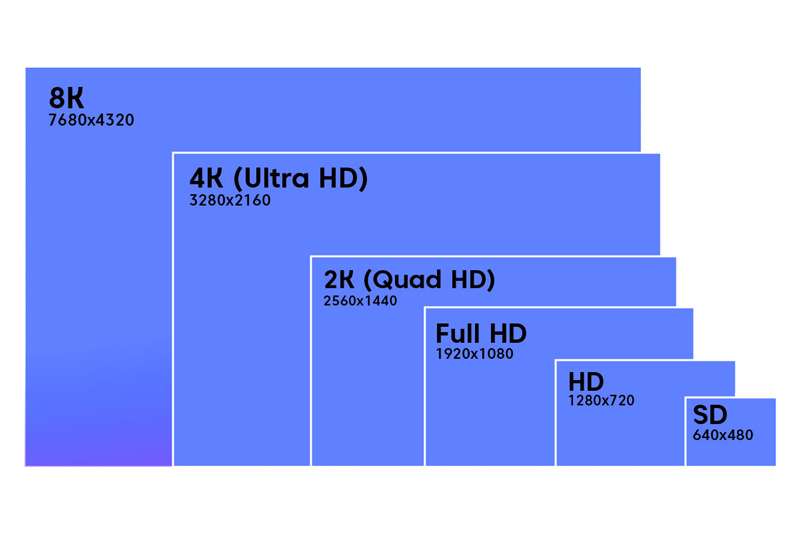
Because no aspect correction or conversion is required, 16:9 delivers the lowest resource consumption and the most realistic picture output.
③ 16:10 Aspect Ratio — Widely Used in Computing Displays
The 16:10 ratio sits between 4:3 and 16:9 aspect ratios, offering slightly increased vertical workspace. It was popular in professional computing workstations and some early high-resolution LED display systems.
However, its limitations include: not compatible with standardized video broadcasting, often requires scaling adjustment.
Its usage in LED advertising fields continues to decline as 16:9 remains dominant.
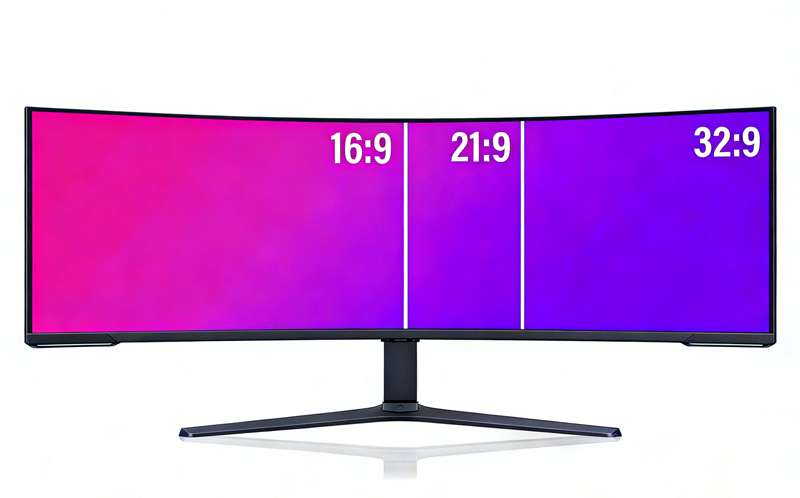
④ 21:9 Aspect Ratio — Ultra-Wide and Immersive
The 21:9 aspect ratio display, referred to as an ultra-widescreen format, delivers a wider, cinematic viewing experience, making it ideal for immersive environments.
While it offers strong visual impact and a premium display effect, it typically requires custom content formats and is mainly used for creative, high-end projects rather than standard installations.
⑤ 32:9 Aspect Ratio — Ultra-Wide Commercial Panoramic Format
The 32:9 aspect ratio display is considered a super-wide panoramic format, essentially equivalent to two 16:9 aspect ratio screens placed side-by-side. It is widely used in environments that require extended horizontal viewing, multi-window layouts, or immersive spatial visual effects.
2. What Is the 16:9 Aspect Ratio LED Display?
The 16:9 aspect ratio, commonly known as “sixteen by nine”, is the most dominant display format used today. It means for every 16 units of width, the screen height equals 9 units.
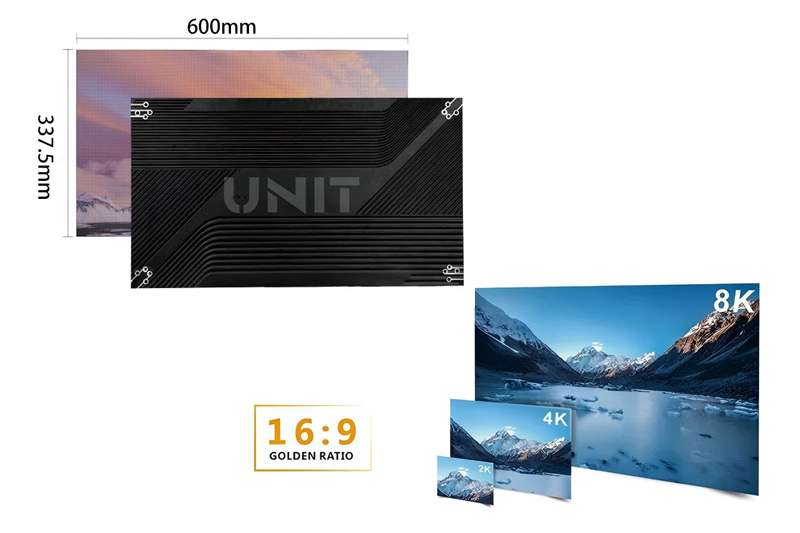
It represents a proportional relationship where the screen width is roughly 1.78 times its height, which is why it is also referred to as 1.78:1 widescreen.
For example:
|
Ratio Width |
Ratio Height |
Output Type |
|
1920px |
1080px |
Full HD LED Display |
|
3840px |
2160px |
4K UHD LED Display |
|
7680px |
4320px |
8K UHD LED Display |
The 16:9 aspect ratio LED display provides optimal horizontal viewing space while allowing balanced vertical height.
3. Why 16:9 Ratio Became the LED Displays Industry Standard?
Choosing 16:9 for an LED display brings multiple advantages, making it today’s go-to format across industries, from retail to broadcasting to live events.
(1) Universal Compatibility with Modern Content
Virtually all modern video content, whether from streaming platforms, broadcast television, live events, or digital signage, is produced in 16:9. Utilizing a 16:9 LED wall ensures that content fits perfectly, no black bars, no stretching, no cropping.
Because of this compatibility, 16:9 walls require less pre-processing or editing of content before playback, saving time, labor, and potential for errors.
(2) Seamless Modular Construction & Scalability
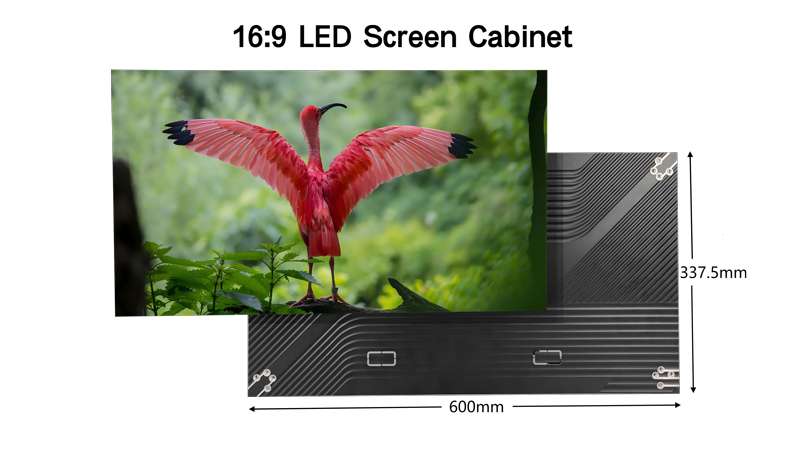
Many LED screen modules (cabinets) conform to the 16:9 aspect ratio, allowing installers to seamlessly combine multiple panels into larger walls while maintaining correct proportions.
This modularity makes it easy to expand an LED display later. For example, from a small indoor wall to a large outdoor video screen, without needing to redesign content or layout.
(3) Comfortable & Immersive Viewing Experience
The widescreen format of 16:9 better matches the natural human field of view horizontally.
This reduces eye strain during prolonged viewing and offers a more cinematic, immersive experience. Especially important for advertising, events, sports broadcasts, concerts, and retail displays.
(4) Native Support from Video Processors
Professional controllers, including Novastar, Colorlight, and Huidu are optimized for 16:9 output. Native scaling preserves dynamic image quality.
(5) Cost-effectiveness & Future-proofing
Because 16:9 aspect ratio is widely adopted, components, modules, and accessories for 16:9 LED walls are more common, which often translates into lower cost and easier procurement.
Moreover, as content standards continue to favor widescreen formats (HD, Full HD, 4K, 8K), a 16:9 LED screen is likely to remain compatible with future media, making it a safer, long-term investment.
https://youtu.be/rEVIWkt5w-o?si=91Lntd28oA9r8vFO
The 16:9 format has become the mainstream choice for modern displays, offering excellent compatibility with today’s video standards. However, its suitability also depends on specific environments, space limitations, and content orientation.
Here are some limitations:
(1) Not Suitable for Ultra-Wide Presentations
When displaying cinematic ratios such as 21:9 or 32:9, a 16:9 screen inevitably results in letterboxing or partial cropping, reducing immersive quality.
(2) Limited Performance for Vertical Content
Applications focused on portrait visuals, menu boards, navigation screens, long banners, or social-media feed displays work better in vertical formats like 9:16 and 4:3.
(3) Space Constraints in Certain Installations
In narrow or confined architectural spaces, a 16:9 horizontal layout may not optimize viewing distance or visibility, especially when vertical space is prioritized.
(4) Less Visually Dominant for Oversized Outdoor Displays
Extra-wide displays are often preferred in stadiums, urban plazas, and highways because they provide a stronger visual presence. Compared with ultra-wide formats, 16:9 layouts can appear relatively standard rather than spectacular.
In summary, the 16:9 format stands as the most versatile and application-friendly aspect ratio for modern displays, particularly in environments where video is the core content. However, designers and users should still consider space conditions and content orientation when determining the ideal screen proportion.
4. Technical Requirements for Designing a 16:9 LED Display
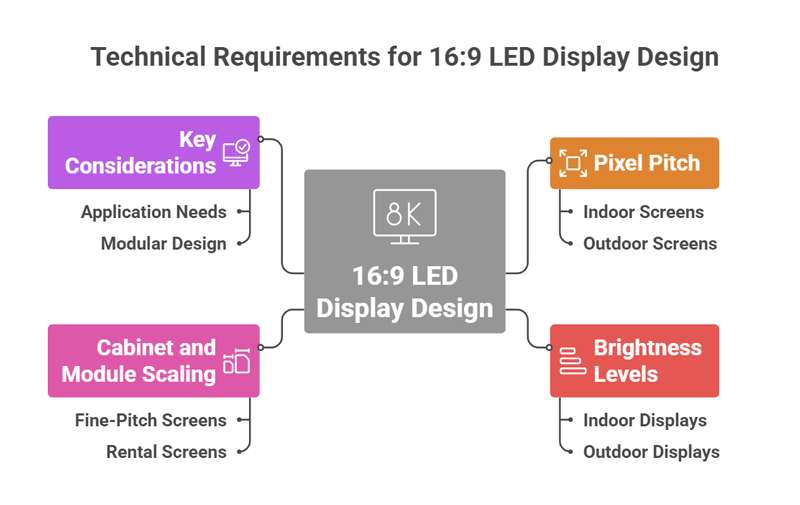
Designing a 16:9 aspect ratio LED display involves key technical factors that determine clarity, performance, and scalability. Below are the main requirements:
-
Pixel Pitch
Common pixel pitch options: P1.25, P1.56, P1.86, P2.5, P2.97, P3.91, P4.81
Indoor professional screens: P1.25 – P1.56 recommended for high-definition visuals at close viewing distances.
Outdoor advertising displays: P3.91 – P4.81 recommended for long-distance visibility.
Viewing distance must match pixel spacing to ensure optimal clarity.
-
Brightness Levels
Indoor LED displays: 600–1200 nits
Outdoor LED displays: 4000–6500 nits to withstand sunlight and maintain vivid images.
16:9 aspect ratio displays should maintain uniform brightness mapping across the entire screen width.
-
Cabinet and Module Scaling
Fine-pitch indoor screens: 600×337.5mm cabinets, exact 16:9 proportion.
Rental or stage screens: 500×500mm cabinets arranged into 16:9 formations.
Example: 3×5 cabinet assembly → 1500×2500mm → fits 2K resolution scalers.
Modular design allows flexible scaling:
- Small conference screen: 110–165 inches
- Event backwall: 10–60m²
- Custom curved auditorium walls: tailored solutions
-
Key Considerations
Ensure pixel pitch, brightness, and cabinet size match application needs.
Modular design allows for easy installation, maintenance, and scalability.
Proper planning guarantees sharp visuals, consistent brightness, and professional display quality.
This structured approach ensures your 16:9 ratio LED display performs reliably for indoor and outdoor professional applications, from conference rooms to large-scale events.
5. How to Calculate 16:9 Screen Dimensions?
The 16:9 aspect ratio defines the proportional relationship between width and height, where width is 16 units and height is 9 units. This ratio is widely used for LED displays, monitors, TVs, and video content, from HD to 8K.
If you know the screen width:
Height = Width × 9 ÷ 16
If you know the screen height:
Width = Height × 16 ÷ 9
If you know the diagonal size:
Width ≈ Diagonal × 0.8716
Height ≈ Diagonal × 0.4903
5.1 16:9 Aspect Ratio in Pixels
The 16:9 aspect ratio in pixels refers to any resolution where the width is 16 parts and the height is 9 parts. The actual pixel numbers depend on the screen size or desired resolution.
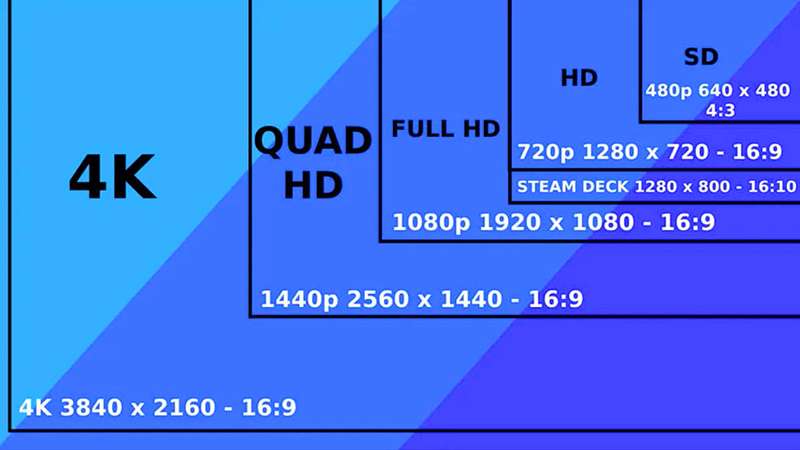
(1) How to Calculate 16:9 Aspect Ratio in Pixels?
First, choose the width or height you want.
To calculate 16:9 dimensions:
Given width → Height = Width × 9 ÷ 16
Given height → Width = Height × 16 ÷ 9
Because it’s a ratio, it can be scaled up or down infinitely while maintaining the 16:9 aspect ratio shape.
(2) 16:9 Aspect Ratio in Pixels Calculator
|
Resolution |
Width |
Height |
Total Pixels |
|
nHD |
640 |
360 |
307,200 |
|
FWVGA |
854 |
480 |
409,920 |
|
qHD |
960 |
540 |
518,400 |
|
WSVGA |
1024 |
576 |
589,824 |
|
HD (720P) |
1280 |
720 |
921,600 |
|
FWXGA |
1366 |
768 |
1,049,088 |
|
HD+ |
1600 |
900 |
1,440,000 |
|
Full HD (1080P) |
1920 |
1080 |
2,073,600 |
|
QHD |
2560 |
1440 |
3,686,400 |
|
QHD+ |
3200 |
1800 |
5,760,000 |
|
4K UHD |
3840 |
2160 |
8,294,400 |
|
5K |
5120 |
2880 |
14,745,600 |
|
8K UHD |
7680 |
4320 |
33,177,600 |
|
16K UHD |
15360 |
8640 |
132,710,400 |
5.2 16:9 Aspect Ratio in Inches
When discussing a 16:9 aspect ratio in inches, we refer to the physical size of a display measured diagonally and how its width and height relate to that diagonal.
The aspect ratio (16:9) never changes; only the actual screen dimensions change depending on the diagonal.
16:9 Aspect Ratio in Inches Calculator
| Diagonal (inches) | Width (in) | Height (in) | Notes |
| 24″ | 20.9″ | 11.8″ | Typical computer monitor |
| 27″ | 23.5″ | 13.2″ | Gaming/office monitor |
| 32″ | 27.9″ | 15.7″ | Small TV or large monitor |
| 43″ | 37.5″ | 21.1″ | Living room TV |
| 55″ | 47.9″ | 27.0″ | Standard flat-panel TV |
| 65″ | 56.7″ | 31.9″ | Home theater display |
| 75″ | 65.4″ | 36.8″ | Large living room TV |
| 85″ | 74.1″ | 41.7″ | Auditorium/signage |
Tip: To quickly estimate, multiply the diagonal by 0.87 for width and 0.49 for height.
The 16:9 aspect ratio defines the screen’s shape, while the diagonal determines its actual size. Using the formulas above, you can easily calculate width and height for any 16:9 display, whether a small monitor or a massive LED video wall.
5.3 16:9 Aspect Ratio Screen Sizes
The 16:9 format is the standard aspect ratio for modern LED displays, perfectly compatible with HD, Full HD, 4K, and 8K video content. Ideal for advertising, stage LED backdrop screens, sports scoreboards, and corporate presentations, 16:9 LED screens offer consistent width-to-height ratios, making content creation easier across any display size.
Modular design allows LED screens to be built in various dimensions while maintaining the 16:9 ratio. This ensures that videos or presentations fit seamlessly on any screen, from small indoor panels to large outdoor video walls.
| Screen Size (Diagonal) | Pixel Pitch (mm) | Width × Height (mm) | Width × Height (m) | Typical Applications |
| 43″ | P2.5 | 1072 × 603 | 1.07 × 0.60 | Small indoor signs, conference rooms |
| 55″ | P2.9 | 1380 × 777 | 1.38 × 0.78 | Retail advertising, corporate lobbies |
| 75″ | P3.9 | 1886 × 1060 | 1.89 × 1.06 | Showrooms, classrooms, small stages |
| 110″ | P4.8 | 2766 × 1556 | 2.77 × 1.56 | Medium conference halls, control rooms |
| 165″ | P6.0 | 4148 × 2332 | 4.15 × 2.33 | Large exhibitions, shopping malls |
| 220″ | P8.0 | 5536 × 3114 | 5.54 × 3.11 | Outdoor billboards, sports venues |
| 330″ | P10 | 8310 × 4669 | 8.31 × 4.67 | Stadium screens, concert backdrops |
Notes:
Pixel Pitch (P): Distance between LED pixels. A smaller pitch means higher resolution and a closer optimal viewing distance.
16:9 Ratio Maintained: All screen sizes preserve the 16:9 width-to-height ratio for perfect content fit without cropping.
Scalability: Modular panels allow expansion to larger screens while keeping the same aspect ratio.
6. Aspect Ratio 4:3 vs 16:9 in LED Display
The aspect ratio is a crucial factor when selecting the appropriate LED display for different applications. While 16:9 has emerged as the global standard, 4:3 remains relevant in certain specialized contexts.
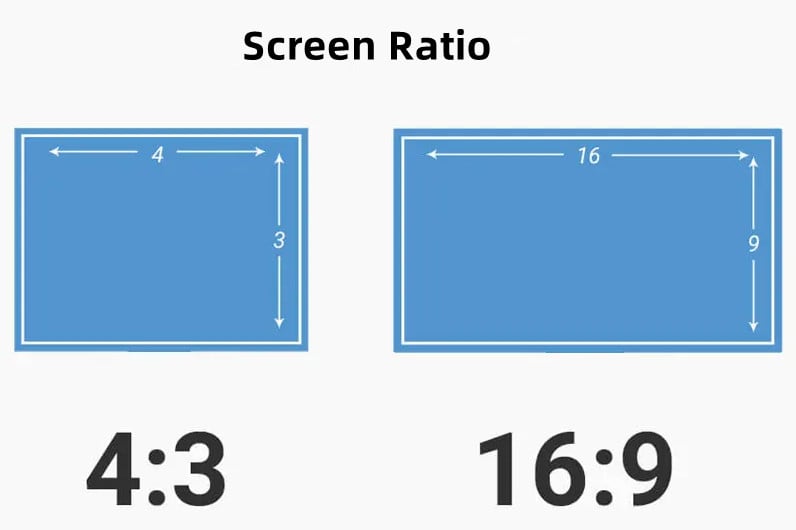
Understanding their differences can help you select the most suitable display for various environments:
(1) Screen Shape & Viewing Experience
4:3 LED Displays:
The 4:3 aspect ratio is more square-shaped, offering greater vertical height compared to its width. This makes it ideal for vertical-oriented spaces like control rooms, security monitoring, or text-heavy presentations.
However, when displaying modern video content, black bars or cropping may appear, reducing the overall viewing experience.
16:9 LED Displays:
The 16:9 ratio is wider and more cinematic, aligning with current video production standards. It provides a more immersive and seamless viewing experience, making it the preferred choice for video-centric applications like advertising, live events, and sports broadcasts.
(2) Content Compatibility
4:3 Displays:
The 4:3 aspect ratio struggles with modern video formats, as most films, TV shows, and online media are produced in 16:9. This requires additional processing, such as cropping or adding borders, to display them properly.
16:9 Displays:
The 16:9 ratio is the industry standard for video content, offering plug-and-play compatibility with HD, 4K, and even 8K content. This minimizes distortion and eliminates the need for additional processing, saving time and reducing setup costs.
(3) Application Scenarios
4:3 Aspect Ratio:
Common in legacy installations, control centers, and educational environments, 4:3 displays are ideal for applications that require multi-window monitoring or text-heavy presentations.
16:9 Aspect Ratio:
Most commonly found in modern advertising, digital signage, and entertainment settings, the 16:9 aspect ratio is ideal for high-impact visual applications like shopping malls, airports, outdoor billboards, and event backdrops.
(4) Installation & Design Flexibility
4:3 Displays:
4:3 displays can be more flexible for custom video wall setups in narrow or vertically constrained spaces. They remain practical for specialized installations, such as legacy control centers or environments that require vertical alignment.
16:9 Displays:
The modularity of 16:9 panels allows for easy integration into modern workflows. With standardized cabinet sizes, scaling to higher resolutions like 2K LED screen, 4K LED screen, or 8K LED screen is straightforward. This flexibility ensures that 16:9 displays are more adaptable for future upgrades and expansions.
(5) Viewing Angles
4:3 Displays:
4:3 displays tend to offer a more restricted viewing angle, especially when used for video content. The square format is more suitable for applications where the viewer is positioned directly in front of the screen, such as control rooms or stationary presentations. The viewing experience may feel more constrained compared to wider formats.
16:9 Displays:
The 16:9 aspect ratio offers a broader viewing angle, making it ideal for both static and dynamic content. It’s perfect for environments where the audience may be spread out, such as retail spaces, sports arenas, and large events. The wider format ensures that more viewers can experience the content with minimal distortion, regardless of their position.
Summary Comparison Table
| Comparison Point | 4:3 Displays | 16:9 Displays |
| Screen Shape & Experience | Square-like, great for vertical content, but limited for video | Wider and cinematic, ideal for video, movies, and dynamic content |
| Content Compatibility | Struggles with modern media formats, requires cropping/stretching | Compatible with HD, 4K, and 8K media, plug-and-play |
| Application Scenarios | Control rooms, legacy systems, educational presentations | Retail advertising, digital signage, sports events, conferences |
| Installation & Design Flexibility | Flexible for narrow or tall spaces, suited for custom setups | Modular and scalable, ideal for modern installations and future upgrades |
| Viewing Angles | Limited viewing angles, best for static content in fixed positions | Wider viewing angles, ideal for dynamic and immersive content |
7. How to Choose the Right LED Screen Ratio?
Selecting the appropriate aspect ratio is essential because it directly impacts content presentation, screen utilization, installation efficiency, and audience experience. Below are key factors to guide your decision:
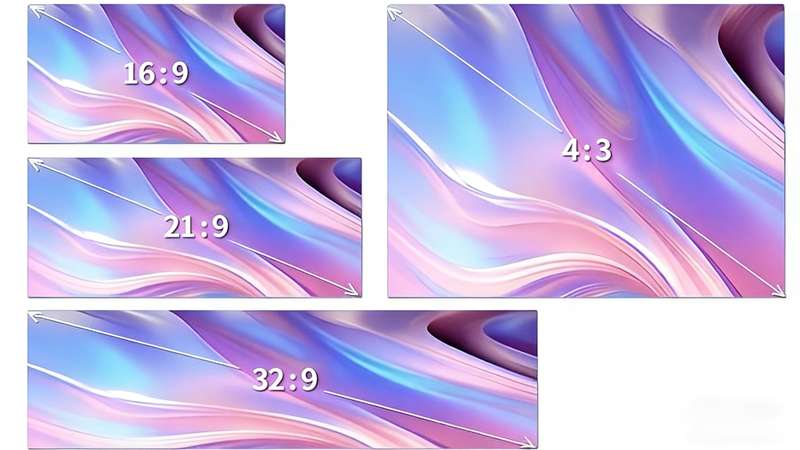
-
Match Content Standards
Your screen ratio should first align with the content format you plan to display:
- 16:9 is ideal for HD, Full HD, 4K, and 8K videos, ensuring full-screen playback with no black borders.
- 21:9 works well for immersive scenes, panoramic content, gaming centers, and control rooms.
- 1:1 is often used for creative displays such as retail windows, art installations, or square video walls.
- If your content is mainly widescreen video, 16:9 is the optimal choice.
-
Consider the Application Scenario
Different environments favor different ratios:
- Conference rooms, studios, and auditoriums → Typically 16:9
- Retail stores and exhibitions → Flexible ratios such as 1:1, 2:1, 3:1, or custom shapes
- Monitoring and command centers → Wider ratios like 21:9 or curved layouts
- Outdoor advertising → Often dictated by billboard dimensions rather than video format
Understanding the viewing context ensures optimal visual impact.
-
Think About Installation Space
Your available wall or mounting space influences size and proportion:
- Narrow or tall walls favor vertical layouts (3:4, 9:16)
- Wide spaces accommodate horizontal ratios (16:9, 21:9)
- Structural limitations may require modular customization
LED screens have flexible cabinet configurations, use this to optimize space utilization.
-
Evaluate Viewing Distance & Screen Size
Aspect ratio affects perception:
- Wider ratios offer more horizontal display surface
- Taller ratios provide stronger vertical presence
Combine ratio selection with:
- Pixel pitch
- Viewing distance
- Screen height vs. audience eye level
This ensures the display is readable and comfortable to watch.
-
Cost & Efficiency of Production
Standard ratios generally reduce cost because:
- Module utilization is higher
- Cabinets align in standard matrices
- Engineering and installation time is shorter
For example:
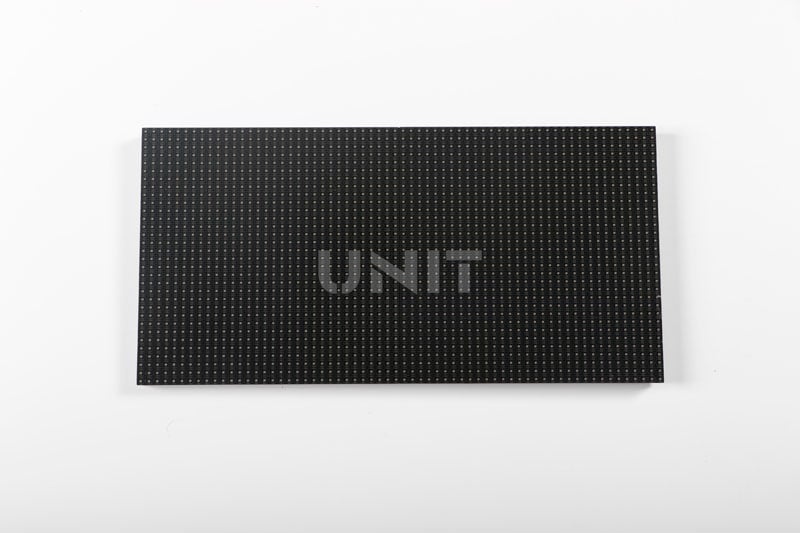
16:9 LED displays can be formed using common panel sizes (e.g., 320×160mm modules)
Custom ratios often increase expenses in structure, installation, and configuration
For most commercial, conference, and broadcast applications, 16:9 is the most practical and widely compatible ratio. However, creative installations, immersive environments, and unique architectural spaces may benefit from custom ratios such as 21:9, 9:16, 1:1, or multi-screen combinations.
Choosing the right ratio allows your content to fit perfectly, elevates user experience, simplifies installation, and maximizes return on investment.
-
Questions to Ask Before Confirming the LED Screen Ratio
Before choosing 16:9, 4:3, 21:9, 9:16, or a custom LED screen ratio, it is better to confirm the real project conditions first. This helps avoid content distortion, wasted pixels, wrong cabinet layout, and unnecessary cost.
- What type of content will be played most often: video, presentation, live camera, advertising, data, or images?
- Will the content be produced in 16:9, vertical 9:16, ultra-wide 21:9, or a custom format?
- What is the available wall width and height?
- What is the closest and farthest viewing distance?
- Do you need Full HD, 2K, 4K, or 8K pixel resolution?
- Will the LED display be used for fixed installation, rental events, outdoor advertising, or creative design?
- Do you need front maintenance, curved installation, hanging structure, or fast setup?
If these details are confirmed early, the LED display supplier can calculate a more accurate screen size, cabinet quantity, pixel pitch, resolution, power load, and installation structure.
8. When Should You Choose a 16:9 LED Display?
A 16:9 LED display is a safe choice when your main content is video, presentation, live camera feed, advertising media, or 4K playback. But for some special spaces, another ratio may work better.
| Project Type | Is 16:9 Recommended? | Reason |
|---|---|---|
| Conference room LED wall | Yes | Works well with PowerPoint, video meetings, 1080p, and 4K content. |
| Retail advertising screen | Usually yes | Most commercial videos and ad materials are produced in widescreen format. |
| Stage LED backdrop | Yes, but depends on stage width | 16:9 is good for video playback, while wider stages may need 21:9 or custom ratios. |
| Outdoor billboard | Depends on structure | The final ratio is often limited by the building, pole, roadside structure, or advertising space. |
| Vertical digital signage | No | 9:16 or portrait formats are usually better for vertical advertising. |
| Control room | Sometimes | 16:9 works for video feeds, but 21:9 or wider layouts may be better for multi-window monitoring. |
9. FAQs
Q1. What resolutions are considered 16:9 aspect ratio resolutions?
Any resolution where width and height follow the 16:9 relationship. Examples include:
1280 × 720 (HD)
1920 × 1080 (Full HD)
3840 × 2160 (4K UHD)
7680 × 4320 (8K UHD)
Resolutions may vary, but the 16:9 proportion stays constant.
.elementskit-card END
Q2. Why is 16:9 ideal for advertising displays?
Because most edited ad media and mainstream video formats target wide-angle horizontal playback.
.elementskit-card END
Q3. Can LED screens be customized to any ratio?
Yes, but cost increases, and playback may require scaling.
.elementskit-card END
Q4. Does 16:9 affect installation complexity?
It reduces complexity because cabinet sizes align with standard pixel resolution formats.
.elementskit-card END
Q5. How do I ensure my screen fits native 4K?
Ensure the LED pixel width reaches 3840 and the pixel height reaches 2160.
.elementskit-card END
Q6. Where is the 16:9 aspect ratio commonly used?
16:9 screens are widely used in:
LED video walls
TVs and monitors
Laptops and tablets
Digital signage displays
Control rooms and conference systems
Live events and staging applications
.elementskit-card END
Q7. Does 16:9 support both horizontal and vertical installations?
Yes. While most 16:9 displays are installed horizontally, vertical installation (rotated 90°) is also supported and often used for digital signage, advertising towers, and retail displays.
.elementskit-card END
Q8. Is 16:9 suitable for large LED video walls?
Absolutely. Modular LED panels can be assembled to achieve precise 16:9 sizes, especially in fixed installations for:
Boardrooms
Auditoriums
Large retail walls
Churches
Command centers
.elementskit-card END
Q9. What is the best aspect ratio for an LED video wall?
For most standard LED video walls, 16:9 is a practical aspect ratio because it matches common video, presentation, advertising, and 4K content. However, custom ratios may be better for vertical signs, panoramic screens, building facades, and creative stage designs.
.elementskit-card END
Q11. Is 16:9 better than 4:3 for LED displays?
16:9 is usually better for modern video playback, advertising, conference rooms, live events, and 4K LED displays. 4:3 may still work for older systems, control rooms, monitoring displays, or special spaces that need more vertical height.
.elementskit-card END
Q12. Can a 16:9 LED display show 4K content?
Yes. A 16:9 LED display can show 4K content if the actual pixel resolution reaches 3840×2160. The final result depends on screen size, pixel pitch, cabinet layout, video processor, and content source.
.elementskit-card END
10. Conclusion
Choosing between a 4:3 and 16:9 aspect ratio LED display mainly depends on your content format and application needs.
Today, the 16:9 aspect ratio has become the industry mainstream because it matches HD, 4K, and most modern video formats, offering a wider visual area and better viewing experience. Meanwhile, 4:3 still fits certain replacement projects or legacy systems where height or existing structure matters more.
By evaluating your installation space, display purpose, and content type, you can select the most suitable aspect ratio that delivers optimal performance and long-term value. Welcome to contact us to help you customise your display project.