LED Screen Panel Size: Choose the Best Size for Your Need
LED screens have revolutionized digital displays, offering superior brightness, energy efficiency, and versatility. One of the most critical factors in selecting an LED display is its LED screen panel size, which directly affects resolution, viewing distance, and suitability for specific applications.
https://youtu.be/1L4Zv2HBFWg?si=Bwqf8i6ZA2MKImqB
This guide explores LED screen module size, their importance, standard dimensions, and how to select the right size for different use cases.
Table of Contents
1. What is LED Screen Panel Size & Why It Matters?
LED screen panel, also called LED module, forms the building blocks of LED video walls. Each LED video wall panel measures a fixed width and height, and multiple LED panels assemble to form a larger screen. The LED video wall panel size and pixel layout directly influence:
- Overall dimensions of the final screen
- Native resolution, based on pixels per panel
- Visual clarity, driven by pixel density and pitch
- Installation logistics, including weight, mounting, and transport
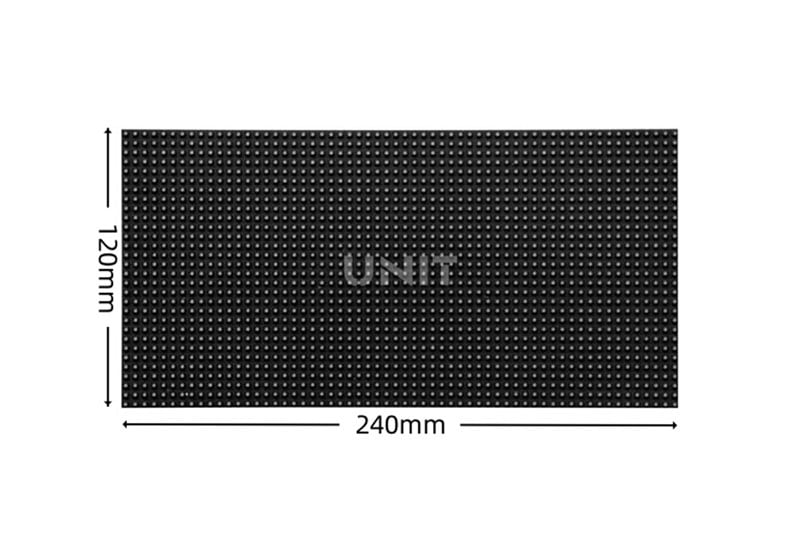
To make well-informed decisions, whether designing for indoor events, outdoor electronic LED billboards, retail signage, or control rooms, understanding LED screen panel size is essential.
2. Common LED Screen Panel Sizes
The LED screen module is the building block of larger LED displays, and LED screen module sizes vary depending on the application, whether for indoor, outdoor, or specialized installations. Below are the most common standard sizes:
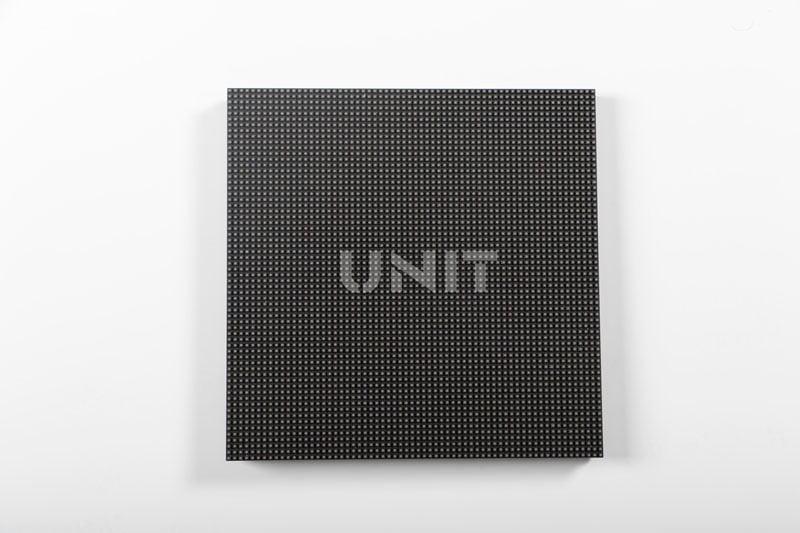
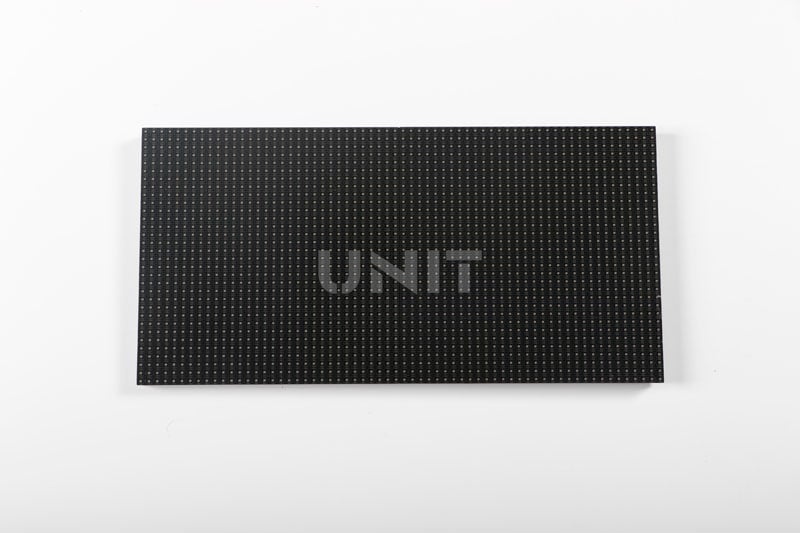
① Indoor LED Screen Panel Size
| Size | Pixel Pitch |
| 320X160mm | P1.25, P1.538, P1.667, P1.86, P2, P2.5, P3.076, P4, P5 |
| 250X250mm | P2.604, P2.976, P3.91, P4.81 |
| 256x256mm | P4 |
| 256x128mm / 128x128mm | P2, P4 |
| 192x192mm / 192x96mm | P3 |
Key Features:
- Smaller pixel pitch (tight pixel density) for close viewing.
- Thinner bezels for seamless video walls.
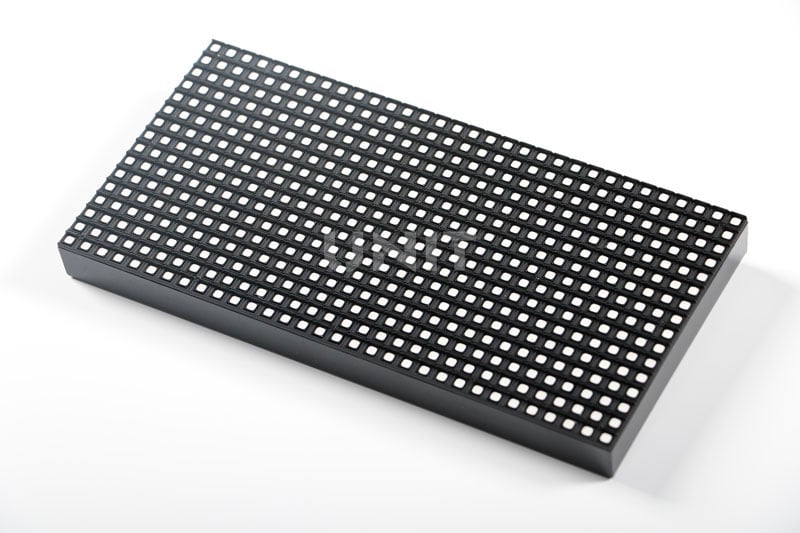
② Outdoor LED Screen Panel Size
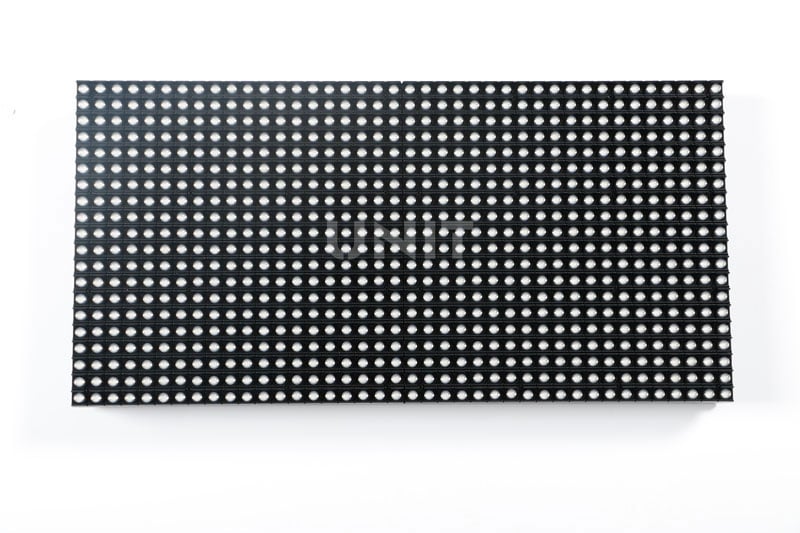
| Size | Pixel Pitch |
| 320X160mm | P2.5, P3.076, P3.33, P4, P5, P6.67, P8, P10 |
| 250X250mm | P2.976, P3.91, P4.81 |
| 192x192mm | P3, P6 |
| 160x160mm | P2.5, P3.33, P5, P10 |
Key Features:
- Larger pixel pitch (wider spacing) for long-distance visibility.
- Weatherproof (IP65/IP67 rated).
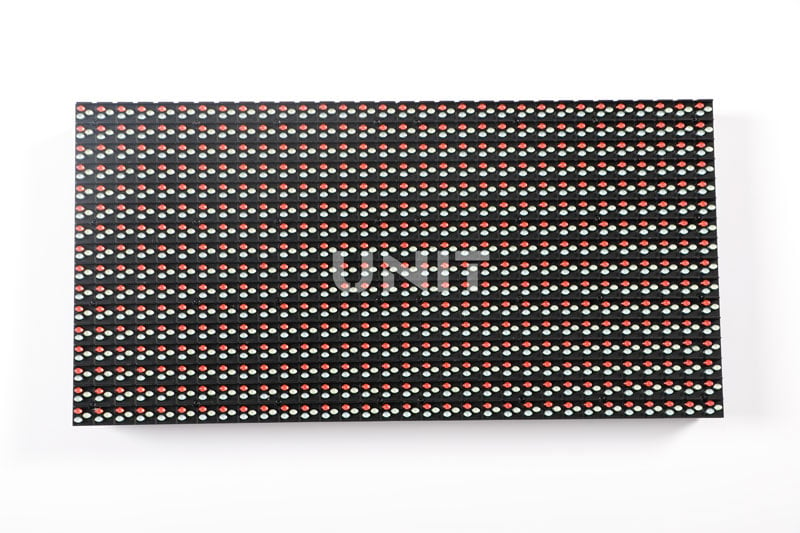
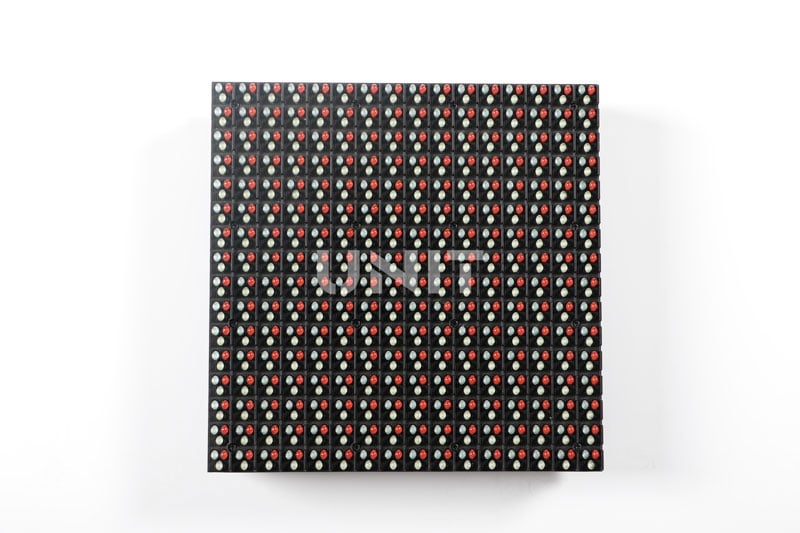
③ DIP Outdoor LED Screen Panel Size
| Size | Pixel Pitch |
| 320X160mm | P10, P20 |
| 256X256mm | P16 |
| 160x160mm | P10 |
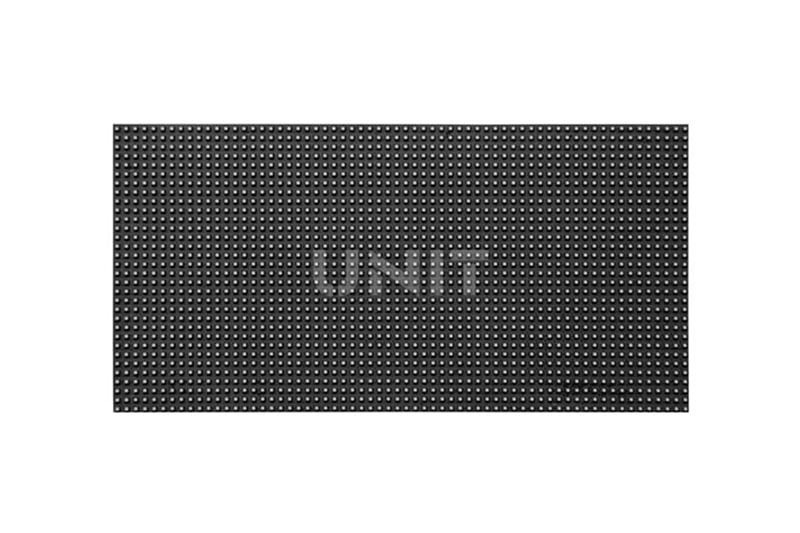
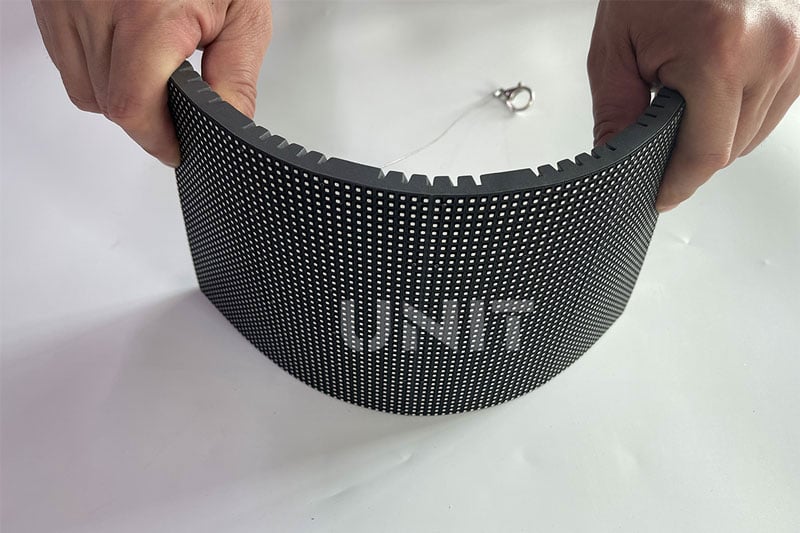
④ Flexible LED Screen Panel Size
| Size | Pixel Pitch |
| 320X160mm | P1.86, P2, P2.5, P3, P4 |
| 256X128mm | P2, P4 |
| 240x120mm | P1.25, P1.579, P1.667, P1.875, P2, P2.5, P3, P4 |
Key Features:
- Bendable or see-through for creative installations.
- Lightweight for unconventional setups.
3. Why do You Need Standard LED Panel Size?
Standard LED screen panel size is essential for creating efficient, scalable, and high-quality LED screens. Here’s why it matters:
① Seamless Assembly & Customization
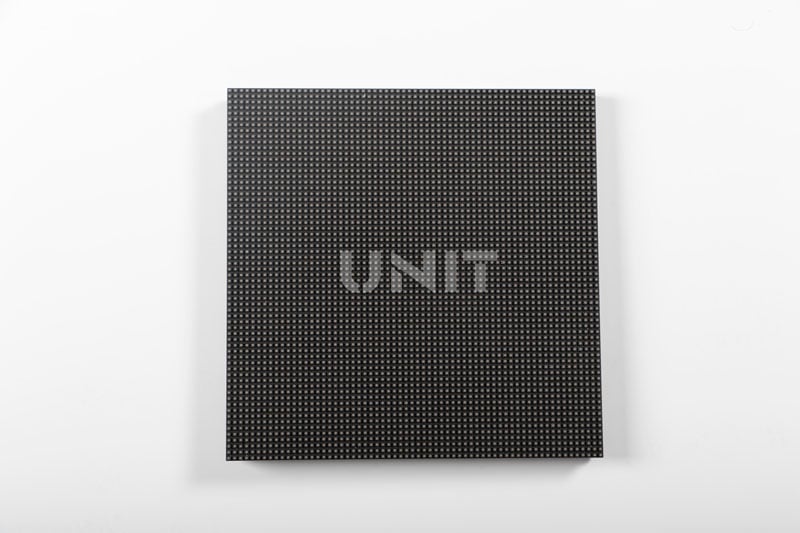
Standard module sizes—such as 320 × 160 mm, 250 × 250 mm, or 250 × 128 mm—ensure panels can be easily tiled to achieve custom screen dimensions and aspect ratios without misalignment. This modularity accelerates design and assembly, simplifying layout adjustments on the fly.
② Easier Maintenance & Replacement
With standardized modules, technicians can swap out faulty panels quickly, minimizing downtime. Having spare parts that match any section of the display cuts service time and cost, increasing system uptime and reliability.
③ Standard Module & Universal Cabinet
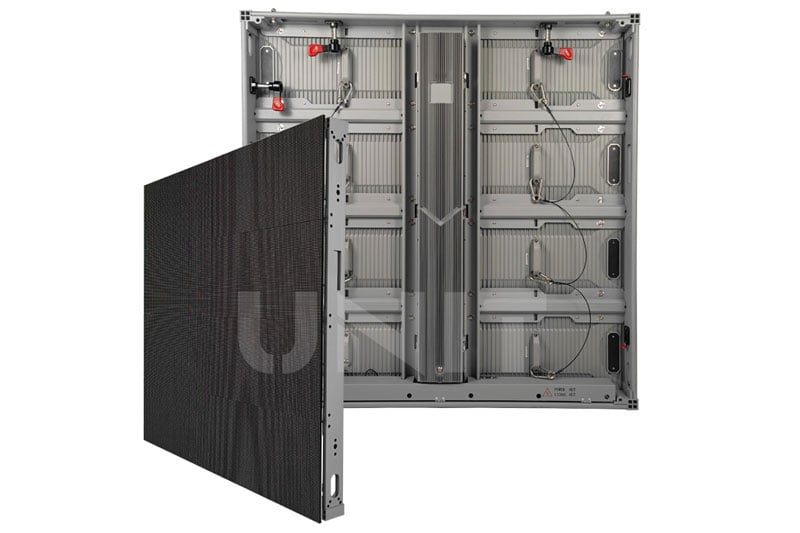
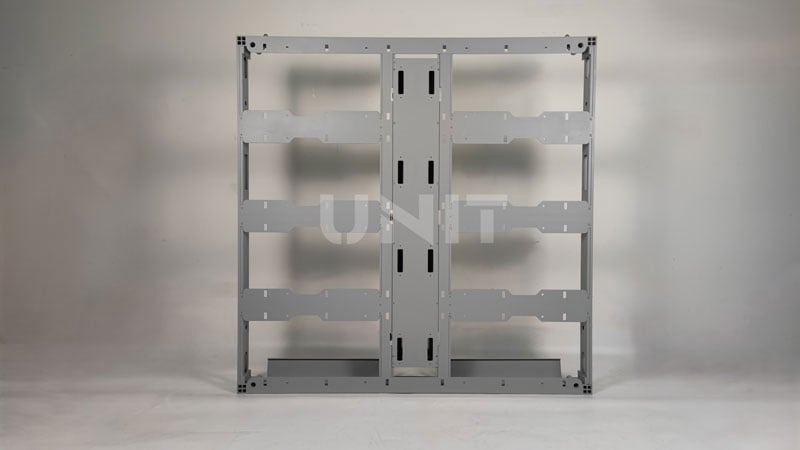
Standard LED screen modules are designed for convenience. Their uniform screw hole positions simplify installation and eliminate the need for LED display cabinet modifications. This allows you to easily replace or upgrade modules with different pixel pitches while keeping the same cabinet. For example, a P8 module on a 960*960mm cabinet can be replaced with a same-size P10 module (320*160mm) without changing the cabinet.
④ Design Versatility
Though standard, module formats are available in various sizes (small, medium, large) and pitches. This offers flexibility to create screens of all shapes—curves, squares, panoramic layouts—using pre-manufactured LED video wall panels.
4. LED Panel Size & Pixel Pitch & Resolutione
What Is Pixel Pitch?
LED screen pixel pitch refers to the center-to-center distance between adjacent LED pixels, measured in millimeters. The pixel pitch influences the optimal LED screen panel size. Typical ranges include:
- Indoor HD modules: 1.25 mm, 1.5 mm, 1.667 mm, 1.875 mm → excellent for close-up viewing and broadcast environments
- General indoor use: 2.5 mm, 3 mm, 4 mm, 5 mm → suitable for corporate spaces, retail, etc.
- Outdoor LED module: 6 mm, 8 mm, 10 mm, 16 mm → ideal for distance-view applications like billboards and stadium screens
How to Calculate Screen Resolution from LED Screen Panel Size and Pixel Pitch?
To determine total resolution:
Resolution per panel = panel width ÷ pixel pitch
Total resolution = resolution per panel × number of panels
Example: A 1280 × 960 mm panel with P10 (10 mm) pitch:
Width pixels: 1,280 ÷ 10 = 128 px
Height pixels: 960 ÷ 10 = 96 px
For a wall of 12 panels (4 × 3):
Width: 128 × 4 = 512 px
Height: 96 × 3 = 288 px
Thus, the resolution is 512 × 288 px.
5. How to Choose the Right LED Panel Size for your Events?
When choosing the right LED module size, several key factors come into play, each critical to ensuring optimal visual quality, installation efficiency, and budget alignment.

Here’s a breakdown:
① Define Your Event Objectives & Audience
Start by clarifying:
- Purpose: Will the LED screen be used for live video, presentations, branding, or ambiance?
- Audience distance: How far will attendees be seated or standing, e.g., 3 m for a trade show, 15 m for a concert display?
These factors determine the physical LED screen panel size and pixel clarity needed.
② Understand Pixel Pitch and Viewing Distance
Pixel pitch is the spacing between LED centers. It directly affects resolution and viewing experience:
- Rule of Thumb: Pixel pitch in mm ≈ optimal minimum viewing distance in meters.
For example, P2.5mm suits ~2.5 m distance.
- Planar’s 10× rule: Multiply pitch by 10 to get visual-acuity distance in feet.
Choosing the correct pixel pitch ensures the image appears sharp without wasting budget.
③ Calculate Screen Dimensions
Choose pixel pitch based on viewer proximity.
Estimate LED screen size, e.g., a 4m × 2m backdrop.
Divide by the LED screen module size to determine module count.
Ensure the aspect ratio aligns with your content and venue constraints.
④ Balance Quality vs Budget
Finer pixel pitches (P1.5–P2.5 mm) deliver crisper visuals at close range but increase cost. For larger venues with more distance, coarser pitches (P4–P10 mm) offer cost-effective impact without sacrificing clarity.
⑤ Operational Environment & Durability
Match module types to venue conditions:
- Indoor LED modules focus on clarity and color fidelity (e.g., SMD type, 800–1500 cd/m²).
- Outdoor LED modules need water/dust protection (e.g., IP65), high brightness (>5000 nits), and robust build (e.g., DIP/COB).
Choosing the right LED screen panel size isn’t just about matching measurements; it’s a strategic choice balancing viewing clarity, content quality, installation practicality, cost efficiency, and environmental suitability. By aligning these factors with your event needs, you’ll ensure an impactful, reliable, and visually stunning LED display.
6. FAQs
Q1. How does pixel pitch affect LED module size?
Pixel Pitch (P) = Distance (in mm) between two adjacent LED pixels.
Smaller Pitch: Higher resolution, smaller LED screen panel size (used for close viewing).
Larger Pitch: Lower resolution, larger LED screen panel size (used for distant viewing, like billboards).
.elementskit-card END
Q2. Can LED panel modules be customized in size?
Yes, manufacturers often provide custom module sizes based on:
- Installation requirements (curved screens, irregular shapes).
- Pixel density needs (higher resolution for fine details).
- Structural constraints (cabinet size limitations).
.elementskit-card END
Q3. How do I choose the right module size for my LED screen?
Consider:
- Viewing Distance: Closer viewing requires smaller pitch & modules.
- Resolution Needs: Higher resolution = smaller pitch & modules.
- Installation Space: Larger modules may reduce assembly time for big screens.
- Maintenance: Modular designs allow easy replacement of faulty sections.
.elementskit-card END
Q4. Are larger LED modules better?
Not necessarily—it depends on the application:
- Pros of Larger Modules: Faster installation, fewer connections.
- Cons: Less flexibility in screen shapes, harder to replace if damaged.
.elementskit-card END
Q5. How are LED modules connected to form a full screen?
Multiple modules are mounted on a cabinet or panel, which are then assembled into a complete LED display. The number of modules depends on the screen size and resolution.
.elementskit-card END
Q6. What’s the relationship between LED video wall panel size and resolution?
Higher resolution = More pixels per module (smaller pixel pitch).
Lower resolution = Fewer pixels per module (larger pixel pitch).
.elementskit-card END
Q7. Do LED module sizes affect brightness?
Indirectly, brightness depends on LED type (SMD/DIP) and power, but larger modules may house more LEDs, increasing overall brightness.
.elementskit-card END
Q8. Where can I find the LED screen panel size?
Check:
Product datasheet from the manufacturer.
Module label (often printed on the back).
Consult the supplier if custom sizes are needed.
Would you like recommendations for a specific application (e.g., rental LED screens, stadium displays, or retail signage)? Let me know!
.elementskit-card END
7. Conclusion
Understanding LED screen panel size is crucial to delivering not just a functional display, but a visually compelling, purpose-built solution. By selecting the right module dimensions and pixel pitch based on screen size, viewing distance, content type, and installation needs, etc., you ensure an optimal visual experience tailored to your audience and environment.