2 Minutes to Know More About COB LED Display
COB technology is an emerging LED packaging technology, which is different from traditional SMD surface mount packaging. So what are the advantages and disadvantages of COB LED display? How is it different from the SMD LED screen?
Click to jump
2. What are the Features of the COB LED Display?
3. LED Packaging Technology: SMD, IMD, COB
4. SMD vs IMD vs COB LED: Which is Better?
5. What are the Advantages of COB LED Screen?
6. What are the Disadvantages of COB LED?
7. More About Flip Chip COB LED
8. COB LED Display Applications
1. What is a COB LED display?
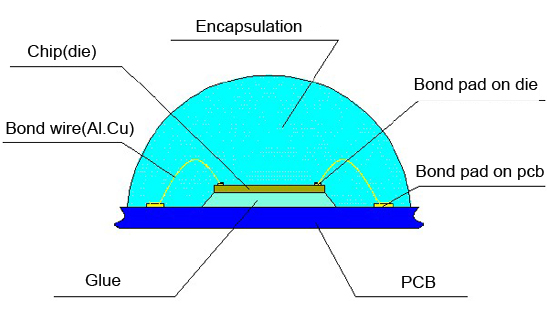
COB, Chip on Board, is a technology that is used to encapsulate a chip on a board.
Unlike SMD, where the beads are soldered to the PCB, the COB process first covers the silicon placement point with thermally conductive epoxy resin (silver-doped epoxy resin) on the substrate surface, then the LED chip is attached to the interconnected substrate with conductive or non-conductive adhesive through adhesive or solder.
Finally, the chip is electrically interconnected with the PCB board through lead (gold wire) bonding.
The LED wafer is fixed to the front surface of the display substrate and the film is pasted to the front surface of the display substrate, the LED wafer is a common red, green, or blue LED chip to achieve integrated packaging.
The COB packaging process breaks through the traditional packaging technology’s dependence on brackets and supports. So it reduces the number of soldering points.
The fewer welds, the fewer points of failure. Therefore, the stability and reliability of the COB LED module are high, and the failure rate of the lamp surface is low.
What is Mini LED?
Mini LED is a technology that enhances traditional LCD displays by using an array of miniaturized LEDs as the backlight.
These LEDs, typically ranging from 100 to 200 microns, are much smaller than conventional LED backlights, allowing for finer local dimming zones.
This results in better contrast, deeper blacks, and higher brightness, making Mini LED an ideal choice for high-end televisions, gaming monitors, and professional displays.
Unlike OLED, which uses self-emissive pixels, Mini LED still relies on an LCD panel to display images.
However, its advanced backlighting system reduces blooming effects and improves HDR (High Dynamic Range) performance.
Brands like Samsung, Apple, and TCL have adopted Mini LED in their premium products, providing consumers with better image quality at a lower cost than OLED.
What is Micro LED?
Micro LED is a next-generation self-emissive display technology where each pixel is an independent microscopic LED, typically measuring under 50 microns.
Unlike Mini LED, which serves as a backlight, Micro LED does not require an LCD panel.
Instead, each Micro LED pixel emits its own light, similar to OLED but with higher brightness, better energy efficiency, and no risk of burn-in.
Micro LED displays deliver infinite contrast, superior color accuracy, ultra-fast response times, and exceptional durability.
These advantages make Micro LED a promising technology for premium TVs, AR/VR devices, and large-scale commercial displays.
However, due to high production costs and complex manufacturing processes, Micro LED is still in the early stages of consumer adoption.
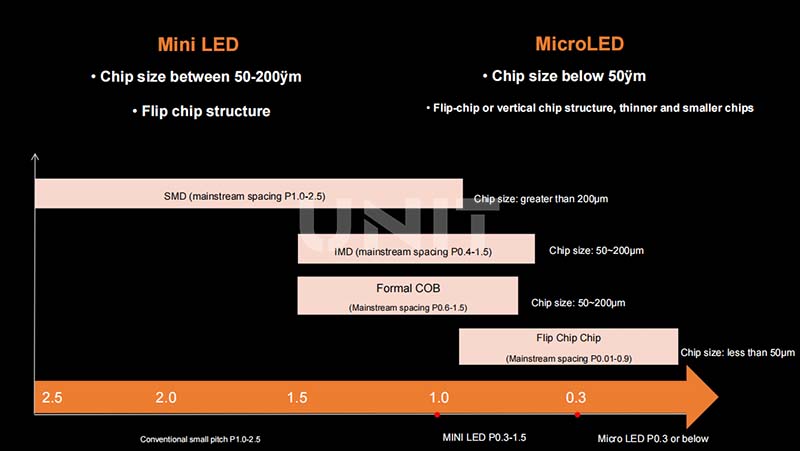
|
SMD |
IMD |
Formal COB |
Flip Chip COB |
|
|
Mainstream pixel (mm) |
P1.0-2.5 |
P0.4-1.5 |
P0.6-1.5 |
P0.01-0.9 |
|
Chip size (µm) |
greater than 200 |
50~200 |
50~200 |
less than 50 |
2. What are the Features of the COB LED Display?
1. different packaging methods;
2. ultra-micro pitch;
3. ultra-clear display screen;
4. the box is lighter and thinner than led small pitch;
5. small thermal resistance value, strong heat dissipation;
6. effective suppression of moiré, light sense superior;
7. small spacing, resulting in the screen ink color consistency is not beautiful;
8. the production process steps less, and the current stage of packaging technology needs to be improved;
9.COB display technology requirements are high, COB display manufacturers less;
https://www.youtube.com/watch?v=_-2dkXX85vg
3. LED Packaging Technology: SMD, IMD, COB
(1) SMD (Surface-Mount Device)
SMD is the most widely used LED packaging technology in traditional LED displays.
In this method, individual RGB LED chips are encapsulated into a small package and then mounted onto a PCB (Printed Circuit Board).
Good brightness
High color consistency
Easy maintenance
Large outdoor and indoor LED displays, commercial billboards, and rental screens.
(2) IMD
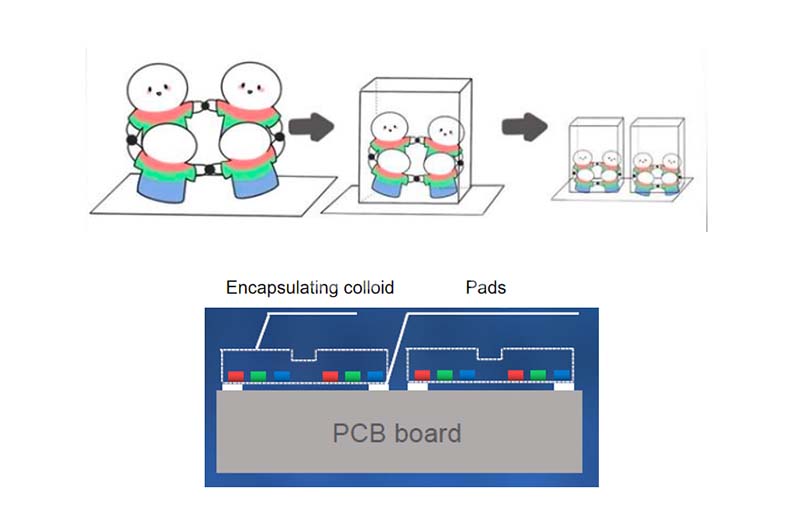
IMD is an improved version of SMD, integrating multiple LED chips (usually 2×2 or 4×4) into a single package.
This enhances pixel density and reliability while reducing soldering points.
A collection of N SMDs solves the problems of conventional SMD bumping and the inability to make smaller dot pitches.
It is still SMD in essence. The minimum currently available is P0.4mm, and the mass production dot pitch can reach P0.7mm.
Separate light and color
Good consistency and good display effect
Thrust is better than that of SMD single lamp
Production efficiency is high
suitable for mass production
There is a ” grid ” effect, obvious moiré, and the moisture resistance is worse than COB products.
The current price is slightly higher, and the cost of fine pitch is greater than COB.
(3) COB
The light-emitting chip is directly soldered on the PCB and encapsulated with epoxy resin.
It can be divided into flip-chip COB and face-mounted COB.
High protection performance (moisture-proof, anti-collision, anti-static).
Compared with the SMD technology route, the dot pitch can be made smaller.
The surface light source has a wide viewing angle and effectively reduces moiré (required by studios, TV and film shooting, etc.)
Current problems and shortcomings
Low production yield
High difficulty in mass transfer technology
High difficulty in mass production
Light board maintenance requires returning to the factory for repair.
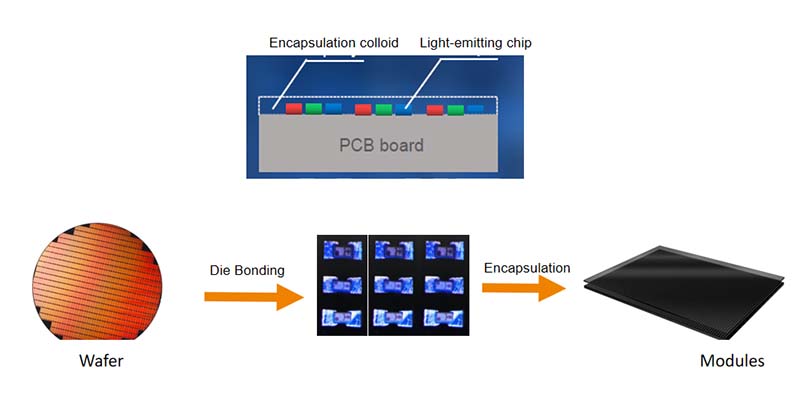
Compared with IMD products, it has higher protection, a wider viewing angle, and can suppress moiré patterns.
The table below briefly compares the differences between different LED technologies.
|
COB |
SMD |
IMD |
GOB |
|
|
Technical route |
The new process has high technical difficulty and eliminates the traditional SMD packaging process. |
Mature technology |
Further development based on SMD, SMD contains one pixel in one package structure, and IMD contains multiple pixels
|
A protective process for the SMD display module to protect the SMD device’s bracket PIN pin by glue filling
|
|
Point spacing |
≥0.4mm
|
≥1.0mm
|
≥0.6mm
|
≥1.0mm
|
|
Anti-collision capability |
Excellent ( >20kg ) |
Poor ( <2kg ) |
middle |
excellent |
|
Reliability / Stability |
excellent |
middle |
generally |
excellent |
|
Repair costs |
high |
low |
low |
higher |
|
Contrast |
higher |
generally
|
high |
generally |
|
Heat dissipation capacity |
excellent |
generally |
generally |
inferior |
|
consistency |
A small number of enterprises are excellent (most enterprises are continuously improving) |
excellent
|
excellent
|
inferior |
|
Difficulty of craft |
high |
low |
generally |
low |
|
Maximum viewing angle |
170°~179° |
170 ° |
160 ° |
170 ° |
4. SMD vs IMD vs COB LED, Which is Better?
Many customers who come into LEDs often hear about COB technology, which makes them confused about its differences from traditional LED displays.
In fact, what we are talking about is COB, which is an emerging packaging technology for LED displays.
In the past, LED displays used SMD surface mount packaging, so the comparison between COB displays and LED displays actually refers to the comparison between SMD packaging and COB packaging. What are the differences between the two?
4.1 Comparison between COB and SMD LED Display
(1) Different Packaging Technology
Nowadays, our conventional LED display screens use surface-mount SMD packaging.
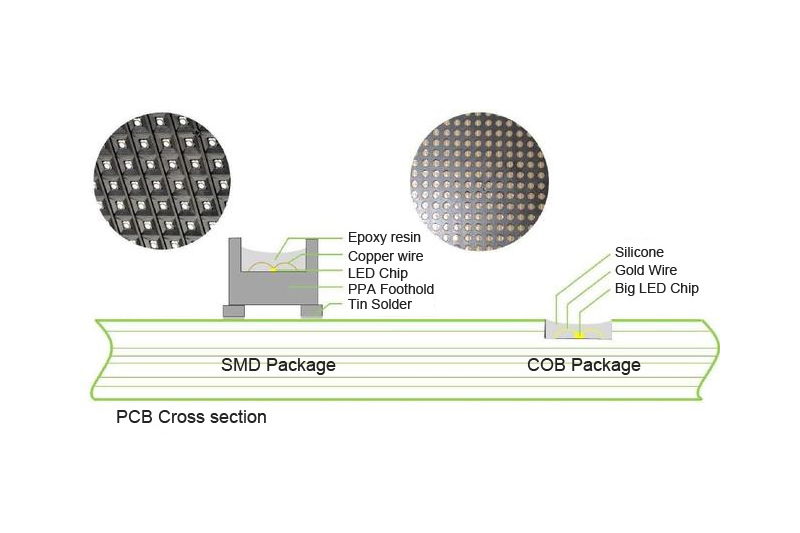
This packaging technology involves fixing the LED chip through a bracket, curing it with epoxy resin inside, and then fixing it on the PCB board with solder paste, followed by reflow soldering to evenly arrange the LED beads on the board.
However, this technology process is cumbersome, requires a certain amount of operation time, and the minimum distance between points can only be 1.2, even if it is multi in one, it can be done to a smaller size, But still unable to get rid of the problem of losing the lights.
COB packaging simplifies the packaging process of LED chips by directly integrating them onto the PCB board and fixing them with adhesive.
The entire process is simpler, without the need for reflow soldering, and the LED chips are more stable. At the same time, the spacing between points can also be smaller.
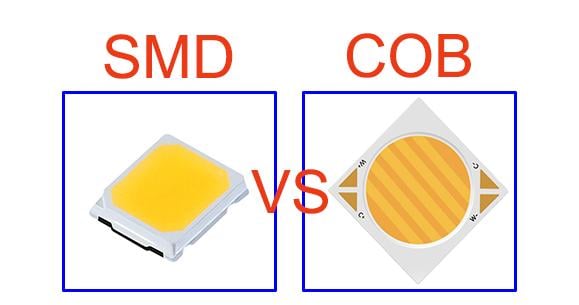
SMD is short for Surface Mounted Devices, where the LED packaging factory uses the SMD process to fix the bare chip to the holder, connect the two electrically via gold wire and finally protect them with epoxy resin.
SMD encapsulated small pitch products generally have the LED beads exposed or use a mask. SMD uses surface mount technology (SMT), which is highly automated and has the advantages of small size, large scattering angle, good luminous uniformity and high reliability.
The COB screen is a led screen made using the COB packaging method, while we now often say that the led screen is the use of SMD packaging led screen, the difference between the two is that the packaging method is different.
(2) Different Pixel Pitches
Ordinary SMD packaged LED displays are limited by packaging technology, and their point spacing is usually above P1.2, such as P1.2, P1.56, P1.875, P2.0, P3, P4, and so on.
Products with small spacing are affected by welding technology, and there may be phenomena such as light bead detachment.
Its development limitation is mainly that it cannot achieve point spacing below 1.0, resulting in the inability to further improve the screen resolution,
If it is a situation that requires high clarity in image quality, it is not very suitable.
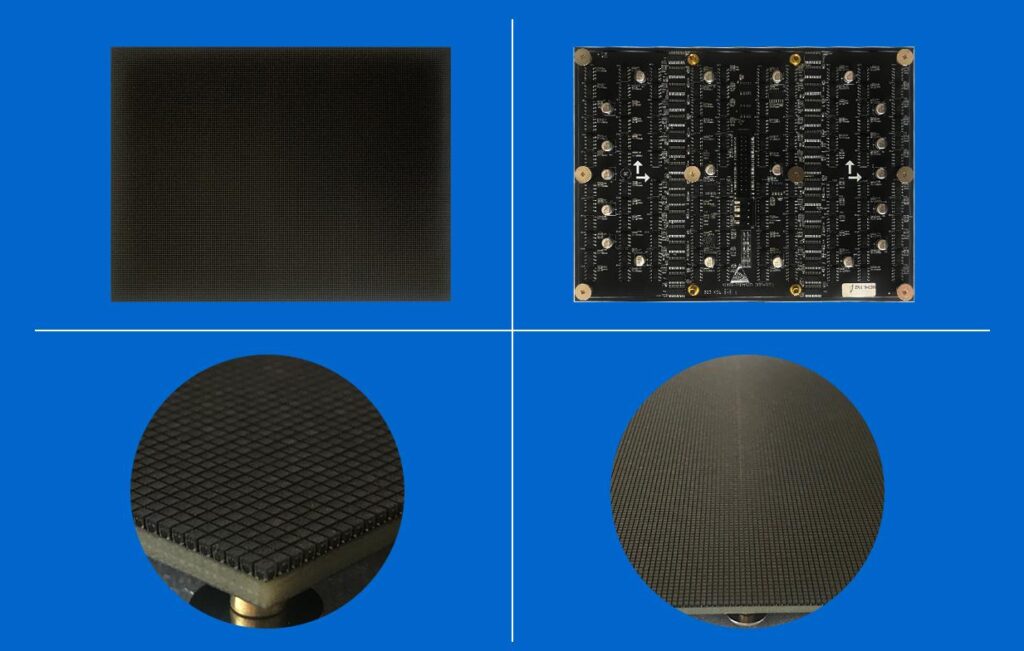
The display screen packaged with COB can achieve smaller dot spacing, for example, the P1.2, PO.9, and PO.6 products .
(3) Production Cost
There are many steps in the production process of SMD LED, and the production cost is high.
Based on SMD, COB LED screen eliminates the concept of brackets, and does not have production processes such as electroplating, patching, and reflow soldering, which simplifies the production process.
The process of SMD LED display is mature, but the COB process is not popular yet, so the price of SMD LED products is cheaper than that of COB products.
(4) Product Reliability
According to the principle of reliability, the fewer control links a product has, the higher its reliability. The product reliability of the COB package is higher.
In the production, transportation, and installation of traditional LED display screens, due to the fact that the lamp beads are exposed to the surface, the lamp beads will fall off when touched by fingers or collide with other things during installation, resulting in a certain pixel not lighting up.
This is mainly because the lamp beads are welded to the PCB board, and collision can easily cause the lamp to fall out.
If you want to repair it later, you can only have technical personnel come to the site to weld or directly replace the unit board, Causing a high after-sales rate.
The display screen packaged with COB has better protective performance, and it will not cause the lamp beads to fall during installation and use, so its surface is also more collision resistant and its stability is greatly improved.
(5) Optical Properties
The SMD package pastes the LED lights one by one on the PCB board, which makes the light spot uneven.
The COB display uses glue dispensing to package the light-emitting chips on the same horizontal plane, making the light-emitting surface more uniform.
In addition, the COB LED video wall has good color consistency, a viewing angle close to 175°, and a good color mixing effect.
(6) Light Quality
The SMD package attaches multiple devices to the PCB, which may cause glare and ghosting. COB LED screen is an integrated package. It reduces light refraction.
Basically, the main difference between COB displays and LED displays is the above three points.
From the perspective of industry development, COB screens will be the mainstream direction in the future.
Compared with traditional surface mount technology displays, COB displays have many advantages such as high reliability, low cost, small spacing, wear resistance, impact resistance, and strong heat dissipation ability.
Compared to led screens, COB screens have a smaller pitch, better protection, and better heat dissipation.
In COB packaging and SMD packaging, COB packaging devices are completely enclosed, while SMD packaging devices are exposed on the screen surface, and COB packaging process steps are fewer.
4.2 IMD vs. COB: Key Differences and Advantages
Both IMD (Integrated Matrix Device) and COB (Chip on Board) are advanced LED packaging technologies used in fine-pitch displays.
However, COB offers several advantages over IMD in terms of display quality, durability, and visual performance.
(1) Better Contrast and Display Consistency
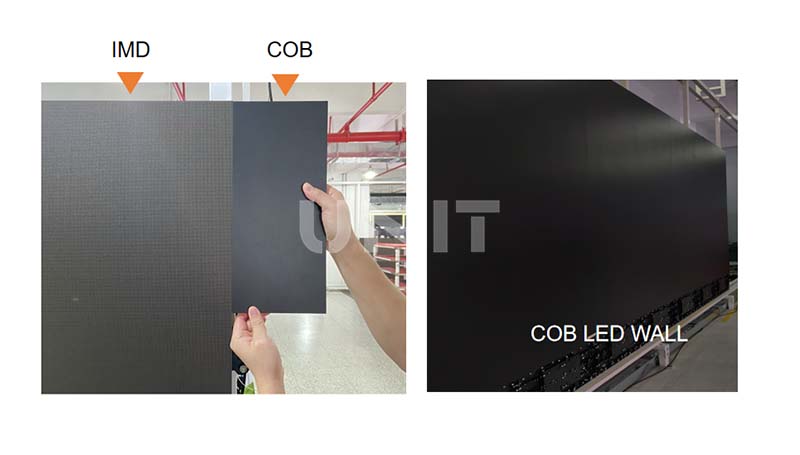
COB technology provides higher contrast and better color consistency than IMD.
With a matte surface and deep black coating, COB panels effectively reduce reflections, ensuring a more immersive and high-quality display.
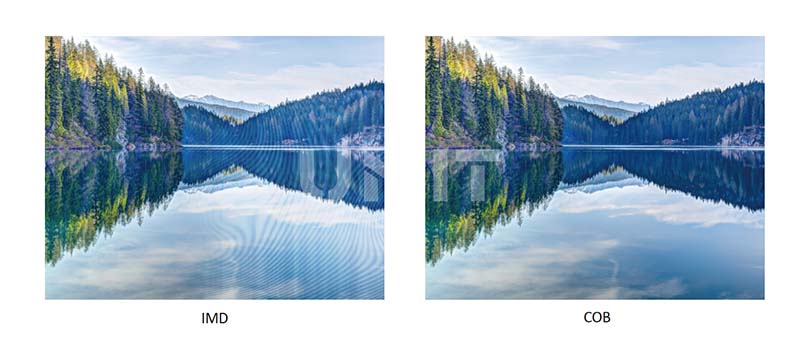
(2) Moiré Pattern Suppression
Moiré patterns can affect LED display clarity, especially in high-resolution applications.
COB technology minimizes moiré effects, resulting in smoother and clearer visuals. It is ideal for broadcast, control rooms, and high-end conference displays.
(3) Superior Impact Resistance
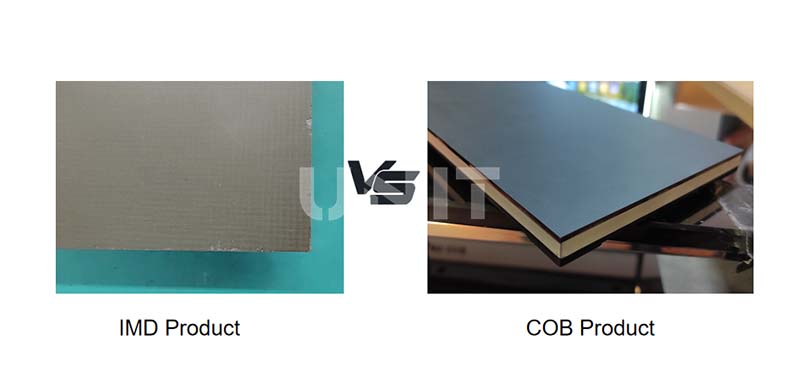
COB panels have a fully sealed structure, making them more durable and impact-resistant compared to traditional IMD and SMD products.
This ensures better protection against physical damage, reducing maintenance costs and improving long-term reliability.
Comparison of different technical routes for Mini LED RGB direct display
|
Technical route |
SMD |
IMD |
COB |
|
Production process |
Most mature Difficult to manufacture below 1.0mm
|
More mature Difficult to manufacture below 0.8mm
|
Gradually mature Die bonding is difficult below 0.7mm |
|
Physical and moisture protection |
Poor
|
Better than SMD
|
optimal |
|
Display consistency
|
Easy to mix lights Black screen and white screen consistency is easy to control
|
Easy to mix lights Black screen and white screen consistency control is more difficult than SMD
|
The consistency of black and white screens is a big challenge. But now technology is advancing rapidly |
|
Technical threshold
|
Low
|
Low
|
high |
|
Technology concentration
|
Low
|
Low
|
higher |
|
Standardization and efficiency
|
Highest
|
high
|
Gradually improve |
|
cost
|
The lowest cost hardware above 1.2mm
|
The cost of 0.9 and 1.2 mm is close to that of SMD
|
At present, the scale of the industrial chain is relatively small, and compared with SMD/IMD, the cost is higher. The trend will gradually decline. |
4.3 Comparison Between Flip Chip and Regular Chip
(1) Brightness
Flip-chip does not need to plate a transparent conductive layer on p-GaN, which can avoid the problem of light absorption by the conductive layer and light shielding by the electrode pad, and has higher brightness.
(2) Contrast
The area of the flip-chip occupies a smaller proportion on the PCB board.
Except for the light-emitting chip, the rest of the area is black, and the black screen is darker, which can improve the contrast.
(3) Thickness
Flip-chip products do not require wire bonding, the thickness of the packaging layer is reduced, and the problem of color lines and bright and dark lines between modules is weakened.
(4) Pixel Pitch
It is difficult for the metal lead of the regular chip to be below P0.7, and the flip-chip can have a smaller point spacing.
(5) Power consumption
Under the same brightness, the power consumption of the flip-chip product is reduced by 20%, with obvious energy-saving advantages and lower surface temperature of the screen.
(6) Stability
Flip-chip does not require metal wire welding, which greatly improves the stability of solder joints.
Comparison Micro of LED different technical routes of COB
|
Technical route |
Formal COB |
Flip Chip COB |
|
Production process |
More mature Difficult to manufacture below 0.8mm |
Gradually mature Die bonding is difficult below 0.7mm |
|
Physical and moisture protection |
Better |
Optimal |
|
Contras |
Better |
Optimal |
|
Thermal performance |
Better |
Optimal |
|
Brightness (same power consumption) |
Higher |
Highest |
|
Viewing Angle |
Better |
Optimal |
|
Technical threshold |
Higher |
Highest |
|
Technology concentration |
Higher |
Highest |
|
spacing |
Smaller |
Minimum |
5. What are the Advantages of COB LED Screen?
(1) Smaller Pixel Pitch
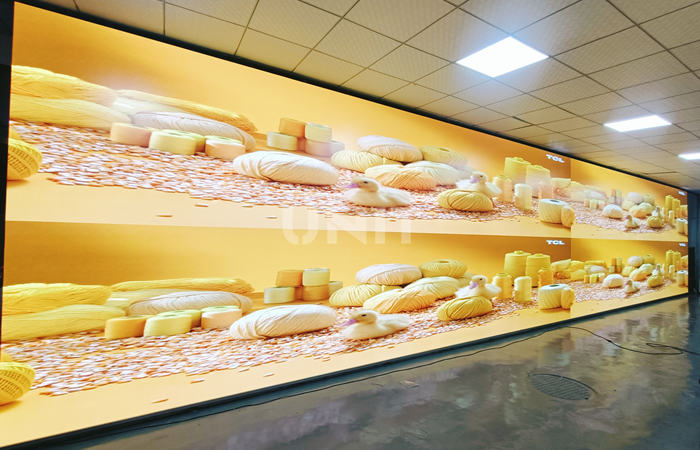
The COB LED screen can easily achieve a smaller pitch, making the display screen clearer, more delicate, and softer in color.
The technological characteristics of SMD limit the breakthrough of display screens to micro-pitch products to a certain extent.
The advent of COB technology has made small-pitch LED displays more possible.
There is no physical barrier between the light-emitting chips, and the display pixels in the unit are more, the picture is clearer, and the color is more delicate.
(2) Super-high Protection Ability
The high-protection COB LED screen completely encapsulates the device in the PCB board.
In the process of transportation, installation, and disassembly, there will be no bad phenomena such as falling lamps and broken lamps.
From leaving the factory to when the product is put into use, the ultra-high protection capability can protect the product from damage and reduce product loss.
(3) Better Display Effect
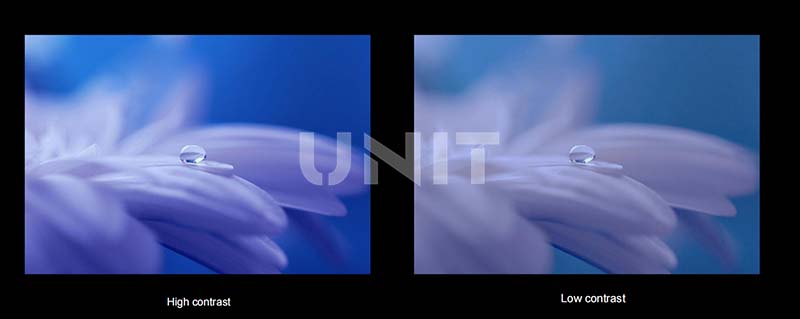
The “surface” light source emits light, effectively suppressing moiré, and not hurting the eyes when viewed at close range.
The COB small display screen has full display pixels and a visual effect comparable to that of an LCD screen.
The screen can reduce light refraction, and the color is better.
Excellent visual effects make it a high-quality choice for high-end display fields, such as high-end conference rooms, studios, command and dispatch centers, etc.
(4) More Convenient Maintenance
Due to the rigorous packaging of COB, the COB LED screen requires almost no maintenance after it is put into use.
The daily maintenance of SMD LED displays requires special attention, such as module maintenance and screen cleaning.
For SMD LED displays with large pitches or small pitch products with masks, improper cleaning will cause damage.
In comparison, the daily maintenance of COB screens is more convenient. Simply clean the surface of the screen with a rag.
COB LED uses epoxy resin to package the chip on the PCB, the screen is smooth, strong sealing, and impervious to water.
(5) Strong Heat Dissipation
The heat directly passes through the PCB board without accumulation, and the product life is more guaranteed.
6. What are the Disadvantages of COB LED?
1. COB LED screen is a new display product, the current packaging technology is not perfect SMD technology, high technical requirements, and high research and development costs;
2. SMD packaging process production steps have differences, enterprises in the transition will be separated from the original production base, high cost of enterprise transformation, and manufacturers less;
3. 2mm below the point pitch led display, whether it is SMD or COB, screen ink color consistency needs to be strictly controlled;
4. COB screen price than the same point pitch led display 10-20% higher.
Know more information about DIP, SMD, COB LED displays, you can turn to this post:
DIP LED Module VS SMD VS COB? One Article Tells You.
7. More About Flip Chip COB LED
In the ever-growing micro-pitch display market below P1.0mm, COB has natural advantages over SMD and GOB LED displays.
COB has also become one of the core technology routes in small-pitch products.
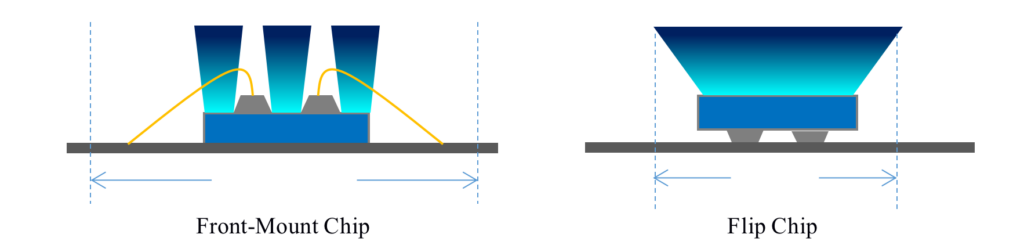
With the advancement of chip packaging technology, COB technology has been differentiated into two types: front-mount chip and flip-chip.
Flip-chip GOB has attracted industry attention because of its ability to achieve chip-level gaps.
(1) Front-mount Chip VS Flip chip GOB
What is an LED front-mount chip?
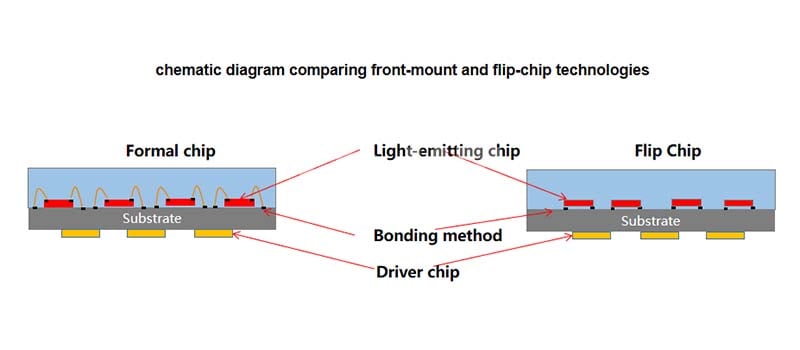
A front-mount chip means that the electrode and the light-emitting surface of the chip are on the same side. The electrodes are connected to the substrate by wire bonding.
What is LED Flip Chip?
The light-emitting surface of the flip-chip faces up, and the electrode faces down, which is equivalent to inverting the front-mounted chip.
The advantages of flip-chip: no need for wiring, higher stability; high luminous efficiency, low energy consumption; large positive and negative spacing, effectively reducing the risk of lamp bead failure.
(2) Why Flip-chip COB LEDs are the Future of Display?
The flip-chip COB further improves product performance based on COB technology. As an upgraded product of formal COB, the COB Flie chip LED display can realize the true chip-level gap.
Overall, the advantages of flip-chip COB LEDs and people’s consumer demand for displays make it the future of the display industry.
Consumers are pursuing better visual quality, better viewing angles, and better near-screen experience. Flip-chip COB can meet these needs.
Ultra-high reliability
Thinner and lighter packages have reduced thermal resistance and improved display life. Ultra-high protection is reflected in waterproof, anti-collision, shockproof, dustproof, and antistatic.
Excellent display effect
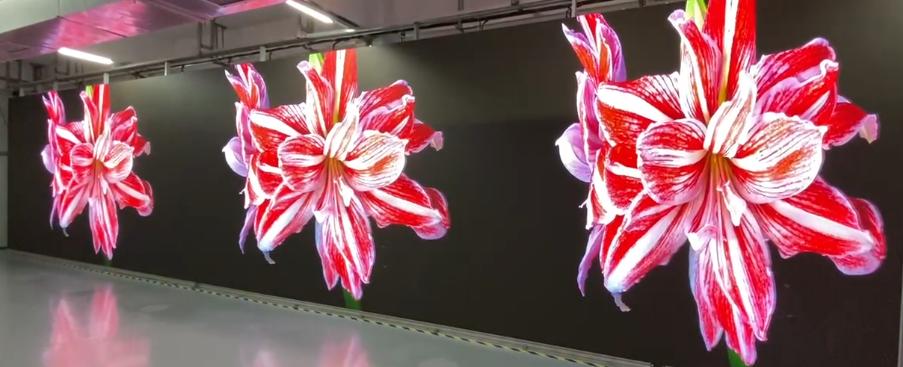
20000:1 ultra-high contrast ratio and more light and dark contrast details bring a better visual experience. HDR digital image technology makes static and high-dynamic picture quality fine and perfect.
Ultra-small dot pitch
The cob flip chip has a higher pixel density and is the first choice for products with a pixel pitch below 1.0mm.
Super energy-saving and comfortable
Under the same brightness conditions, flip chip cob power consumption is reduced by 45%. Good viewing angle and side-view display uniformity are suitable for indoor near-screen experience application scenarios.
8. COB LED Display Applications
COB (Chip on Board) LED displays offer high contrast, durability, and seamless visuals, making them ideal for professional and high-end applications.
Key application areas include:
(1) Control Rooms
COB LED displays provide high resolution, low reflection, and stable performance, ensuring clear and detailed visuals for real-time monitoring and data analysis.
They are widely used in command centers, security surveillance, and traffic control rooms.
(2) Conference Rooms
With seamless splicing, excellent color consistency, and wide viewing angles, COB LED screens enhance presentations, video conferences, and corporate meetings.
It delivers professional and immersive communication experiences.
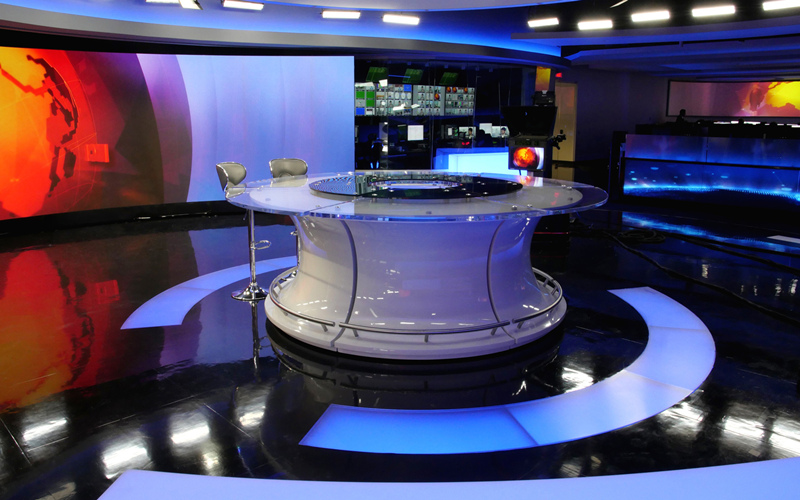
(3) TV Studios & Broadcast Centers
COB LED displays offer moiré-free visuals, high refresh rates, and precise color reproduction, making them perfect for TV studios and live broadcasting.
Their non-reflective matte surface ensures clear on-camera visuals, improving production quality.
(4) High-End Commercial Displays
Luxury retail stores, showrooms, and flagship stores benefit from COB LED’s vivid colors, ultra-fine pitch, and premium display quality.
It creates eye-catching digital signage and interactive experiences for branding and advertising.
9. Conclusion
COB LED video wall has the characteristics of light and thin, anti-collision and pressure resistance, and good display effect, and has great advantages in the field of small-pitch display.
Although there are still some technical difficulties to be overcome, it is undeniable that COB LED display will bring more possibilities to the display industry in the future.