Bar LED Screen 2026: Prices, Products and Solutions
A bar LED screen is one of the fastest ways to turn a normal venue into a more visual, more energetic, and more profitable space. In a bar, customers do not only buy drinks; they buy atmosphere, movement, music, sports moments, and the feeling that something is happening around them.
A well-planned LED screen helps deliver that experience. It can show drink promotions, live games, DJ visuals, brand videos, countdowns, event posters, menu updates, and interactive content without printing new posters every week. For venue owners, the real value is not just a brighter screen. It is a flexible communication system that can support sales, entertainment, and brand identity at the same time.
Table of Contents
1. What Is A Bar LED Screen?
https://www.youtube.com/watch?v=MoF7r_tyCD0https://www.youtube.com/watch?v=wZ2bjhYPiZs
Bar LED Screen of Unit LED
A bar LED screen is a modular digital display built for nightlife, hospitality, and entertainment spaces where visual impact matters. Unlike a normal TV, it can be built in almost any size, installed on walls, columns, stages, counters, entrances, ceilings, or curved surfaces, and controlled with scheduled digital content.
The main idea is simple: a bar LED screen uses many LED modules or cabinets to create one large seamless display. The screen can be small enough for a back-bar menu board or large enough to become the main visual wall of a nightclub. Since the modules are tiled together, the final size is not limited to standard TV dimensions. This makes LED technology especially useful for bars with unusual layouts, long counters, narrow walls, DJ booths, or large open dance floors.
1.1 Why Bars Use LED Screens Instead Of TVs
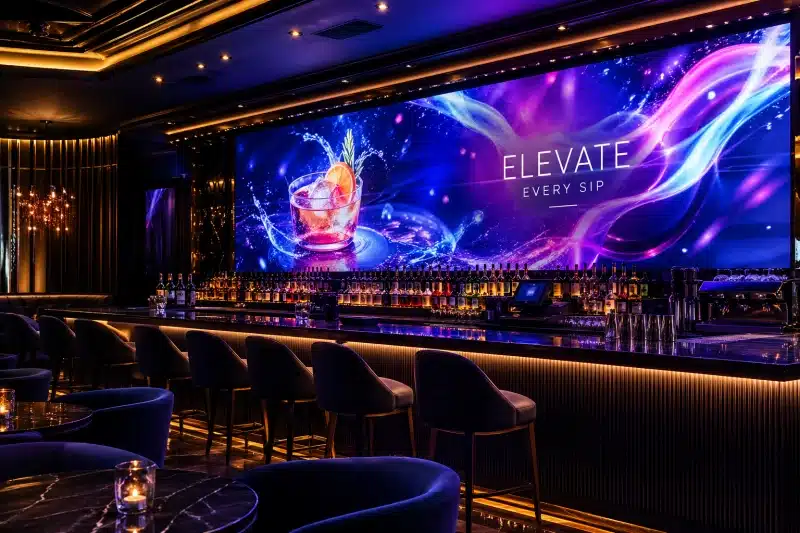
Bars use LED screens instead of TVs when they need a larger, brighter, more seamless, and more flexible display system. A TV wall can work in a small room, but it usually has visible bezels, fixed sizes, limited brightness, and less freedom for custom layouts. A LED screen can be designed around the bar itself, whether the project needs a wide video wall, a long menu display, a curved counter screen, or a high-impact DJ backdrop.
In practice, the screen is used for more than decoration. A sports bar may use it to create a stadium-style viewing experience. A cocktail bar may use it to display premium brand visuals and menu highlights. A nightclub may connect it with lighting, music, and stage effects. A restaurant bar may use it to promote happy hour offers, seasonal dishes, or private events.
The best way to think about it is this: a bar LED screen is both a visual centerpiece and a business tool. If it only looks impressive but does not help customers understand what to order, where to look, or why to stay longer, the design is not complete.
2. Types Of Club LED Screen Setups
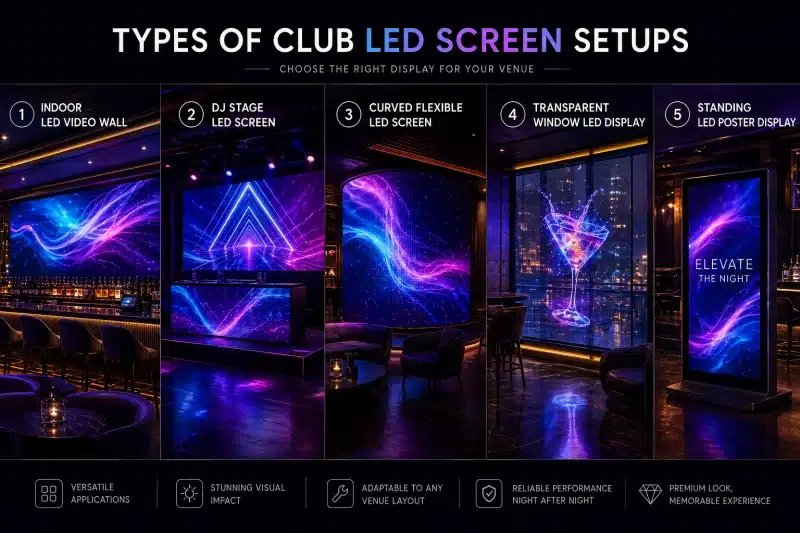
The right club LED screen setup depends on viewing distance, installation location, content style, and how rough the environment is. Bars and clubs are not quiet office spaces. People move around, lights change quickly, drinks spill, and content often includes fast-moving video, sports, or music visuals.
Here are the most common types used in bars and clubs:
- Indoor LED Video Wall: Best for main walls, sports viewing areas, private rooms, and back-bar displays. If you are comparing indoor options, a detailed indoor LED screen guide can help you understand pixel pitch, brightness, and viewing distance more clearly.
- Stage LED Screen: Used behind DJs, bands, live performers, or event hosts. It works well with lighting systems, music visuals, and branded event content.
- Flexible LED Screen: Useful for curved walls, columns, round bars, and creative interior designs.
- GOB LED Screen: A good option for venues where the screen may face impact, moisture, dust, or accidental contact.
- Transparent LED Screen: Often used on windows, glass walls, and entrances where visibility through the glass still matters.
- Poster LED Display: Suitable for entrance promotions, event posters, and movable advertising inside the venue.
- Outdoor LED Display: Used for storefront signs, street-facing promotions, and exterior bar branding.
2.1 Stage LED Screen For DJs And Live Shows
A stage LED screen is usually the strongest choice when the venue depends on music, performance, and event energy. In clubs, live bars, and DJ venues, the screen behind the performer becomes part of the show. It can display VJ loops, artist names, event themes, brand sponsor visuals, countdowns, or abstract motion graphics that follow the music mood.
For a club LED screen, the content is usually more dynamic than in a restaurant. It may include motion graphics, VJ loops, countdowns, performer visuals, sponsor logos, animated drink promotions, or social media feeds. That means refresh rate, contrast, grayscale performance, and stable control systems become more important.
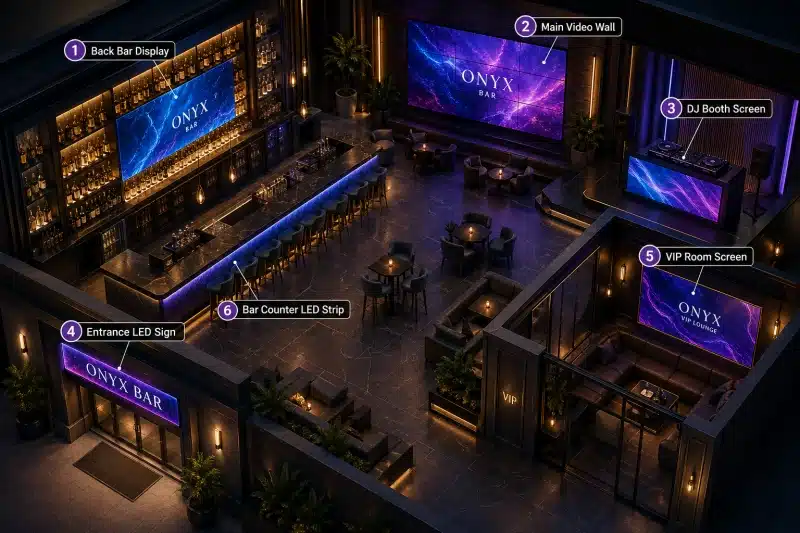
A small bar may only need one back-wall display and one entrance poster screen. A large nightclub may need several display zones: DJ booth screen, dance floor wall, ceiling strips, bar counter LED, VIP room display, and exterior sign. The better the zones work together, the stronger the venue identity becomes.
3. Key Features Of A Good Bar LED Screen
A good bar LED screen should be bright, smooth, durable, easy to control, and suitable for the real viewing distance inside the venue. Many buying mistakes happen because owners focus only on screen size or price, while ignoring the details that affect daily performance.
3.1 Pixel Pitch And Viewing Distance
Pixel pitch should be selected according to how close customers stand or sit to the screen. Pixel pitch means the distance between LED pixels. A smaller pitch gives a sharper image at close distance, while a larger pitch is more cost-effective for long-distance viewing.
For indoor bars, P2, P2.5, P3, and P4 are common choices. A screen behind the bar may need a finer pitch because customers stand close to it. A high wall or large dance floor screen may use a slightly larger pitch because people view it from farther away. Choosing the wrong pitch can either waste budget or make the image look rough at close range.
Brightness is another key point. Indoor bar screens often work well around 800 to 1,500 nits, depending on the lighting environment. A dark cocktail bar may not need extreme brightness. A sports bar with strong ambient lighting may need more. Outdoor signs need much higher brightness and proper weather protection.
3.2 Refresh Rate For Sports, DJ Visuals, And Video
Refresh rate is critical when the bar LED screen shows fast-moving content or appears in customer videos. If the screen shows sports, DJ visuals, camera-recorded events, or fast animation, a higher refresh rate helps reduce flicker and makes video look smoother.
For nightlife use, 1,920Hz can be acceptable for many standard projects, while 3,840Hz is often preferred for premium visual effects and camera-friendly performance. This is especially important in nightclubs because customers often record short videos for TikTok, Instagram, YouTube Shorts, or local event promotion.
| Feature | Recommended Direction | Why It Matters |
|---|---|---|
| Pixel Pitch | P2–P4 For Most Indoor Bars | Controls image sharpness and viewing distance |
| Brightness | 800–1,500 Nits Indoors | Keeps content visible under bar lighting |
| Refresh Rate | 1,920Hz Or 3,840Hz | Improves motion, sports, and video recording |
| Protection | GOB Or Strong Front Protection | Helps against spills, impact, and dust |
| Maintenance | Front Service Preferred | Makes repairs easier in tight spaces |
Durability should also be taken seriously. Bars are crowded, humid, and sometimes chaotic. Screens close to counters or walkways should have stronger protection and easy front access for maintenance. For safety planning, it is also smart to follow basic electrical and installation practices from reliable references such as OSHA Electrical Safety Guidance.
4. Prices Of LED Bar Screens
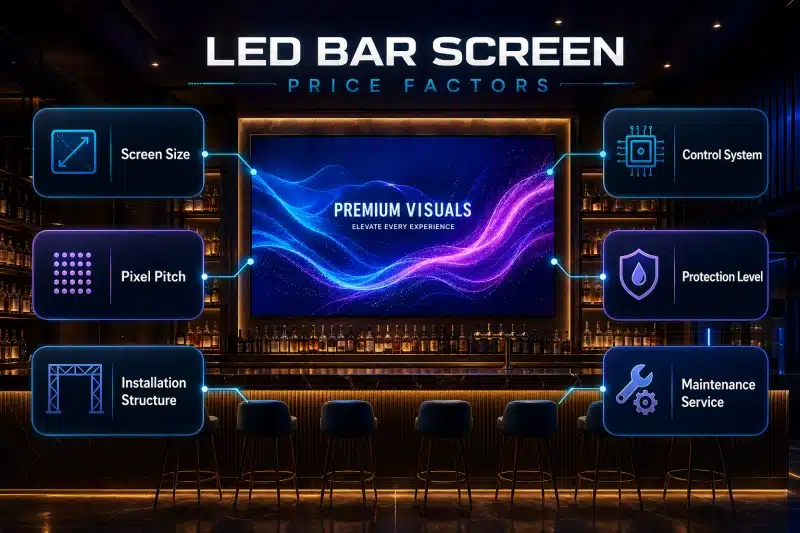
The price of an LED bar screen depends mainly on screen size, pixel pitch, protection level, installation difficulty, control system, and after-sales service. A cheap screen can become expensive later if it has poor brightness, weak refresh rate, unstable modules, or difficult maintenance.
4.1 Main Factors That Affect LED Bar Screen Cost
The main cost factors are screen area, pixel density, cabinet structure, protection method, and installation complexity.
In general, finer pixel pitch costs more. A P2 indoor display usually costs more than a P4 display of the same size because it contains more LEDs and delivers sharper close-up viewing.
GOB protection, curved modules, transparent design, rental-grade cabinets, or custom shapes can also increase the budget. These features are not always necessary, but they can be valuable when the venue has close customer contact, special interior design, or frequent event changes.
Installation is another major cost factor. A simple flat wall installation is easier than a curved bar counter, ceiling-mounted structure, large stage wall, or outdoor sign with weatherproofing. The supporting frame, power distribution, signal cables, controller, video processor, and content management system should be included in the real budget.
| Project Type | Typical Use | Budget Level |
|---|---|---|
| Small Back-Bar Screen | Menus, promotions, drink specials | Low To Medium |
| Sports Bar Video Wall | Live games, ads, event content | Medium |
| DJ Booth Or Club Wall | Music visuals, lighting content, branding | Medium To High |
| Curved Or Custom LED Design | Premium interiors and themed venues | High |
| Outdoor Entrance Display | Street traffic, event promotion, signage | Medium To High |
For most bar owners, the better question is not “What is the cheapest screen?” but “Which screen gives the best return for my venue?” A screen that helps sell more premium drinks, promote events, reduce printed material, and attract street attention can pay back faster than a low-quality screen that only works as decoration.
5. How To Install Bar LED Display Systems
A bar LED display should be installed only after the screen layout, viewing distance, wall structure, power supply, signal path, and maintenance access are confirmed. Many problems appear later because the installation was treated like a simple decoration project rather than a technical system.
The first step is site planning. Measure the wall, ceiling, counter, or stage area carefully. Check how customers move through the space. A screen near a narrow walkway needs protection. A screen above a bar counter must not block staff movement. A screen behind a DJ booth should fit the stage height and camera angles.
5.1 Mounting Structure And Safety Checks
The mounting structure should be checked before any LED cabinets or modules are installed. Flat wall mounting is common for indoor displays, but hanging or truss mounting may be needed for stage and event areas. Curved installations need special cabinets or flexible modules. Outdoor signs need stronger frames, waterproofing, and wind-load consideration.
The wall, ceiling, steel frame, or support structure must be able to carry the screen weight safely. The installation team should also consider ventilation, maintenance access, cable routing, fire safety, and whether the screen blocks emergency exits, sprinklers, cameras, or service paths.
The third step is power and signal design. LED screens need stable power distribution, proper grounding, and safe cable routing. Signal cables may include network cables, fiber cables, HDMI, or video processor connections, depending on the control system. The screen should also be easy for staff to operate without calling an engineer every time the content changes.
- Confirm screen location and viewing distance.
- Choose pixel pitch, brightness, and cabinet type.
- Check wall strength, mounting frame, and safety requirements.
- Plan power supply, signal cables, and controller placement.
- Install cabinets or modules with accurate alignment.
- Test brightness, color, grayscale, refresh rate, and content playback.
- Train staff on content updates and basic troubleshooting.
For larger bars and clubs, installation should not be handled as a DIY project. A professional supplier can help avoid structural risks, overheating, dead zones, poor alignment, and unsafe cable work.
6. Factors To Consider When Choosing A Bar LED Screen
The best bar LED screen is the one that fits the venue’s business model, not just the one with the highest technical specification. A sports bar, a nightclub, a rooftop lounge, and a small restaurant bar all need different screen plans.
Start with the purpose. If the screen is mainly for menus and promotions, readability matters most. If it is for live sports, size and smooth motion matter more. If it is for DJ visuals or performances, you need higher refresh rate, better contrast, and strong integration with stage content. If it is for exterior promotion, brightness and weather resistance become the priority.
Next, think about the customer’s position. How close will people stand to the screen? Will they sit directly in front of it or view it from the side? A wide viewing angle is important in crowded bars because customers rarely stand in one perfect position.
6.1 Choose By Content Type
The content type should guide the technical choice because a menu board, sports screen, DJ backdrop, and entrance sign do not need the same configuration.
- Simple menu content needs clear text, stable color, and easy updates.
- Sports content needs a large viewing area, smooth motion, and good brightness.
- DJ visuals need high refresh rate, deep contrast, strong grayscale, and reliable playback during long events.
Content workflow is also important. Some venues only need a USB-based or simple cloud content system. Others need real-time video input, live camera feeds, DJ software integration, sports broadcast routing, or multi-screen synchronization. A good LED display screen solution should be planned around how the venue will actually use content every day.
Finally, check supplier support. Ask about warranty, spare modules, receiving cards, control software, installation drawings, content format, maintenance training, and response time. In a bar, downtime is visible. If the main screen fails during a weekend event, the damage is not only technical; it affects the whole customer experience.
7. Where To Use LED Screen In Bar Spaces
The most effective places to use an LED screen in a bar are the areas where customers naturally look, wait, order, gather, or take photos. Screen placement should follow customer behavior, not just empty wall space.
7.1 Back Bar LED Screen
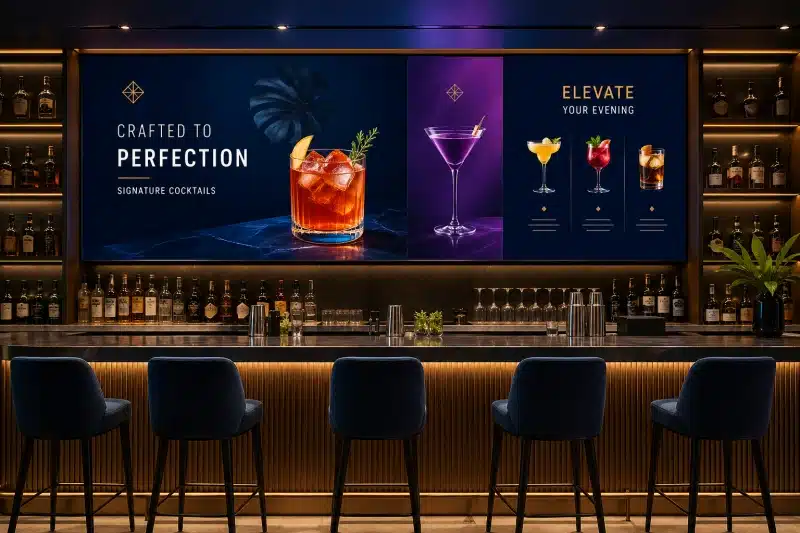
A back bar LED screen is one of the most useful placements because customers look there when ordering drinks. It can show menus, cocktail features, happy hour offers, brand visuals, premium bottle promotions, live sports highlights, or seasonal content. A clean back-bar screen can replace printed boards and create a more upscale look.
The main wall is ideal for sports bars, large lounges, and social venues. A big screen can turn one wall into the central attraction, especially during major games, live events, and themed nights. For sports content, the screen should be large enough for group viewing and bright enough to stay clear under ambient light.
7.2 DJ Booth And Stage Area
The DJ booth and stage area work best when the bar wants to create a stronger entertainment identity. When paired with a stage LED display, music visuals, performer branding, event logos, and lighting effects can create a more immersive show. This is especially useful for clubs, live music bars, and event-driven venues.
Entrance screens are useful for attracting people from outside. A storefront LED sign can show tonight’s event, drink specials, reservations, live sports schedule, or brand identity. For outdoor use, brightness, waterproof rating, ventilation, and local sign regulations must be checked.
Other useful locations include VIP rooms, private event spaces, ceiling strips, bar counter fronts, windows, photo zones, and corridor walls. The goal is not to cover every surface with LED. The goal is to place screens where they add attention, direction, and atmosphere.
8. The Best Options In LED Screens For Nightclubs: Unit LED Nightclub LED Screen Products
The best nightclub LED screen options are usually high-refresh, high-contrast, durable display systems that can handle fast motion, dark environments, and long operating hours.
Nightclubs need more than a bright wall; they need a visual system that works with rhythm, lighting, performers, and crowd energy.
8.1 Fine-Pitch Indoor LED Wall For Premium Clubs
A fine-pitch indoor LED wall is a strong choice for premium clubs that want sharp, seamless, and close-viewing visuals. It works well behind the DJ booth, across the main wall, inside VIP rooms, or in high-end lounge areas where customers may stand close to the screen.
For Unit LED product planning, the strongest options usually fall into several categories.
- A fine-pitch indoor LED wall is a strong choice for premium clubs that want clean, sharp visuals behind the DJ booth or across the main wall.
- A rental-style LED screen is useful for venues that host changing events, brand parties, and temporary stage setups.
- A flexible LED screen works well for curved club interiors, columns, tunnels, and creative installations.
https://www.youtube.com/watch?v=PSqp8nAdOJs
MA640/MA640S Series
- 4:3 Cabinet Design
- 640*480mm Standard Cabinet Size
- Hard Connection (MA640S), Soft Connection (MA640)
- LED Module without Bottom Shell (MA640S)
- Full Front Maintenance
8.2 GOB LED Screen For High-Traffic Bar Areas
https://www.youtube.com/watch?v=cjVdQHGDlSMhttps://www.youtube.com/watch?v=lP3CB9N0Anw
A GOB LED screen is a practical option for high-traffic bar areas because it offers stronger surface protection against contact, dust, moisture, and accidental impact. This matters in bars where customers move close to the screen, drinks may spill, and staff need the display to keep working during busy hours.
For a nightclub, refresh rate should be treated as a serious buying point. Fast visual loops, strobe lighting, camera recording, and social media filming can expose poor refresh performance quickly. A 3,840Hz refresh rate is often a better direction for premium club visuals. Good grayscale performance also matters because clubs often use dark scenes, gradients, shadows, and low-light content.
Unit LED products can be positioned around practical venue needs:
- For DJ Booths: Choose high-refresh indoor LED panels with strong contrast and reliable video playback.
- For Dance Floors: Use larger LED walls or creative shaped displays to build immersive movement.
- For VIP Rooms: Use smaller fine-pitch displays for premium private viewing and brand content.
- For Entrances: Use outdoor or semi-outdoor LED signage to promote events and attract foot traffic.
- For Bar Counters: Use protected LED modules or bar-shaped displays for drink promotions and ambient effects.
A nightclub LED screen should never be selected from a catalog photo alone. The supplier should understand viewing distance, ceiling height, lighting design, content format, installation load, and daily operation. That is where a project-based LED supplier has more value than a basic screen seller.
9. FAQs About Bar LED Screen Projects
The most common questions about a bar LED screen are usually about pixel pitch, cost, safety, content updates, and maintenance. Clear answers at the beginning of the project can prevent wrong purchases and expensive changes later.
9.1 What Pixel Pitch Is Best For A Bar LED Screen?
Most indoor bar projects use P2, P2.5, P3, or P4, depending on viewing distance. If customers stand close to the screen, choose a smaller pitch. If the screen is large and viewed from farther away, a larger pitch can reduce cost while still looking good.
9.2 Can A Bar LED Screen Show Live Sports?
Yes, it can show live sports if the control system supports the correct video input and the screen has suitable size, brightness, and refresh rate. Sports bars should pay special attention to motion smoothness and viewing angle.
9.3 Is A Bar LED Screen Better Than A TV Wall?
For large custom displays, LED is usually better than a TV wall because it can be seamless, brighter, more flexible in size, and easier to build around unusual spaces. TVs may still work for small rooms, but they do not create the same large-format visual impact.
9.4 How Long Does A Bar LED Screen Last?
Many quality LED screens are rated for tens of thousands of working hours, often around 50,000 to 100,000 hours depending on components, brightness settings, ventilation, and maintenance. Real lifespan depends on daily use and operating conditions.
9.5 Can Staff Update The Content Easily?
Yes, most modern systems can support scheduled content, remote updates, USB playback, or cloud-based control. The best choice depends on whether the bar needs simple promotions or real-time event content.
9.6 Does A Bar LED Screen Use Too Much Energy?
Power use depends on screen size, brightness, content, and LED efficiency. LED technology is generally known for efficient light output, and broader information about LED efficiency can be found from public resources such as the U.S. Department Of Energy.
Most indoor bar projects use P2, P2.5, P3, or P4, depending on viewing distance. If customers stand close to the screen, choose a smaller pitch. If the screen is large and viewed from farther away, a larger pitch can reduce cost while still looking good.
Yes, it can show live sports if the control system supports the correct video input and the screen has suitable size, brightness, and refresh rate. Sports bars should pay special attention to motion smoothness and viewing angle.
For large custom displays, LED is usually better than a TV wall because it can be seamless, brighter, more flexible in size, and easier to build around unusual spaces. TVs may still work for small rooms, but they do not create the same large-format visual impact.
Many quality LED screens are rated for tens of thousands of working hours, often around 50,000 to 100,000 hours depending on components, brightness settings, ventilation, and maintenance. Real lifespan depends on daily use and operating conditions.
Yes, most modern systems can support scheduled content, remote updates, USB playback, or cloud-based control. The best choice depends on whether the bar needs simple promotions or real-time event content.
Power use depends on screen size, brightness, content, and LED efficiency. LED technology is generally known for efficient light output, and broader information about LED efficiency can be found from public resources such as the U.S. Department Of Energy.
10. Conclusions
A bar LED screen is worth the investment when it is planned around customer experience, venue layout, content needs, and long-term operation. The best projects do not start with the biggest screen or the lowest quote. They start with clear questions: where do customers look, what should the screen help sell, how close is the viewing distance, what content will run every night, and how easy will it be to maintain?
- For a small bar, one well-placed back-wall display may be enough to modernize the space and improve promotions.
- For a sports bar, a large high-refresh screen can create a shared viewing experience that keeps customers longer. For a nightclub, a dynamic LED system can become part of the show itself.
Whether the project is a bar LED screen, a club LED screen, or a complete nightclub LED screen setup, the right supplier should help balance design, performance, safety, installation, and return on investment from the beginning.