NovaStar LED Driver IC Solutions Full Guide is Here!
Novastar LED driver IC are essential for ensuring stable and high-performance LED displays.
These integrated circuits regulate power delivery, optimize grayscale performance, and enhance refresh rates, making them a critical component in modern LED display technology.
With the increasing demand for high-resolution LED screens in advertising, entertainment, and smart city applications, understanding LED driver ICs and market trends is crucial for businesses and integrators.
This post introduces you the detailed information of PWM & PAM LED Driver IC! Let’s read it!
Table of Contents
What is LED Driver IC?
1.1 Definition and Function
An LED driver IC is a specialized integrated circuit that controls and regulates the current and voltage supplied to LEDs.
Unlike traditional power supplies, an LED driver IC ensures a stable and controlled power output, preventing flickering, overheating, or premature failure.
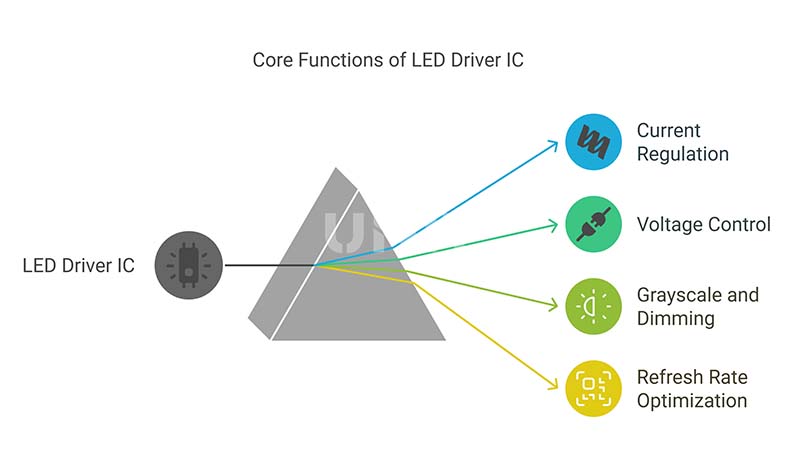
The main functions of an LED driver IC include:
(1) Current regulation – Ensures a steady flow of electricity to prevent brightness fluctuations.
(2) Voltage control – Matches the voltage requirements of LEDs for optimal efficiency.
(3) Grayscale and dimming – Enables smooth brightness adjustments and color accuracy.
(4) Refresh rate optimization – Reduces flickering, enhancing visual quality, especially in high-end LED displays.
1.2 Types of LED Driver IC
Different applications require different types of LED driver IC. The three main categories are:
(1) Constant Current LED Driver IC
Provide a steady current, preventing brightness inconsistencies.
Ideal for fine-pitch LED displays where uniformity is crucial.
(2) Constant Voltage LED Driver IC
Deliver a fixed voltage, commonly used in LED strips and signage.
Less precise for color consistency in high-end displays.
(3) PWM (Pulse Width Modulation) LED Driver IC
Adjust brightness by turning LEDs on and off at high frequencies.
Used in dynamic lighting systems and high-refresh-rate displays.
1.3 Why High-Quality LED Driver IC Matter
The performance of an LED screen heavily depends on the quality of its driver IC. High-end driver ICs, like Novastar’s solutions, integrate advanced features such as:
(1) High refresh rates – Essential for broadcast and sports displays.
(2) Grayscale enhancement – Improves color depth and display realism.
(3) Energy efficiency – Reduces power consumption without sacrificing brightness.
(4) EMC optimization – Minimizes electromagnetic interference for stable operation.
Choosing the right LED driver IC directly impacts an LED screen’s longevity, visual quality, and power efficiency.
For a long time, the brand of the chip has become an important criterion for judging the quality of LED screens.
In the LED full-color screen industry, the most advanced chips are produced by Japan’s NICHIA company, and can only be packaged by Nichia itself.
The second is the American CREE chip, which is also well-known. Its regular package is the Huagang package.
But since CREE supports selling chips alone, almost 80% of the so-called CREE lamp beads on the market are sealed by other packaging factories.
The size of the chip is expressed in units: mil (μ or mil) (1μ=0.001 inch). The chip is generally rectangular and is usually named after the long side.
Under the premise of the same batch of epitaxial wafers, the larger the chip, the better the heat dissipation performance of the lamp bead, the better the light effect, and the significantly improved life and stability.
There are also special cases, such as a certain brand of red light, which has a counter-electrode packaging method, and the brightness and effect are comparable to conventional packaging of larger chip sizes.
The Role of LED Display Driver Chip
After the LED is installed, the LED display needs to be debugged. The LED display module chip and decoder are needed for debugging.
The LED display driver chip provides stable current and voltage for the LED to ensure that the LED emits light normally.
The control chip is responsible for processing and transmitting display data to achieve various display effects.
During debugging, by adjusting the chip parameters, such as output current size, refresh frequency, etc., the performance indicators such as brightness, uniformity and refresh rate of the display can be improved.
The decoding chip converts the input address signal into the corresponding row or column selection signal, so that the controller can accurately control each pixel of the LED display.
During the debugging process, by checking whether the output signal of the decoding chip is correct, it can be determined whether the decoding circuit is working properly, thereby eliminating display failures caused by decoding errors.
Decoding process:
2.1 Input Signal
Usually a digital signal in serial or parallel format.
These signals contain data of the display content, such as the characters to be displayed, the pixel value of the image, etc.
2.2 Signal Decoding
The decoder inside the chip decodes the input digital signal into a specific control signal for each LED lamp bead.
This involves converting digital codes into corresponding physical signals to determine the on/off state, brightness level or color of each LED bead.
2.3 Grayscale Control
For LED displays with grayscale levels, the decoder also needs to convert digital signals into PWM (pulse width modulation) signals.
By changing the duty cycle of the PWM signal, the average brightness of the LED is controlled to achieve different grayscale display effects.
2.4 Output Signal
The decoded signal will be output to the LED drive circuit, which will then control the on/off state of the LED,
and finally present the corresponding image or text on the LED display.
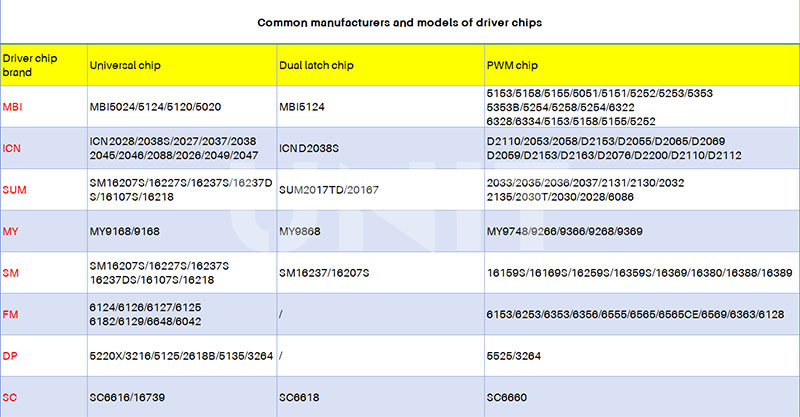
Currently, commonly used driver chips can be divided into three categories according to their architecture: general-purpose chips, double buffers, and PWM.
Common driver chips for LED displays:
LED Driver IC Market Status
2.1 Challenges in the LED Driver IC Market
Despite the rapid advancements in LED driver IC technology, the industry faces several challenges that impact performance, efficiency, and adoption.
Below are some key obstacles:
(1) Power Efficiency and Heat Dissipation
A. High power consumption
As LED screens become larger and more advanced (e.g., 4K/8K, fine-pitch LED displays), the demand for high-power driver ICs increases.
However, higher power output often leads to energy inefficiency.
B. Heat management issues
Excessive heat generation from driver ICs can affect LED longevity and cause color inconsistencies. Efficient thermal management solutions are required to maintain stable operation.
(2) High Refresh Rate and Low Latency Requirements
Modern LED applications, such as broadcast, gaming, and sports displays, demand ultra-high refresh rates (3840Hz or higher) to prevent flickering and motion blur.
Achieving high refresh rates while maintaining low latency and power efficiency requires advanced chip design and processing algorithms, increasing manufacturing complexity.
(3) Increasing Demand for Fine-Pitch LED Displays
Fine-pitch LED screens (P1.2, P1.5, etc.) require more driver LED ICs per unit area, significantly increasing production costs.
Maintaining brightness and uniformity across high-density displays is challenging, requiring precise current control and signal processing.
(4) EMC (Electromagnetic Compatibility) Issues
LED driver IC generates electromagnetic interference (EMI), which can affect surrounding electronic devices.
Strict EMC compliance standards require manufacturers to integrate noise-reduction technology, adding to the cost and design complexity.
2.2 Changes in Leading LED Display Companies
Micro LED Display
Chip on Board Technology
Pixel Pitch : 0.9 mm
Brightness : 1,200 nit (Peak), 600 nit (Max)
Contrast ratio (10lux) : 33,000:1
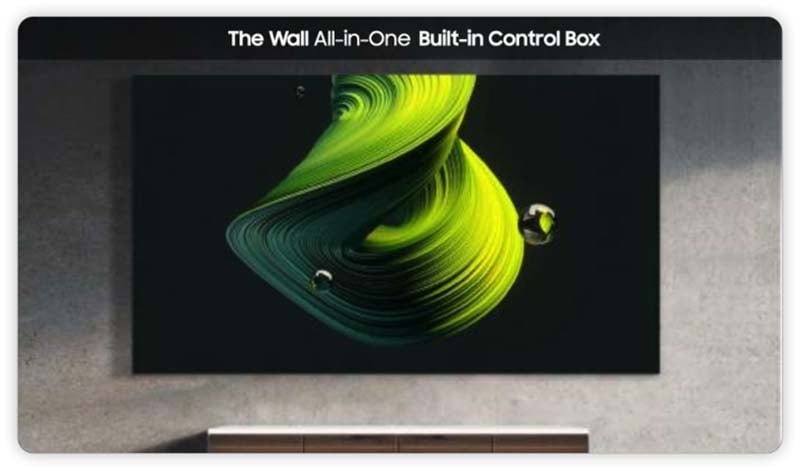
Micro LED Display
Chip on Board Technology
Pixel Pitch : 0.84 mm
Brightness : 1,600 nit (Peak), 500 nit (Max)
Contrast ratio (10lux) : 24,000:1
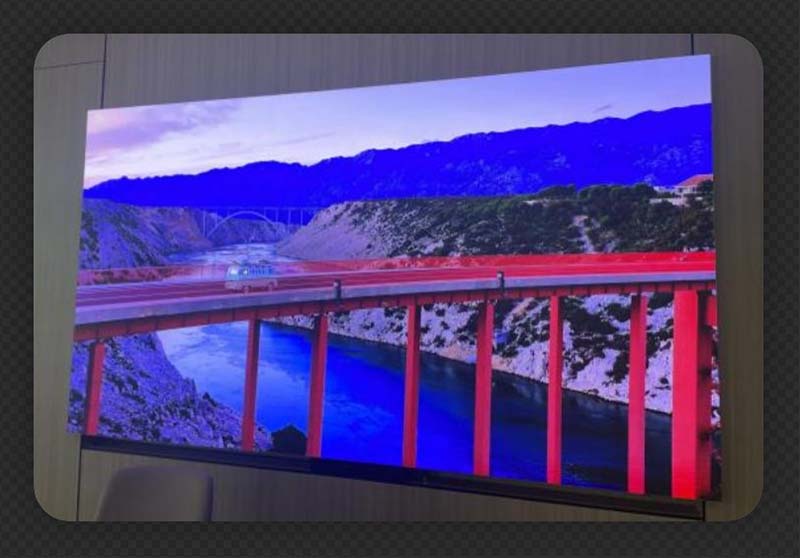
- Brand: Samsung The Wall
- Resolution: 3840*2160
- Number of light panels: 16*12
- Light panel resolution: 240*180
- Pixel pitch: P0.63mm
- Package form: COB package
(1) Brightness test
Test method: 10% white block 255 grayscale
Full white screen brightness: 295.62nit; peak brightness: 1314.77nit
Dynamic peak brightness function
(2) Refresh rate test
Test method: Select 4 typical grayscale tests. The measurement area is a 1024*1024 pixel white block with a black background.
Test data:
|
Grayscale |
Brightness |
Refresh Rate |
|
255 Grayscale |
499.7411nit |
1920Hz |
|
128 Grayscale |
184.3012nit |
1080Hz |
|
32 Grayscale |
3.3015nit |
120Hz |
|
10 Grayscale |
0.0025nit |
1380Hz |
Note: The brightness of 10 grayscale is too low, and the waveform separation of the test instrument is abnormal
(3) Power consumption test
Test method: Use PA310 255 full screen, test for 5 minutes at a brightness of 295.62nit
Full screen power consumption: 76.64Wh
ABL function makes the white screen power consumption extremely low
(4) Uniformity test
Test method: Use 9-point test method
|
Uniformity data |
Ordinary screen |
|||
|
|
Brightness |
Chroma |
Brightness |
Chroma |
|
W |
98.57% |
0.0017 |
98.57% |
0.0009 |
|
R |
97.81% |
0.0002 |
98.46% |
0.0001 |
|
G |
98.70% |
0.0032 |
98.99% |
0.0018 |
|
B |
98.80% |
0.0007 |
99.25% |
0.0004 |
Uniformity is lower than that of ordinary displays on the market, and the R brightness and G chromaticity deviation are large
(5) Color temperature test
Uniformity is lower than that of ordinary displays on the market, and the R brightness and G chromaticity deviation are large.
Average color temperature after stabilization: 12197K White balance average coordinates: Cx, Cy (0.2702, 0.2719)
The low gray temperature deviation is large, and it tends to be stable after 20 grayscales
(6) Color gamut test
The DCI-P3 color gamut matching rate of conventional displays is about 90%
Test method: Using CA410 to test the R, G, and B coordinate values
Compared with conventional displays on the market, the DCI-P3 color gamut matching rate is high
(7) Subjective perception of the human eye
The picture is bright, the layering is obvious, and the color saturation is high when playing natural pictures
Pure color observation, the uniformity is general, and the difference between modules is large.
Changing the video source content to full-screen pure color, the brightness is automatically reduced, which is comfortable for the human eye and will not cause stimulation due to high brightness.
(8) Summary and analysis
A. Dynamic peak brightness function makes The Wall more shocking when playing natural pictures
B. With ABL function, The Wall changes to full white automatically limit the brightness to 300nit when the picture is displayed, with lower power consumption and more comfortable viewing for the human eye
C. Narrow wavelength lamp makes The Wall have a higher matching rate with standard colors in terms of color performance, and the color reproduction is more realistic
D. The refresh rate, uniformity, and low gray temperature stability are similar to or even lower than conventional displays on the market
Novastar PWM & PAM LED Driver IC
To address these challenges, leading manufacturers like Novastar have launched the world’s first mass-producible driver IC with PWM & PAM architecture.
3.1 Basic principles of PWM+PAM regulation
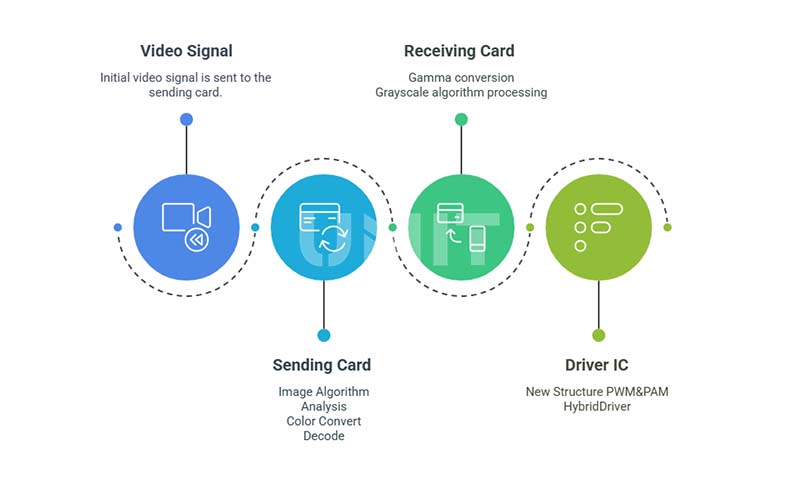
Video signal: sent to the sending card
Sending card: real-time image analysis, dynamic algorithm processing, lossless re-encoding
Receiving card: Gamma conversion, grayscale algorithm processing, pixel-by-pixel bit separation
Driver IC (New Structure PWM&PAM Hybrid Driver): display brightness realization, refresh frequency realization, grayscale number realization, display algorithm realization
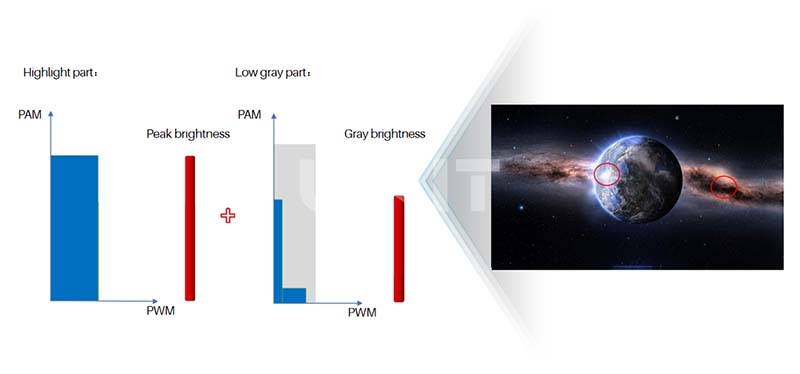
3.2 How do PWM & PAM LED Driver ICs improve display quality?
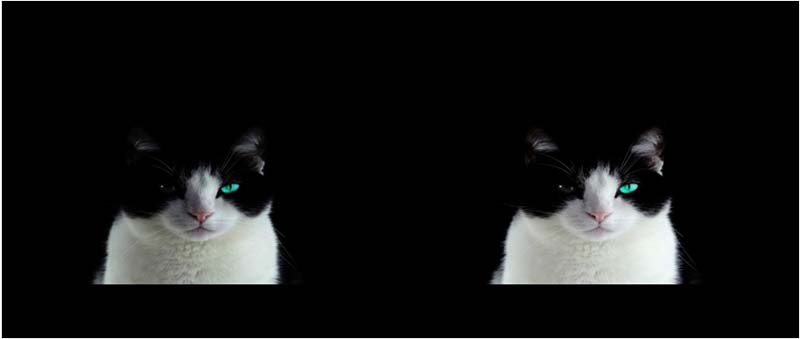
(1) MG algorithm
Combined with the system MG algorithm, the display is dimmed when it should be dark and brightened when it should be brightened, which is more energy-saving and eye-friendly
Lower driving current prolongs the service life of LED lamp beads
(2) Peak brightness
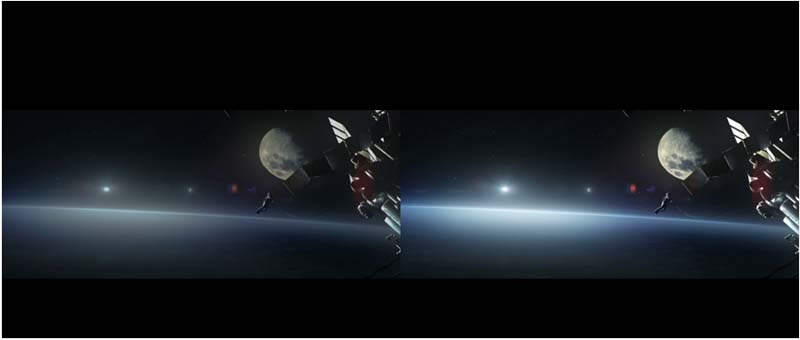
The peak brightness function can perform real-time intelligent analysis of video source data.
By achieving frame-by-frame and pixel-by-pixel peak brightness adjustment, the dynamic range of the display is improved.
This brings higher contrast and more delicate grayscale performance.
(3) Dynamic energy saving
The black screen state brings about 50% energy saving, and the bright screen state brings more than 20% energy saving
3.3 Display Effect Test
(1) High Refresh Rate
System configuration:
Controller: MX40 Pro
Receiving card: A10s Pro
Frame rate output: 240Hz
Specifications of the tested display:
Type: SMD Dot pitch: P1.95
Scan number: 8s
Visual refresh rate: 15360Hz
Driver IC model: TBS5367
Grayscale bit level: 18bit
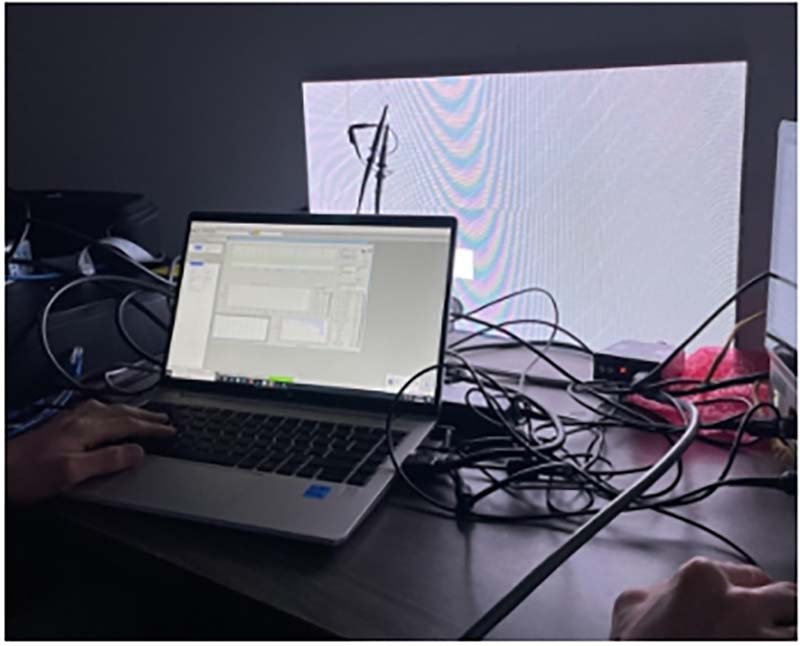
Test method:
Use LM-AST-10MM with software (LLide) for testing.
LM-AST-10MM is close to the screen (module center), and the number of peak brightness (number of open) is read and recorded through LLide. The number multiplied by 60 is the refresh rate
|
Driver IC model |
Supported PAM bit number |
16 scans or less |
20 scans or less |
20-45 scans |
45 scans or more |
|
TBS5367 |
8bit |
≥18bit @7680~15000Hz |
≥18bit @7680~15000H z |
≥16bit @7680H z |
≥16bit @3840Hz |
|
TBS5266A |
4bit |
≥16bit @7680~15000Hz |
≥16bit@ 7680Hz |
≥14bit @3840Hz |
|
Test conclusion:
The maximum brightness of the display is 1308nit. When the brightness is 1nit, the visual refresh rate reaches 1740Hz
When the display brightness reaches 10nit (39 grayscale), the refresh rate reaches 3840Hz
When the display brightness reaches 20nit (52 grayscale), the refresh rate reaches 7680Hz
When the display brightness reaches 40nit (67 grayscale), the refresh rate reaches 15360Hz
3.4 Comparison of common COB display test data
|
Test cabinet |
P0.93 real pixel 54S COB cabinet |
||
|
Performance |
5267 |
2XX9 |
Effect comparison |
|
Maximum brightness/nit |
600 |
600 |
– |
|
Peak brightness/nit |
1200 |
600 |
Brightness increased by 600nit |
|
Graying brightness/nit |
0.0071 |
0.0091 |
Lower graying |
|
1200nit peak brightness contrast ratio |
169049:1 |
65934:1 |
2.5 times |
|
White screen cabinet power consumption W/m2 |
310 |
340 |
8.5% lower |
|
Black screen cabinet power consumption W/m2 |
47 |
98 |
51% lower |
|
Grayscale |
32768(15bit) |
8192(13bit) |
4 times |
|
Video cumulative/KWh (6H) |
0.204(1200nit) |
0.252(600nit) |
19% lower |
|
Temperature |
36.7℃ |
39.8℃ |
3.1℃ lower |
Conclusion:
When the white screen brightness is 600nit, the peak brightness can reach 1200nit, and the contrast ratio is increased by 2.5 times.
When the white screen brightness is 600nit, the black screen energy saving reaches 51%.
At the peak brightness of 1200nit, the cumulative power consumption of the video is more than 19% lower than that of similar products.
The grayscale level is increased from 13Bit to 15Bit, an increase of 4 times.
The average module temperature is 3.1℃ lower than that of competing products.
3.5 Comparison of the temperature of the general COB screen
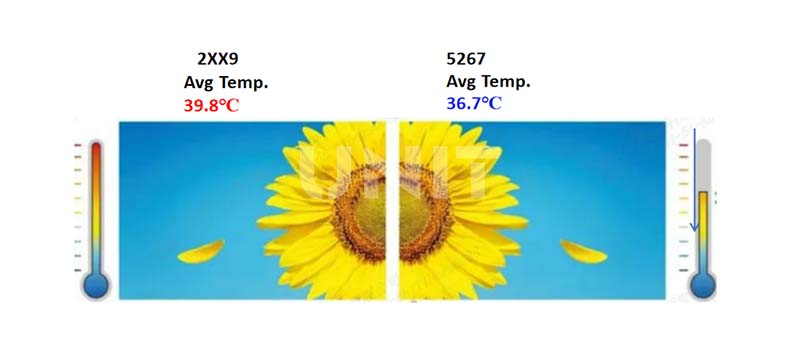
P0.93 real pixel COB, 54 scan cabinet, under the same power supply and other test conditions, the same maximum brightness of 600nit, after playing the same video for 6 hours, the screen temperature is 3.1℃ lower than that of the competing products, reaching the cold screen standard (≤37℃)
TBS Driver IC Introduction
Product Features:
Dual-edge data transmission, maximum 25MHz
Open and short circuit detection, eliminate cross, eliminate lower ghost, eliminate the first line of darkness
Effectively suppress coupling, effectively solve low gray blocks, color cast, pitting problems
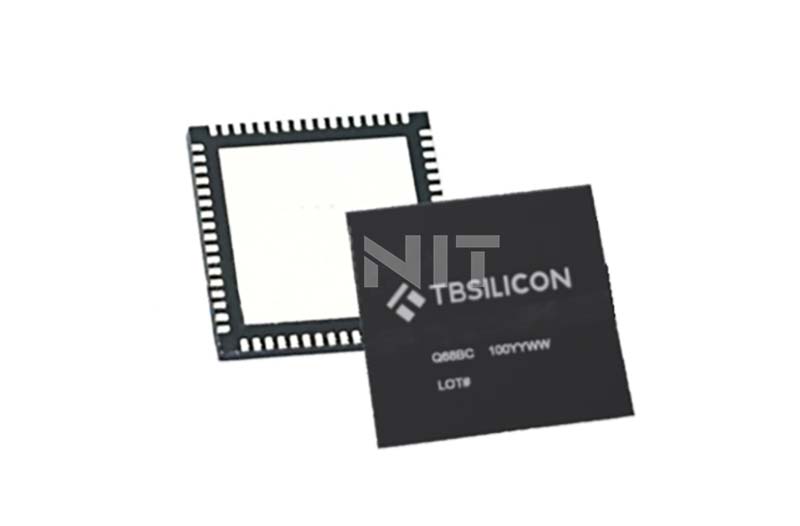
(1) TBS5266A
- Energy saving: pixel-level dynamic energy saving of about 20%, black screen energy saving of about 40%
- High refresh rate: up to 7680hz with 45-scan design
- High grayscale: 2~3bit higher than the same specification products on the market
- High contrast: pixel-level peak brightness adjustment to improve dynamic contrast
- Benchmark products: MBI5264
(2) TBS3266
- High refresh rate: up to 7680hz with 45 scans
- High contrast: pixel-level peak brightness adjustment to improve dynamic contrast
- High grayscale: 2~3 bits higher than the same specification products on the market
- Benchmark products: ICND2065 and ICND2153
(3) TBS5267A
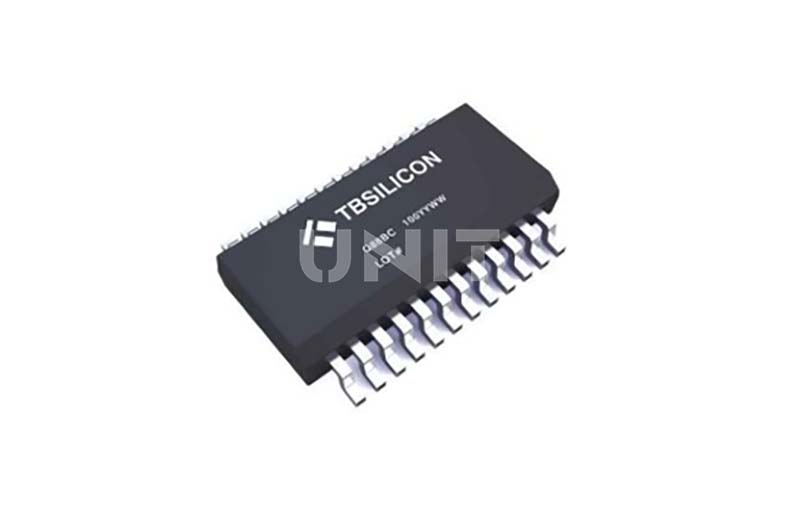
- Low temperature: 2~3℃ lower than the temperature of products with the same specifications on the market
- High contrast: pixel-level peak brightness adjustment to improve dynamic contrast
- High grayscale: 2~3 bits higher than the same specification products on the market
- High refresh rate: up to 7680hz under 45-scan design
- Benchmark products: ICND2069
Limitations of the above three ICs
|
Scan |
Visual Refresh Rate |
Grayscale |
|
32 scans or less |
7680Hz |
16 bit |
|
32~45 scans |
7680Hz |
14 bit ~ 16 bit |
|
45 to 64 scans |
3840Hz |
14-15bit |
Note: The grayscale level will fluctuate according to the design of the light board.
(1) TBS5266A
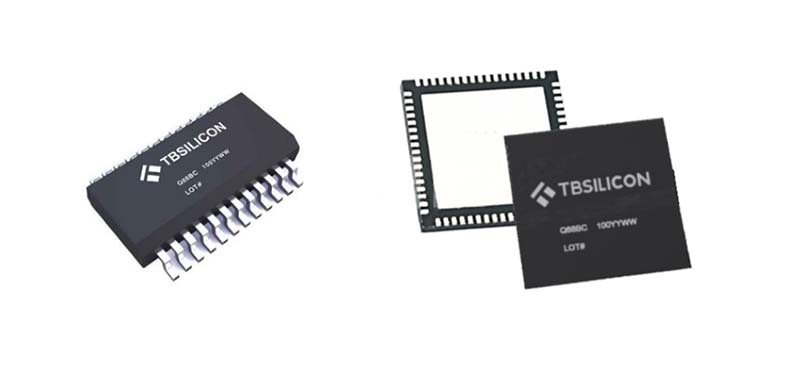
- 24bit grayscale level: supports 24bit grayscale output
- Low brightness and high refresh rate: visual refresh rate of more than 1200Hz at 1nit brightness
- High contrast: peak brightness adjustment at pixel level to improve dynamic contrast
- Benchmark products: XM10480
Limitations of TBS5367A
|
Scan |
Visual Refresh Rate |
Grayscale |
|
20 scans or less |
10000Hz |
16 bit – 18 bit |
|
20~45 scans |
7680Hz |
16 bit |
|
45 to 60 scans |
3840Hz |
16bit |
Note: The grayscale level will fluctuate according to the design of the light board.
|
TBS Driver IC |
||||
|
Product model |
TBS5367 |
TBS5266A |
TBS5267A |
TBS3266A |
|
Polarity scan |
Common cathode, row and column in one |
Common anode column scan |
Common cathode column scan |
Common anode column scan |
|
Supported scan number |
1~60 |
1~64 |
1~64 |
1~64 |
|
Operating voltage |
2.8V~5V |
3.8V~5V |
2.8V~5V |
3.8V~5V |
|
Operating current |
0.1mA~10mA |
0.2mA~20mA |
0.2mA~20mA |
0.2mA~20mA |
|
Recommended use scenarios |
XR shooting, high-end fixed installation |
XR shooting, high-end rental |
Small pitch |
Small pitch, rental |
|
Peak brightness |
√ |
√ |
√ |
√ |
|
Energy saving |
√ |
√ |
√ |
× |
|
High contrast |
√ |
√ |
√ |
√ |
|
1-20 scans Grayscale level and refresh rate |
(20s) 10000Hz/21bit |
7680Hz/16bit |
7680Hz/16bit |
7680Hz/16bit |
|
20-45 scans Grayscale and refresh rate |
(40s) 7680Hz/18bit |
7680Hz/16bit |
7680Hz/16bit |
7680Hz/16bit |
|
45-64 scans Grayscale and refresh rate |
(60s)3840Hz/16bit |
3840Hz/14bit |
3840Hz/14bit |
3840Hz/14bit |
|
Encapsulation |
QFN88 |
SSOP24/QFN24 |
SSOP24/QFN24 |
SSOP24 |
|
Benchmark products |
XM10480G/10486G |
MBI5264 ICND3065 |
ICND2169 CFD855 |
DP3264S/DP3265S/ICND2065 ICND1065S/ICND2153 |
Novastar LED Driver IC Full-link Solution
5.1 Conventional Receiving Card + TBS3266A
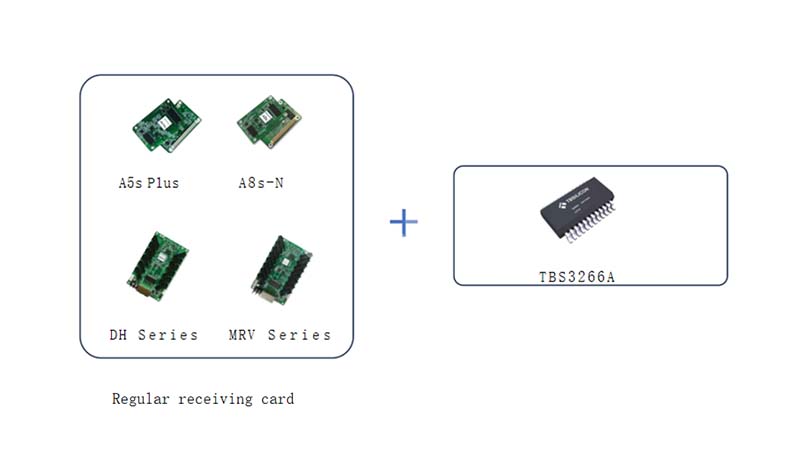
(1) Applicable scenarios
Outdoor, semi-outdoor LED display screen
(2) Higher brightness
Higher brightness allows the display content to be displayed clearly under complex ambient light.
At the same time, it can further increase the static contrast of the display
(3) Lower power consumption
The TBS3266A LED driver IC cooperates with the control system to analyze the input source content in real time.
When a continuous black screen is detected, the driver IC automatically shuts down the internal module and enters a silent state.
It will wake up immediately when the signal appears again. Compared with conventional displays on the market, the black screen energy-saving effect saves about 50% of energy consumption.
5.2 Conventional receiving card + TBS5266A/TBS5267A
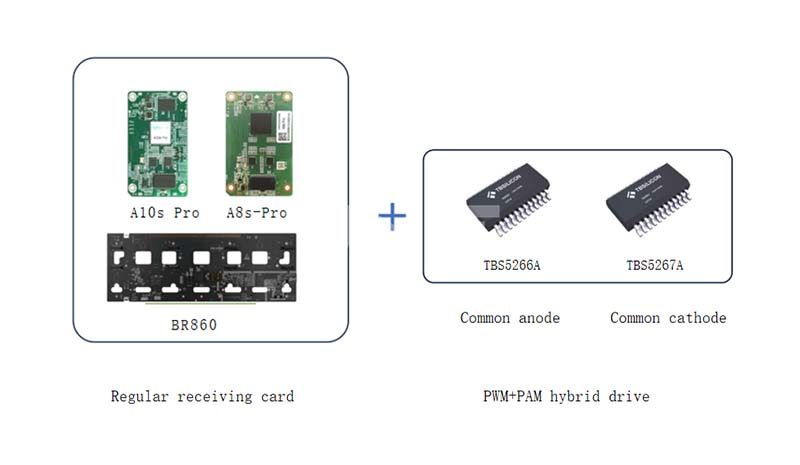
(1) Higher dynamic contrast
Based on the PWM+PAM control method, the gray brightness can be lower, and the peak brightness can be higher.
The screen contrast ratio can reach 169014:1
(2) Higher refresh rate
TBS5266A/TBS5267A adopts PAM adjustment, which can make the display refresh higher when it is bright. It can reach 7680Hz below 32 scan design.
(3) Higher grayscale bit number
A high grayscale bit level can present more detailed content.
When the light board is designed to be within 54 scans, the grayscale bit level of the display can still be kept above 15 bits.
(4) Lower than human body temperature
When playing normal video, based on the operation of low power consumption mode, the surface temperature of the screen is lower than human body temperature
(5) Multiple low power consumption modes
Using special driver IC internal processing, it can save power consumption at pixel level and driver level. Cooperate with the control system to achieve black screen low power operation
5.3 Conventional receiving card + TBS5367A
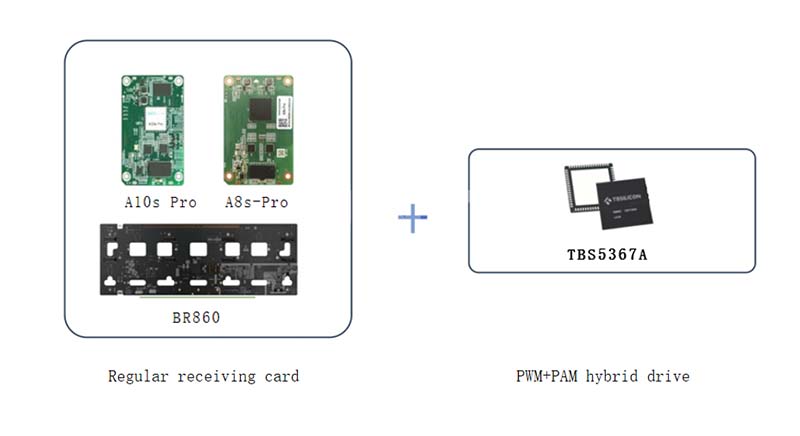
The solution of conventional receiving card + TBS5367A can achieve higher dynamic contrast, higher refresh rate, and higher grayscale bit number.
In addition, the PAM method is used to adjust the display so that it can refresh at a low brightness of 1 nit without flickering for human eyes.
LED Driver IC Market Trends
6.1 Market Growth and Demand
The global LED driver IC market is expanding rapidly due to:
Rising demand for high-resolution LED displays in advertising, stadiums, and retail.
Advancements in LED technology, such as Micro LED and Mini LED, requiring more precise driver ICs.
Stricter energy efficiency regulations, pushing for low-power consumption solutions.
According to industry reports, the LED driver IC market is projected to grow significantly, with Asia-Pacific leading production and North America and Europe driving high-end display demand.
6.2 Key Market Trends
(1) Shift Toward Higher Refresh Rates
Broadcast and sports displays require refresh rates of 3840Hz or higher, demanding superior driver ICs.
Low refresh rates cause motion blur and flickering, reducing display quality.
(2) Growing Use of Fine-Pitch LED Displays
Indoor P1.2, P1.5, and P2.0 LED screens require advanced driver ICs for seamless performance.
Corporate boardrooms, control centers, and home theaters are adopting fine-pitch displays, increasing demand for premium ICs.
(3) Rise of 4K and 8K LED Displays
Higher resolutions require more powerful LED driver ICs to manage increased pixel density.
Novastar’s high-performance ICs support HDR display technology, improving contrast and color vibrancy.
(4) Integration with Smart LED Systems
Driver LED ICs are now used in smart city lighting, automotive displays, and IoT-connected LED solutions.
Advanced features like dynamic dimming and real-time color correction are becoming standard.
6.3 Market Leaders and Competitive Landscape
The LED driver IC market is dominated by key players, including:
Novastar – Known for high-end broadcast and rental display solutions.
Macroblock – Specializes in high grayscale and low-power LED driver ICs.
Texas Instruments (TI) – Provides industrial and automotive-grade LED driver IC.
STMicroelectronics – Develops integrated driver IC solutions for smart LED systems.
Novastar continues to lead in fine-pitch LED applications, integrating low-latency, high-refresh-rate technology for seamless display performance.
6.4 Future Outlook
With ongoing innovations in Micro LED, naked-eye 3D, and flexible LED displays, the demand for intelligent LED driver IC will continue to grow.
Companies investing in high-performance, energy-efficient solutions will dominate the next phase of LED display advancements.
Conclusion
Through the full-link processing of the image by the sending card, receiving card, and hybrid PWM+PAM driver, the LED display provides a more stunning display effect.
In this post, we introduce the LED driver IC solution of PWM & PAM architecture launched by NovaStar in detail. For more information, please contact us!