3 Minutes to Know About LED Display Parameters!
When the user makes an LED Display screen project, the most important item for an LED screen display is the parameters. In many cases, some important LED display parameters directly affect the visual effect and quality.
As below are some of the most important parameter items in detail which can make you know more clearly about the data.
Click the terms and jump to:
LED Module
Cabinet
Pixel Pitch
Pixel Density
Resolution
SMD/DIP/GOB
White Balance
Screen Ratio
Screen Configuration
Aging Test
Lifespan
Maintenance Method
Screen Configuration
Control System
1. Brightness
2. View angle
3.View distance
4.Grayscale
5.Display color
11. Frame update frequency
12. Screen refresh frequency
13. Gamma correction
14. Support input
15. Control distance
16. Color temperature
17. Light color
18. Brightness correction
19. Operating temperature
20. Operating humidity
25. Out of control pixels rate
Common Terms of LED Display
Definition: A basic unit consisting of multiple LED lamp beads, circuit boards and drive circuits. The composition and configuration of the module directly affect the display effect.
If a module has 100 LED lamp beads arranged in 10 rows and 10 columns, the pixel resolution of each module is 10×10.
Definition: The cabinet is a frame that carries the LED module, usually made of aluminum or iron, providing physical protection and structural support.
The cabinet design should be easy to install and maintain. Standardized sizes facilitate splicing.
However, for special project requirements, LED display manufacturers can provide customized services.
Definition: The distance between the centers of adjacent pixels, which affects the clarity and viewing distance of the display. The unit is usually millimeters. P2mm means that the pixel pitch of this display is 2mm.
Smaller pixel pitches (P2mm, P2.5mm, etc.) are suitable for close viewing. Generally used in indoor scenes.
Larger ones are suitable for long-distance viewings, such as P8mm, P10mm.
Correspondingly, the smaller the pixel pitch, the higher the image quality and the more expensive the price.
Definition: The number of pixels per square meter. It determines the clarity of the display.
The pixel density can be calculated using the following formula:
Pixel density (PPI) = total number of pixels ÷ display area (m²)
For example, if a display has a resolution of 1920×1080 and a size of 1.5m x 0.75m:
Total number of pixels=1920×1080=2073600
Display screen area=1.5×0.75=1.125 m²
Pixel density=2073600÷1.125≈1842000 pixels/m²
The higher the pixel density, the clearer the image, which is suitable for high-definition display needs.
Resolution refers to the total number of pixels of the display, usually expressed in the form of width and height, such as 1920*1080.
This value determines the clarity and fineness of the displayed content. The higher the resolution, the clearer the displayed image.
Module Resolution
It refers to the pixel resolution of a single LED module. Module resolution directly affects the display quality of the unit.
For example, a module with a resolution of 64*32 means that the module has 64 horizontal pixels and 32 vertical pixels.
Cabinet Resolution
The resolution of the entire cabinet is obtained by adding the resolutions of multiple modules.
For example, if a cabinet contains 4×4 modules with a resolution of 64*32, the resolution of the cabinet is:
(64*4)*(32*4) = 256*128
Definition: Surface mount device refers to the technology of directly mounting LED lamp beads on the surface of the circuit board.
Features: Provide wider viewing angle, higher color uniformity, and better heat dissipation performance
SMT (surface-mounted technology) is the most popular technology and process in the current electronic assembly industry.
At present, SMD still occupies the vast majority of the market share in the LED display industry.
Definition: Dual-pin package, LED lamp beads are fixed on the circuit board through two pins.
Features: Mainly used for outdoor display screens, high brightness, and resistance to environmental changes.
However, the viewing angle is relatively narrow, suitable for long-distance viewing, and is usually used for billboards and large displays.
Definition: LED lamp beads are fixed and packaged on the circuit board with special glue.
Features: GOB LED display provides better waterproof, dustproof, and shockproof performance, suitable for extreme environmental conditions.
Definition: Contrast is the brightness ratio of the brightest and darkest parts of the display, reflecting the layering and detail performance of the image.
Contrast = Brightness (brightest part) ÷ Brightness (darkest part)
For example, if the brightness of the brightest part is 1000 nits and the darkest part is 10 nits. Then the contrast ratio is 100:1.
Importance: High contrast makes the image more vivid and the details clearer, especially when the lighting conditions change.
Definition: White balance is the process of adjusting the ratio of the three colors of red, green and blue in the display to make the white appear natural.
By adjusting the brightness of the three colors of RGB, the brightness of the three colors is equal when displaying white.
For example, if the original values of RGB are 255, 200, and 150 respectively, they can be adjusted to 200 to obtain a better white balance effect.
Importance: Accurate white balance can improve the realism of colors, avoid color cast, and ensure that the image appears natural.
Definition: Screen ratio is the ratio of screen width to height, usually expressed in the form of X:Y (such as 16:9).
For example, for a 1920×1080 screen, the ratio is:
Screen ratio = 1920÷1080≈ 1.78:1 (i.e. 16:9)
Importance: Screen ratio affects the layout of content and is suitable for different types of display needs, such as video playback, web browsing, etc.
Definition: The LED display screen is tested for long-term continuous operation before leaving the factory.
Usually includes 24 to 48 hours of continuous operation, monitoring brightness, color changes, failure rate, etc.
Function: Ensure that each LED module can work normally before formal use, and reduce future failure rates.
Definition: The time that the LED display screen equipment can continue to work under normal conditions. Usually expressed in hours.
The service life of most LED displays is between 50,000 and 100,000 hours. It depends on the use environment and maintenance.
Influencing factors: Including ambient temperature, humidity, ventilation conditions, and frequency of use. Good maintenance can extend the service life.
Front maintenance: Maintain the display device from the front
Rear maintenance: Maintain the display screen from the back. For example, disassembly of LED modules, power boxes, etc.
Dual maintenance: Both front and rear maintenance are possible, which is more convenient.
Definition: Screen debugging is the process of adjusting and optimizing display parameters (such as brightness, contrast, color balance, etc.).
Including:
Brightness adjustment: Ensure that the display is visible under different ambient light.
Contrast setting: Adjust to enhance the layering of the image.
Color correction: Adjust white balance through test images to ensure accurate colors.
Uniformity check: Ensure that the color and brightness of the screen are uniform across the entire display area.
Importance: Good screen debugging ensures the best visual effect and improves user experience. It is especially important in professional display and advertising applications.
Definition: The control system is a hardware and software system used to manage and control the content of the LED display screen.
Composition: Usually includes control card, sending card, receiving card, signal source (such as computer, player), etc.
Function: Process video signals and image files and convert them into a format that can be displayed by LED modules. Support real-time content update and multimedia playback.
1. Brightness
Brightness, as one of the most important parameters of LED Display, is the key to our choice of LED Display.LED brightness is typically expressed in Luminous Intensity, in CD;1000UCD =1 MCD, 1000mcd=1 CD.
The brightness of LED display screen refers to the luminous intensity per unit area of the display screen when the display screen is working normally. The unit is CD/m2 (i.e., the luminous intensity of how many CDs there are per square meter of the area).
The brightness higher for the LED display, the brighter of the image, and the sharper of the screen when looks from a distance.
The brightness of LED display is a difficult indicator to measure, but can be measured by professional tools.
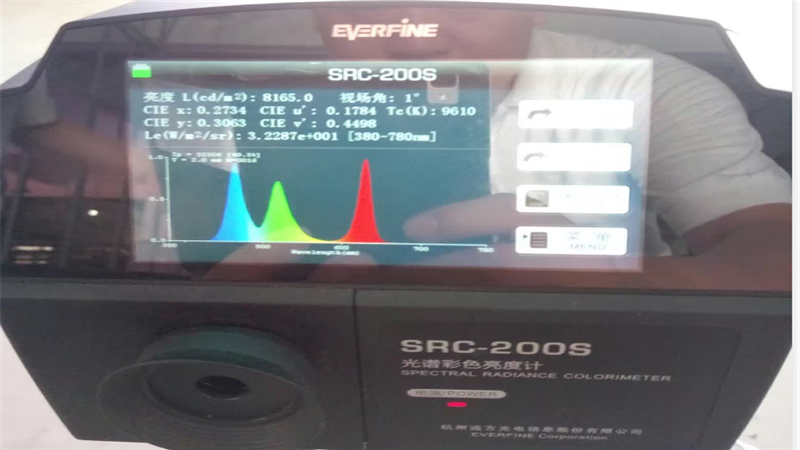
Nit VS cd/m2:1nit=1cd/m2
Generally, the brightness of indoor LED display is around 1000nits at the highest, and that of outdoor LED display is around 6500nits.In some areas of direct sunlight, brightness requirements even reach 7000nits-10000nits.Ultra-high brightness LED displays usually require special SMD lamps or use of DIP lamps.
2.View Angle
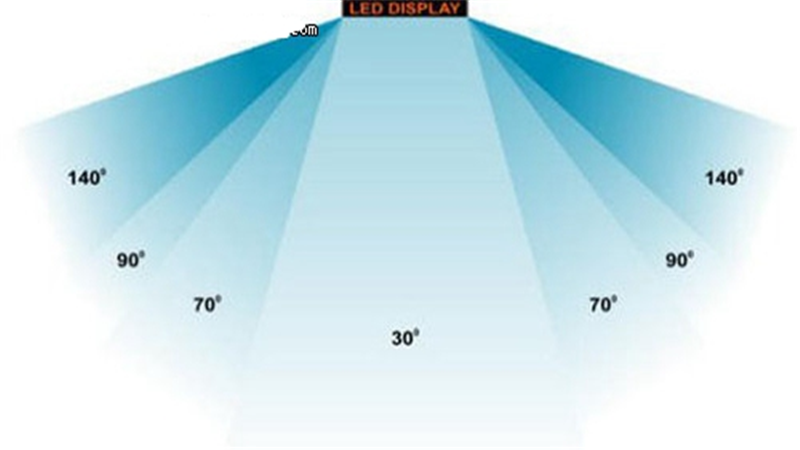
The View Angle of the LED display refers to the Angle at which the user can clearly view all the content on the screen from different directions.And the visual Angle is a reference value, LED full color display visual Angle including horizontal and vertical two indicators.Technical parameters are described as follows (visual Angle: 140°/140°);The maximum viewing Angle is 140°, and the maximum horizontal and vertical viewing Angle is 140°. if beyond 140°, the viewing effect is poor or there are blind spots.
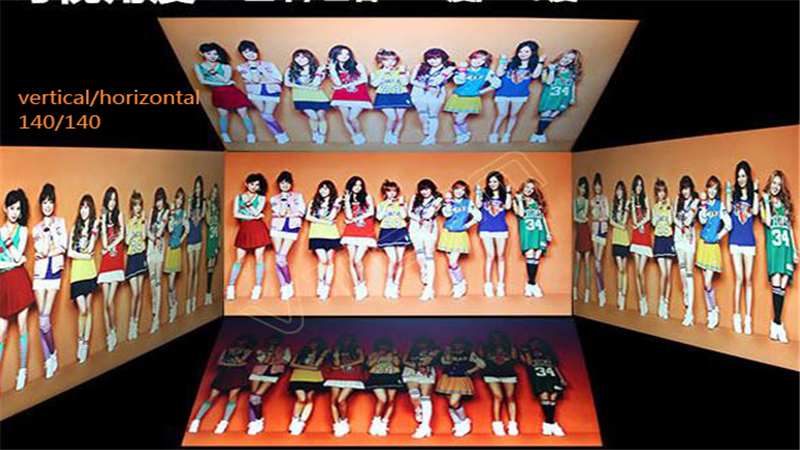
The larger the scope of the full color LED screen can be seen by the audience, so the larger the view Angle will be better.However, the size of the view angle is mainly determined by the encapsulation method of the LED lamps, so it must be carefully considered encapsulation brand LEDS.In addition, the view Angle has a great relationship with the viewing Angle and distance, but at present, most LED display manufacturers have the same Angle. LINSN LED reminds you: if you customize the Angle according to the situation of the scene, the cost will be very high.In addition, with a same LED chip, the bigger of the Angle of LED full color screen brightness will be lower.
3.View Distance
View distance refers to the best distance from which the user can view the LED display. In fact, it is difficult to have a specific test standard for View distance, which is related to screen brightness and installation environment such as air quality and installation height, but it is most directly related to LED pixel and screen size.The smaller the Pixel, the smaller the closest distance you can see, and the larger the Pixel, the greater the closest distance you can see.And the larger the screen, the greater the distance you can see.
Usually, View distance in LED parameter mainly describes the nearest and farthest distance that a pixel’s screen can View per square meter in the horizontal direction.For example, the View distance of P10mm is 10-100m, and the View distance of P5mm is 5-50m.
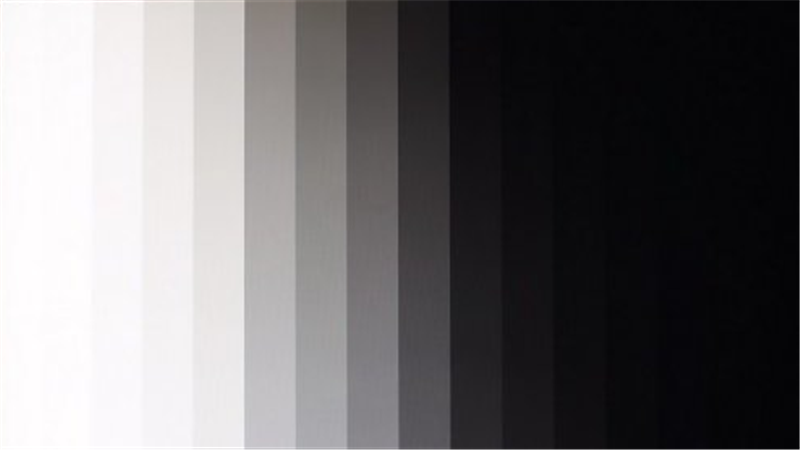
4.Gray Scale
Gray scale is the so-called color scale or gray scale, which refers to the degree of brightness. Also known as half-tone (half-tone) is mainly used to transmit pictures. There are three methods of 16, 32, and 64 levels respectively. It uses matrix processing to process the pixels of the file into 16, 32, and 64 levels to make the transmission The picture is clearer. The higher the gray level of the LED display, the richer the color and the brighter the color; on the contrary, the display color is single and the change is simple.
A grayscale image is a monochrome image with 256 grayscale levels or levels from black to white. Each pixel in the image is represented by 8-bit data, so the pixel value is one of 256 gray levels between black and white. The image has only gray levels and no color changes.
5.Display Color
Display color refers to the number of color types that the display can display. The color of our full-color LED display can reach 16.7M, which means that this display can support a maximum number of 16.7 million colors, that is, 16.7 million different colors can be displayed. “M” means million and is short for million.
6.Brightness Adjustment
Refers to the brightness that the LED screen can adjust from the lowest to the highest value, usually 0-100, can also be understood as 0%-100% of the highest brightness.
When selecting the LED display screen solution, many outdoor screens will add automatic light detection to adjust the brightness of the screen according to the changes in the sunlight environment. A good brightness value can have a better visual effect and save power consumption.
7.Operation Power
The operation power refers to the screen’s working input voltage range and the frequency of sinusoidal alternating current. This value is mainly based on the implementation standards of various countries to match the power supply. We will confirm with the customer before the trip order that the screen uses the national voltage standard, if There are special standards that require a specific power supply.
8.Maxium Power Consumption
Maximum power consumption refers to the power consumption generated by turning each LED lamps of a running LED display to white color and setting the brightness to the maximum. The photoelectric conversion efficiency of LED display is usually set at 20%-30%(estimated) in the industry, so the total power consumption can be estimated at 70% ~80%. Maximum power varies in different application scenarios, for example Outdoor full-color display is divided into energy-saving version and conventional version, energy -saving outdoor led display max power consumption is 400W/m2, conventional version is around 1000W/m2. Indoor led scren is around 700W/m2.
9. Average Power Consumption
The power consumption varies depending on the content. For example, advertising videos are rich in color, mostly white, and the average power consumption is 50% of the maximum power consumption.When playing simple graphics such as text, most of the screen is black, and the average power consumption is 10% of the maximum power consumption.According to the normal advertising statistics, the general average power consumption is 40% of the maximum power consumption.
10.Correction Scale Level
The gray level of LED display screen refers to the degree of difference in brightness.For the digital display technology, gray scale is the determinant of the number of colors.Generally speaking, the higher the gray scale, the richer the color display, the more delicate the picture is, and the more easy to show rich details
11.Frame Update Frequency
The frame updated frequency refers to the number of times the information displayed on the LED display is updated per second. Due to the visual persistence effect of the human eye, when the frame change frequency reaches a certain value, the discretely switched frame images appear to be continuous. The frame change frequency is an important indicator of the continuity of the video. Currently, LED display manufacturers generally use 60Hz or 60Hz~75Hz adaptive frame undated frequency.
12.Screen Refresh Frequency
Refresh rate refers to the image update speed on the LED screen, in other words, the number of times an image appears per second. The high quality LED displays’ refresh rate is generally over 1920Hz/s. The higher the refresh rate, the lower the flicker sense of the LED display screen, the higher the definition of the image is more stable, the lower the refresh rate, the picture may appear flicker jittery phenomenon.
13.Gamma Correction
Gamma correction, also called gamma nonlinearization or gamma coding, is used to perform nonlinear calculations or inverse calculations on the brightness or tristimulus values of light in the film or imaging system.Gamma correction rate is -5.0—5.0.
14.Support Input
Composite Video, S-Video,DVI, HDMI,SDI,HD-SDI
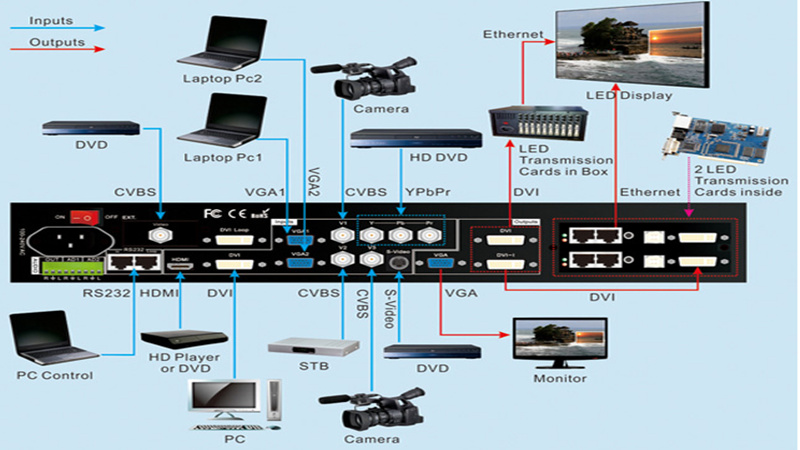
To support these input, customers need to use a video processor. There are many video processor brand, like VDwall, Novastar, Colorlight.
The Video and S-Video input can connect with DVD,Camera. DVI input can connect with computer. HDMI input can connect with HDplayer or DVD. SDI input can connect with some other items that connect with it.
15.Control Distance
Ethernet cable 100m, optical fiber 5km.
For indoor rental LED screen, the control computer is usually near the screen. So people only need an Ethernet cable to connect the screen with the controller. But some outdoor screens will be installed far from the controller that are in the building. So people can use a fiber converter to extend the distance. There are multi-mode fiber and single mode fiber. Multi-mode fiber can extend the distance to 500M, while single mode fiber can extend the distance to 20KM.
16.Color Temperature
5000-9300 adjustable

The color of the light emitted by the light source is the same as the color of the light radiated by the black body at a certain temperature. The temperature of the black body is called the color temperature of the light source. Color temperature is only used to express the visual impression of color.
17. LED Light Color under Different Color Temperature:
1. Low color temperature:When the color temperature is below 300K, the light color is red, giving people a warm feeling; there is a steady atmosphere, warm feeling. When the low temperature light source is used, the red color will be more bright.
2. Middle color temperature:The color temperature in 300-6000K for the middle, people in this tone without particularly obvious visual psychological effect, there is a refreshing feeling; So it’s called a neutral color temperature. When using middle color temperature light source irradiation, the blue has a cool feeling.
3. High color temperature:The color temperature is more than 6000K, the light color is blue, giving people a cool feeling, when using high color temperature light source, make the object have a cold feeling.
18.Brightness Correction
Dot by dot, module by module, cabinet by cabinet
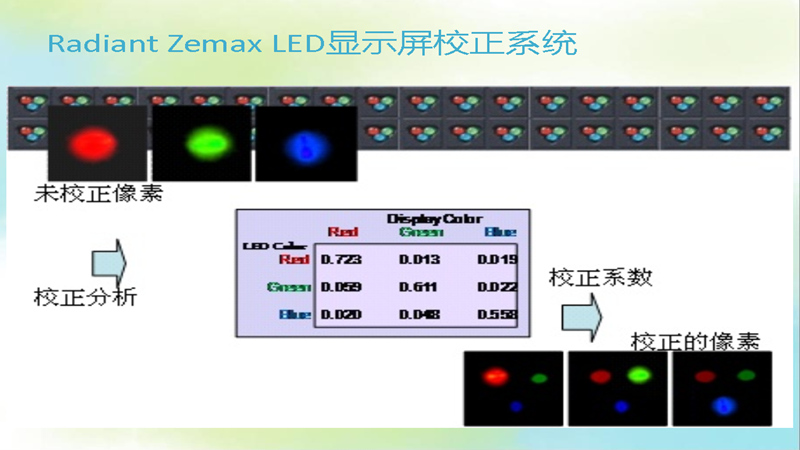
Different LED color has different aging speed. After 6-months continuous working, the red LED brightness reduce 8%, while the green LED’s decrease rate is twice speed than red, the blue LED’s decrease rate is four times speed than red. So it needs to correct the brightness sometimes. LED display brightness correction serves to improve the color fidelity of the display screen, so that the display image is consistent with the color of the source image, so that the display color is more natural.
19.Operating Temperature
-20-60 Celsius degree
The internal electronic components of LED display are susceptible to the influence of working temperature. Manufacturers have certain regulations on the ambient temperature of LED display, which is generally 0~55℃. However, in order to ensure work safety and reliability, it should be considered to leave room for use, and it is best to control it below 40℃. For the natural cooling LED display screen without forced cooling, because the temperature inside the screen may be 10 ~ 15 ℃ higher than that outside the screen, countermeasures should be taken for the installation site and the heating problem inside the screen to ensure that the temperature inside the screen does not exceed the working temperature range of the LED display screen.
The ventilation and heat dissipation space around the LED display screen should be large enough. Do not install the LED display screen in the place directly exposed to sunlight. The LED display screen should have ventilation louvers. If the temperature inside the screen is too high, a fan should be installed inside the screen for forced ventilation.
The failure rate of any product in its service life is very low only under suitable working conditions. As an integrated electronic product, LED display screen is mainly composed of control panel with electronic components, switching power supply, light-emitting devices, etc., and the service life of all of them is closely related to the working temperature. If the actual working temperature exceeds the specified range of the product, not only the service life will be shortened, but also the product itself will be seriously damaged.
20.Operating Humidity
The overall structure of the LED display is compact, and its own heat dissipation is large, so the LED display has certain requirements for the installation environment. When the humidity is too high and the humidity changes greatly, condensation is prone to occur inside the LED display, and its insulation performance will be greatly reduced, and it may even cause a short circuit accident. In order to ensure the insulation performance of the LED display, the relative humidity of the air should be less than 85% (no condensation). If limited by the installation location, the LED display must be installed in a place with high humidity. The LED display should adopt a sealed structure. When necessary, a desiccant and heater must be added to the LED display body. If the installation site permits, air conditioning can be installed.
21.Operating Life
The use of LED displays is divided into indoor and outdoor. Whether indoor or outdoor, the service life of LED module panels is greater than 100,000 hours. Because the backlight is generally LED light, the life of the backlight is equivalent to that of the LED screen. Even if it is used 24 hours a day without interruption, the equivalent lifetime theory is more than 10 years, and the half-life is 50,000 hours. Of course, these are theoretical values! How long it can actually be used is also closely related to the environment and maintenance of the product. Therefore, the purchased LED display must have quality and service as the premise. A good installation environment and good maintenance and maintenance methods are the fundamental reasons for the life of the LED display.
22.MTBF
Mean Time Between Failure is a measure of the reliability of a product (especially electronic products), the unit is “hour”. Specifically, it refers to the average working time between two adjacent failures, also known as the mean interval between failures. It is suitable for repairable products and also stipulates that the ratio of the cumulative working time to the number of failures during the total use phase of the product is MTBF.The determination of the MTBF value usually adopts the theoretical statistical method and the empirical statistical method. The theoretical statistical method is based on the actual conditions of the devices, components and constraints, and accumulates the averaged data. The empirical statistical method is based on the destructive records of factories or laboratories and accumulates average data.
23.Continuous Working Life
The LED display is subjected to 72-hour aging test in the factory, before delivery,so the uninterrupted working time of the LED display can definitely be more than 48 hours.but we generally do not recommend uninterrupted use for such a long time, because long-term work will reduce the life of the lamp
24.Protection Level
The Protection level, sometimes called “waterproof level”, “dust-proof level”. defines the degree of protection that mechanical and electronic equipment can provide against solid bodies and liquid penetration.
Generally, the indoor LED display protection level reaches IP45 is
enough, and the outdoor LED display protection level reaches IP65 is
enough.But for some harsh environments, a higher waterproof level can
also be made.
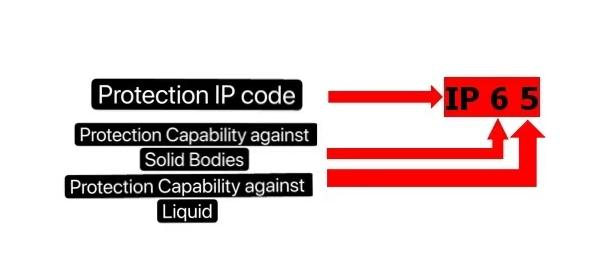
| Level numeral | First place (Protection against solid bodies ) | Second place (Protection against Liquid ) |
| 0 | Unable to prevent the entry of solid bodies | unable to prevent the entry of liquid |
| 1 | protection against solid bodies greater than 50mm | Protection against Water dripping |
| 2 | protection against solid bodies greater than 12.5mm | When the LED display is tilted 15 degrees, water droplets can be protected |
| 3 | protection against solid bodies greater than 2.5mm | Protection against spilled water |
| 4 | protection against solid bodies greater than 1.0mm | Protection against water gushing out |
| 5 | Dust-prevention, But can not completely prevent dust from entering,and the amount of dust does not affect the normal operation of the LED display | Protection against sprayed water |
| 6 | Completely,Dust-prevention | Protection against strong jets of water |
| 7 | – | Protection against short-term flooding(1m) |
| 8 | – | Protection against long-term flooding,Under the fixed pressure |
25.Out of Control Pixels Rate
The pixel out-of-control rate refers to the proportion of the smallest imaging unit (pixel) of the display that is not working properly (out of control).The pixel out of control has two modes: one is blind dot, which is not bright when it needs to be bright, which is called blind dot; the other is constant bright dot, which is always bright when it needs to be dark, which is called constant bright dot.Generally, the composition of a pixel is 1R1G1B, and out of control is generally not that the red, green, and blue lights in the same pixel are all out of control at the same time, but as long as one of the three led(red,green and blue) is out of control, we think that the pixel is out of control.For simplicity, we perform statistics and calculations of out-of-control pixels according to the primary colors of the LED display( red, green, and blue), and take the maximum value as the pixel out-of-control rate of the display.